
 Prefer Jewish News on Google
End of Round 2 in Israel’s Battle of the (emergency medical) Hotlines
Judges rule in favour of United Hatzalah after Magen David Adom's latest attempt to simplify the country's medical dispatching
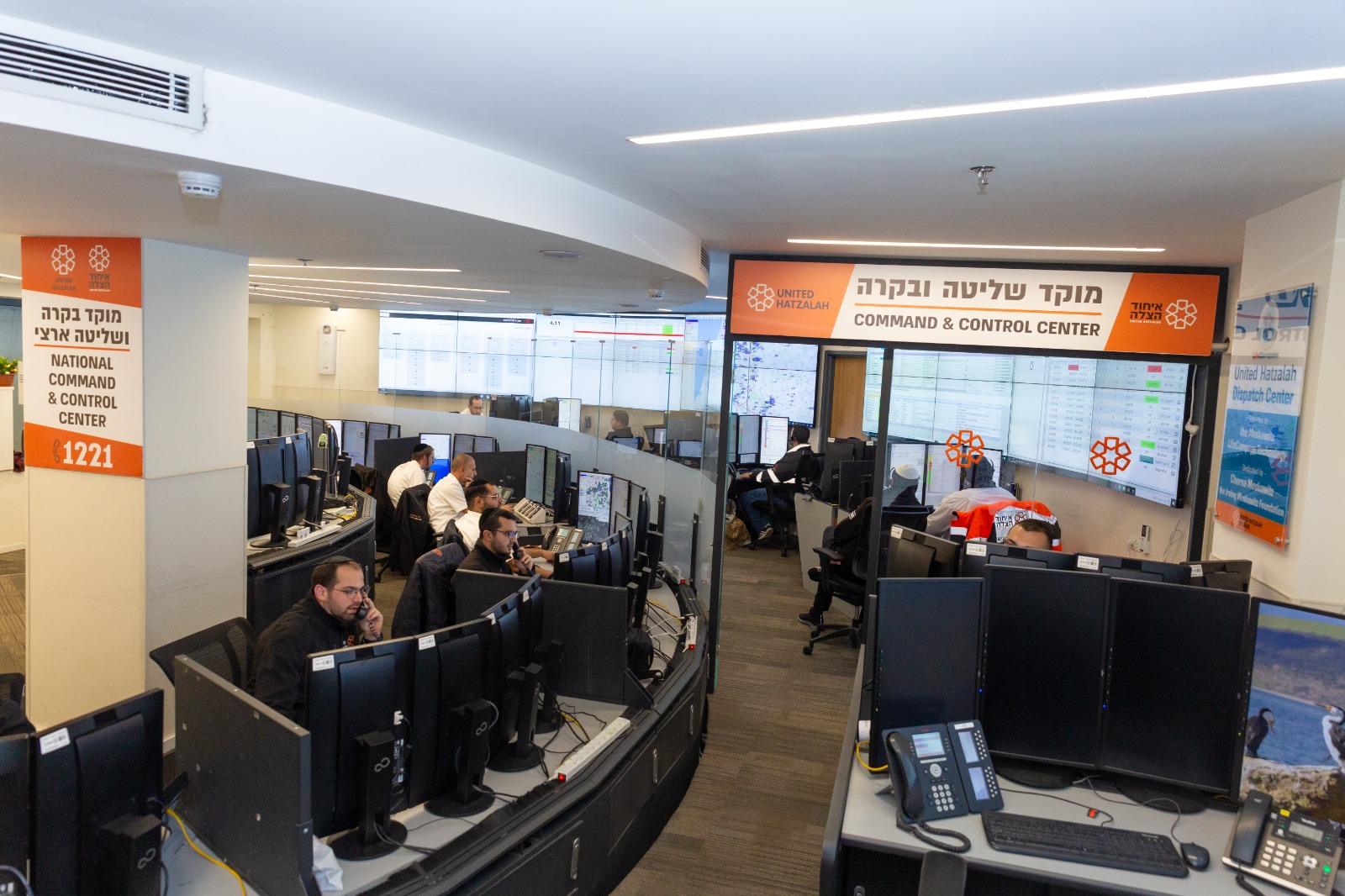
Israel’s two emergency response organisations continued their wounding grievance this week after the country’s Supreme Court ruled on whether one of them could use the emergency number 1221.
Magen David Adom (MDA) and United Hatzalah have been at loggerheads for years, and the former had petitioned the High Court of Justice to cancel the latter’s use of the abbreviated hotline number, but this was thrown out by a three-judge panel.
The number 1221 was assigned to United Hatzalah on ministerial recommendation in 2010 and this week’s ruling was the second attempt by MDA to overturn it.
Israel does not have a unified dispatching service, such as 911 in the United States or 999 in the UK. Instead, each emergency service has its own hotline – the police have 100, MDA is 101, fire is 102, electricity is 103, and municipal hotlines are 106.
MDA argues that having two emergency numbers risks confusing Israelis as to which number to call. United Hatzalah, which has 6,500 medical volunteers, said MDA was trying to shut down its dispatching service.


United Hatzalah, which is known for its ambucycles, prides itself on fast response times, and recently said that it was increasing its resources in response to “lengthier than usual ambulance response times and the potential risks to human life”.
Other non-profit emergency organisations in Israel have four-digit hotline numbers such as United Hatzalah’s 1221. Zaka, with its emergency response teams, has 1220. Eran, for emergency mental health issues, is on 1201.
Israel’s rape crisis centre for women is 1202, and 1203 for men, while the West Bank has its own emergency service line, on 1208. Yedidim B’Kvishim, which provides emergency roadside assistance, is on 1230.
Some Israeli politicians have sought to unify Israel’s emergency dispatching services, similar to the 999/911 hotlines, but efforts have been stymied by concerns over dispatchers’ medical training and unification’s effect on response times.

Keep community journalism free.
Jewish News is free for everyone. No paywall. No barriers. Just trusted journalism for anyone who wants to stay connected to Jewish life in Britain.
If you value that, please support us.
From as little as £5 a month, you can help keep our journalism free and accessible to all.
Every day, we report on the issues that matter to our community. We celebrate achievements, support charities, challenge antisemitism and ensure Jewish voices are heard more widely.
From as little as £5 a month, you can help us continue to:
- Report on the stories shaping Jewish life in the UK and beyond
- Bring our community together through shared stories, events and campaigns
- Celebrate the people, culture and moments that define our community
- Support organisations doing vital work across Jewish Britain
You can make a one-off donation or become a regular supporter. Every contribution helps keep our journalism free, independent and accessible to all.
If everyone who values Jewish News gave a small amount, it would make a real difference to our future.





















