Prefer Jewish News on Google
Vatican official: We must learn from Judaism on shabbat and family
Cardinal Kurt Koch said the 'Sunday culture in Christianity is very weak', urging for a more home-orientated approach
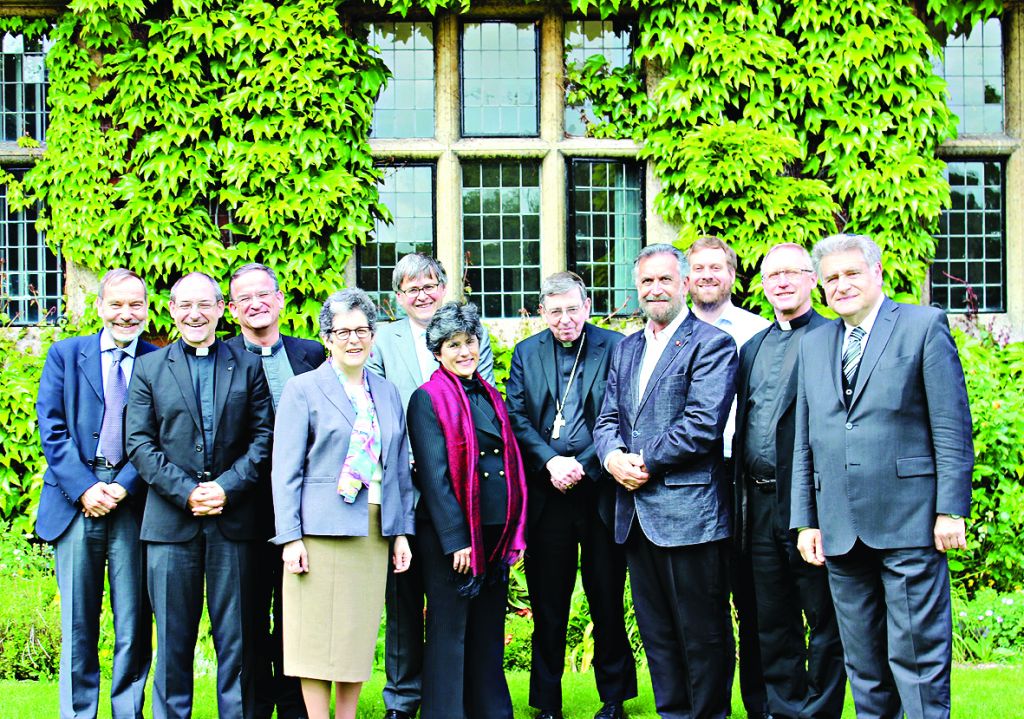
The Vatican’s most senior official on relations with Jewish communities has insisted the Catholic Church must learn from the centrality of the home and Shabbat in Jewish life, saying the Sunday “culture in Christianity is very weak”.
The frank comments from Cardinal Kurt Koch, president of the pontifical commission for religious relations with the Jews, came during an exclusive interview as he joined leading theologians from both faiths for a two-day symposium on enhancing relations.
“The most important thing we can learn from the Jewish people is first of all it’s a religion not of the synagogue but of the home, the family,” the cardinal told the Jewish News. “I’m convinced the survival of the Jewish people is rooted in the family. The Sunday culture in Christianity is very weak. The survival of the Jewish people in the tradition belongs also to this clear tradition of Shabbat. Family and Shabbat are two main challenges for Christianity.”
He was one of eleven Catholics and Jews from around the world meeting in Cambridge to mull the next decade of dialogue, four months after the release of a landmark Vatican document that clearly opposed any attempts to convert Jews and spoke of the need for Christians to fight anti-Semitism. The document, The Gifts and Calling of god are Irrevocable, came half a century after what he described as the “epoch-changing” Nostra Aetate, which overhauled relations between the two faiths.
“Pope Francis says always it’s impossible to be a Christian and to be anti-Semitic. I hope this message is clear above all in our church in ecumenical relations and in society. Pope Francis is not tired of saying this,” Koch said. Asked about how anti-Israel sentiment all too often crosses the line into anti-Semitism, he insisted there is a need to distinguish between the people and land of Israel and its policies.
“Not every critic of the politics of the state can be anti-Semitic because there are many critics in Israel. On the other side we cannot distinguish and say we have only a relationship with Jews as individuals and not as a people and the land.” He also reiterated the Pope’s wish to finally open the Vatican archives related to the Nazi era.
“We want transparency,” the 66-year-old said. “But it’s a great work with millions of documents and when academics enter without any order they can’t work. Putting all these documents in order is the challenge we have. But it’s very clear for the pope that we must open these archives. I hope you and I can enter into the archives.”
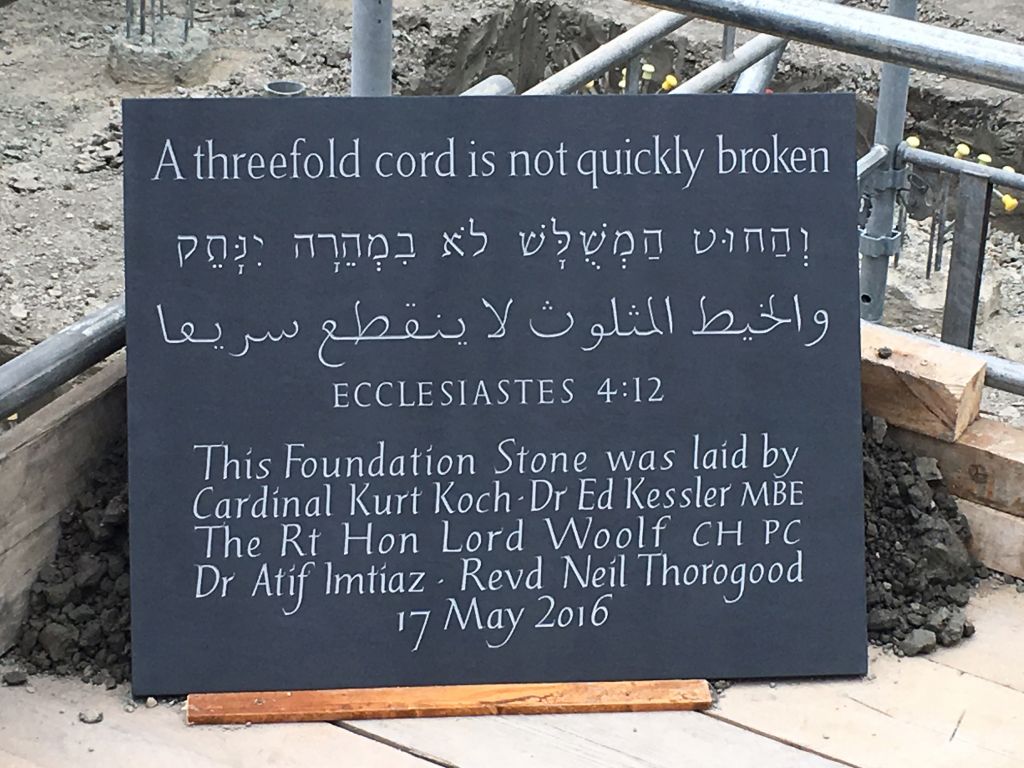
The cardinal expressed gratitude to the Woolf Institute – which he described as a “leader” in the study of relations between Jews, Muslims and Christians – for organising the symposium. Tuesday also saw the unveiling of the foundation stone for the Institute’s new building at a ceremony addressed by Lord Woolf, who supported the initiative from its inception in 1998.
Spread over three and a half floors in the grounds of Westminster College, the venue will feature a purpose-built library, conference facilities, media centre and research hub as well as accommodation for students. It is set to open next summer at a cost of £10million.
Institute founder Ed Kessler, who began negotiations on the new project four years ago, said: “At the moment we have researchers here and there but to have a research centre where everyone’s working together will be fantastic. To have students living in same place as staff helps announce to Cambridge and the world we are a permanent presence, not a passing fad. Let’s be honest, the issue is understanding relations between the religions is not going to become less important.”
He said the two-day event had been a unique chance not just for Catholics but for Jews – “orthodox and reform – to think what does our relationship with Christianity mean. It’s not just about the history of anti-Semitism but there’s something quite profound and we’re starting to look at it.”
He added: “It will be very interesting if we can come to a common accord about tricky subjects. My fantasy would be that in a certain number of years there’ll be a nostra aetate 2 that might be signed up by leading Jewish and Christian figures.”
Argentinean Rabbi Abraham Skorka, a close friend of the Pope, was among the Jewish representatives. “One of the most important challenges of our time is interfaith dialogue,” he said. “The best barrier we can build up against fanaticism is to demonstrate that the way of living is the way of dialogue. The bible is a book of dialogue. The pope applauds all those working for dialogue and reconciliation.”

Keep community journalism free.
Jewish News is free for everyone. No paywall. No barriers. Just trusted journalism for anyone who wants to stay connected to Jewish life in Britain.
If you value that, please support us.
From as little as £5 a month, you can help keep our journalism free and accessible to all.
Every day, we report on the issues that matter to our community. We celebrate achievements, support charities, challenge antisemitism and ensure Jewish voices are heard more widely.
From as little as £5 a month, you can help us continue to:
- Report on the stories shaping Jewish life in the UK and beyond
- Bring our community together through shared stories, events and campaigns
- Celebrate the people, culture and moments that define our community
- Support organisations doing vital work across Jewish Britain
You can make a one-off donation or become a regular supporter. Every contribution helps keep our journalism free, independent and accessible to all.
If everyone who values Jewish News gave a small amount, it would make a real difference to our future.