
 Prefer Jewish News on Google
Westminster Shoah memorial would be ‘trophy site’ for terror
Group of 42 academics submit evidence to planning inquiry, as Lord Carlile says the proposed Victoria Tower Gardens monument poses a 'self-evident terrorism risk'
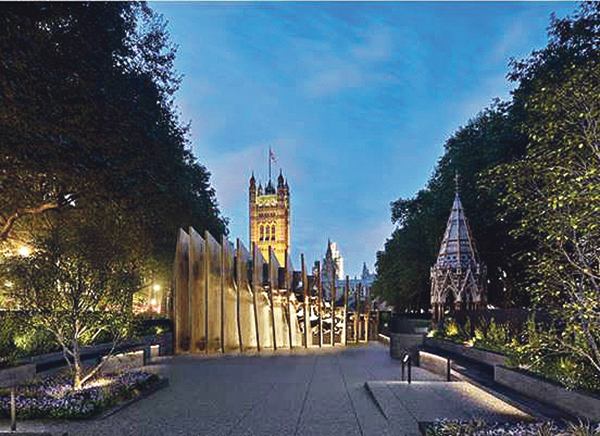
A group of 42 leading Holocaust academics have labelled the proposed location of the Holocaust Memorial and Learning Centre next to the Houses of Parliament as “deeply problematic”, while terrorism expert Lord Carlile QC has branded the plan as a “self-evident terrorism risk” and a “potential ‘trophy’ site”.
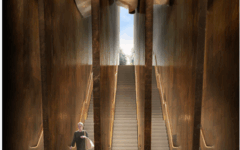
In evidence to a month-long planning inquiry which opens today over the £100 million project, the academics said the significant size of the Holocaust Centre in Victoria Tower Gardens would “overpower all the existing important statues and memorials” commemorating women’s rights, immigration and the abolition of slavery.
The group of academics, led by Professors and Drs from UCL, University of Edinburgh, University of Southampton and Northumbria University, say that the plans create a “celebratory narrative” of Britain’s response to the Holocaust and would portray the nation as “the ultimate saviour of the Jews”.
In their letter, the academics say they “oppose the current site” and instead set out a decentralised proposal as an alternative, which would “feed into a new open and explicit public dialogue about the form and location of a national Holocaust memorial in Britain.”
In a separate statement submitted to the inquiry, Lord Carlile QC, the crossbench Lord and son of Jewish parents born in pre-war Poland, said that while he “totally” supports the creation of a Holocaust memorial in London, the plans “would be a threat to the public, and also a potential threat to Parliament.”
Risks of being located near Parliament and government offices, Lord Carlile says, would be compounded by confined space and the “total inadequacy” of proposed 20 second security checks.
Trudy Gold, who has taught adults and children on Holocaust issues for more than 40 years and was one of the founder members of the British Delegation to the International Holocaust Remembrance Alliance, said in her statement to the inquiry that the memorial “will do nothing to solve the very serious problem of antisemitism – and is, at worst, counter-productive and dangerous.”
“It will not prevent antisemitism: that will require something far more forensic and comprehensive”, Mrs Gold said. The location of the centre next to parliament will, however, “expose Jewish people to accusations of special treatment and special influence; a literal purloining of a beloved public space at the centre of British democracy.”
Mrs Gold instead suggests that Holocaust studies be taught within a wider framework of Jewish history at key stage three, including that of the Jewish diaspora and how anti-Jewish tropes developed.
The group of 42 academics similarly propose greater investment into digital learning resources for students and teachers, with providing educational materials designated as “a priority”.
Labour leader Sir Keir Starmer threw his support behind the memorial and learning centre last week, advocating for the planning inspector “to recognise the national significance of this project.” While the Housing Secretary Robert Jenrick has previously said the government was “implacably committed” to the construction of the centre.

Keep community journalism free.
Jewish News is free for everyone. No paywall. No barriers. Just trusted journalism for anyone who wants to stay connected to Jewish life in Britain.
If you value that, please support us.
From as little as £5 a month, you can help keep our journalism free and accessible to all.
Every day, we report on the issues that matter to our community. We celebrate achievements, support charities, challenge antisemitism and ensure Jewish voices are heard more widely.
From as little as £5 a month, you can help us continue to:
- Report on the stories shaping Jewish life in the UK and beyond
- Bring our community together through shared stories, events and campaigns
- Celebrate the people, culture and moments that define our community
- Support organisations doing vital work across Jewish Britain
You can make a one-off donation or become a regular supporter. Every contribution helps keep our journalism free, independent and accessible to all.
If everyone who values Jewish News gave a small amount, it would make a real difference to our future.





















