Prefer Jewish News on Google
Israel, Jordan and Palestinians discuss water co-operation
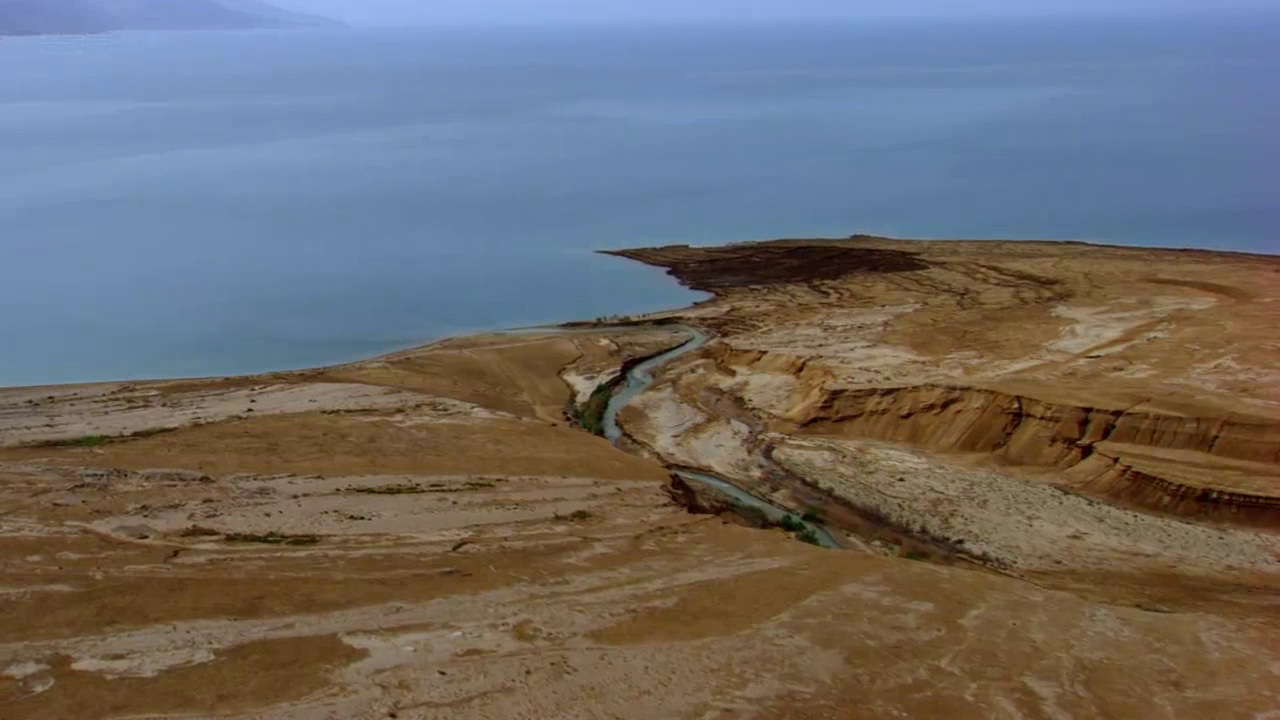

Water specialists from Israel, Jordan, and the Palestinian territories met last week in the gorgeously gilded surroundings of London’s Lancaster House to discuss the possibilities of regional water co-operation, writes Jenni Frazer.
The all-day seminar, held by the Anglo-Israel Association in co-operation with Israel’s Arava Institute for Environmental Studies, also attracted industrial and academic specialists from Britain, each eager to learn from each other and trade knowledge and information. The seminar was designated as the Ambassadors’ Round Table and was attended by UK Foreign Office officials as well as experts in sustainability of the environment.
Keynote addresses were given by Monther Hind of the Palestinian Wastewater Engineering Group, Suleiman Halasah, founder and director of the environmental group IGreens in Jordan, and Dr Clive Lipchin, director of the Arava Institute’s centre for transboundary water management.
Dr Lipchin, South-African-born, is known as a “water visionary” who looks beyond politics to try to solve problems in the region. He told the delegates that despite – or perhaps because of – years of drought, Israeli technology and its major desalination work now allows Israel, probably uniquely, to call itself a “water secure country” – meaning that it has developed technology sufficient to cater for the population’s needs.
He said it was vital to rethink about water beyond nationalism. “Water resources don’t conform to political boundaries”, he said.
Dr Lipchin presented an imaginative solution for how Israel, Jordan and the Palestinians could proceed, each bringing something different to the table. Israel, because of its success in desalination from the Mediterranean, will continue to be the major water supplier. Jordan, through a series of solar panels placed in its eastern desert, will supply much-needed energy for the region; and the Palestinians will develop natural agricultural resources through water buffers.
Dr Lipchin’s solution took note of the vast increase in population with which Jordan, specifically, is dealing – the huge numbers of Syrian refugees who have found shelter in the region. However temporary or permanent that might be, more water, more energy and more food will be needed in the region.
A different take on what to do was presented by Oxford University’s Dr David Johnstone, a senior research associate at the School of Geography and the Environment. Dr Johnstone’s speciality is waste water: he reported that globally there are two thousand million tons of waste water per day which are untreated. In the developing world urban rivers have become sewers and there are an estimated 2.6 billion people without proper sanitation, with a further 2 billon more people in this category by the year 2040.
His answer was to push governments to treat waste water and use its resources, among which are “energy, fertiliser, phosphates and building materials.” such Such treatment, Dr Johnstone predicted, could radically improve lives in the Middle East and worldwide.

Keep community journalism free.
Jewish News is free for everyone. No paywall. No barriers. Just trusted journalism for anyone who wants to stay connected to Jewish life in Britain.
If you value that, please support us.
From as little as £5 a month, you can help keep our journalism free and accessible to all.
Every day, we report on the issues that matter to our community. We celebrate achievements, support charities, challenge antisemitism and ensure Jewish voices are heard more widely.
From as little as £5 a month, you can help us continue to:
- Report on the stories shaping Jewish life in the UK and beyond
- Bring our community together through shared stories, events and campaigns
- Celebrate the people, culture and moments that define our community
- Support organisations doing vital work across Jewish Britain
You can make a one-off donation or become a regular supporter. Every contribution helps keep our journalism free, independent and accessible to all.
If everyone who values Jewish News gave a small amount, it would make a real difference to our future.