Prefer Jewish News on Google
OPINION: Israel’s power places huge responsibility on its actions
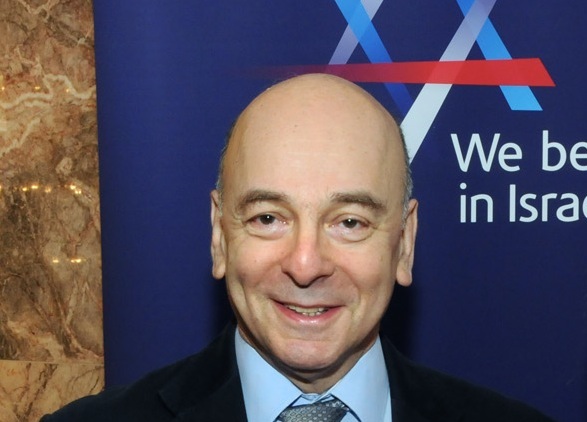

By Vivian Wineman, President of the Board of Deputies of British Jews
It feels as if there has never been a quiet time for Israel’s supporters.
The last We Believe in Israel conference took place in 2011. At the time the issue was the blockade of Gaza.
Today we have the results of the elections to consider and their impact on relations between state of Israel and its neighbours and between the state and its minorities.
As a diaspora community proud of Israel and its democratic traditions we hope fervently that the state will adhere to the high ideals set out in its Declaration of Independence.
Above everything, however, looms the issues raised by Operation Protective Edge.
The vast disparity in force between the Israelis and their foes puts a huge responsibility on Israel and one which was discussed by the workshop I was privileged to lead.
If it wished to, Israel could flatten those areas of the territories which are the source of the violence that threatens her.
Clearly everyone accepted that a massive air bombardment would not be acceptable. But what about a more limited air attack as was suggested in 2002 in Jenin.
This city in the West Bank had been the source of a large number of suicide bombers who had not only killed hundreds of Israelis but had also generated an atmosphere of fear throughout the country.
The government was urged to launch an air attack which while frugal with Israeli lives would kill a large number of residents who had not themselves been involved in terrorism.
The minister of defence Beinyamin Ben Eliezer said he could not do this both because of the moral imperative not to kill large numbers of civilians and because of the international repercussions.
The result was that he sent in ground forces. Initially the world’s media called it a horrendous massacre but later the statistics showed that 52 Palestinians were killed compared to 23 Israelis. The bereaved parents of some of the soldiers wrote an angry letter to Ben Eliezer accusing him of complicity in the death of their children.
In 2014 Israel tried different tactics – the result was that the casualty rate was much more lopsided. Again this resulted in very heavy criticism, this time coming from the international community.
The moral dilemmas are labyrinthine.
It is reassuring to note as Luke Akehurst of We Believe said at the beginning of the conference that the proportions supporting Israel and the Palestinians remained roughly constant during the conflict and though he did not say this the proportion supporting Hamas remained minuscule. In fact they are only marginally less unpopular than Islamic State

Keep community journalism free.
Jewish News is free for everyone. No paywall. No barriers. Just trusted journalism for anyone who wants to stay connected to Jewish life in Britain.
If you value that, please support us.
From as little as £5 a month, you can help keep our journalism free and accessible to all.
Every day, we report on the issues that matter to our community. We celebrate achievements, support charities, challenge antisemitism and ensure Jewish voices are heard more widely.
From as little as £5 a month, you can help us continue to:
- Report on the stories shaping Jewish life in the UK and beyond
- Bring our community together through shared stories, events and campaigns
- Celebrate the people, culture and moments that define our community
- Support organisations doing vital work across Jewish Britain
You can make a one-off donation or become a regular supporter. Every contribution helps keep our journalism free, independent and accessible to all.
If everyone who values Jewish News gave a small amount, it would make a real difference to our future.