Prefer Jewish News on Google
Israeli-led research team makes finds heart risk drugs find
A study of over 30,000 people with heart disease was carried out by the Tel Aviv-based team
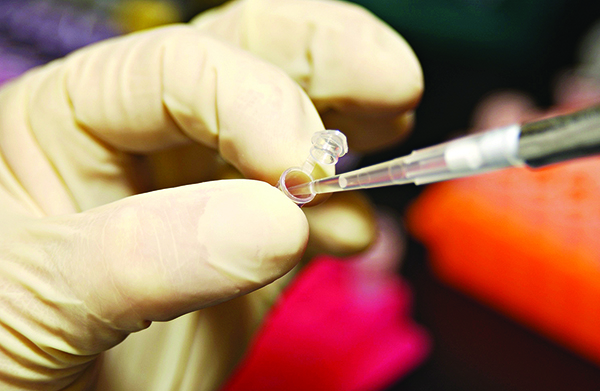
An Israeli-led research team has found that people taking statins to lower their cholesterol and prevent heart risks may not benefit from taking the drugs, new research suggests.
A study of more than 31,000 patients with heart disease found that lowering cholesterol beyond a certain point made no difference in protecting them from problems like heart attacks, angina or stokes.
Statins are taken by millions of Britons every year and cost the NHS hundreds of millions of pounds.
The Israeli-led research looked at levels of so-called low-density lipoprotein cholesterol (LDL-C) levels in patients. Led by Morton Leibowitz, of the Clalit Research Institute in Tel Aviv, the team included scientists from the United States and Canada.
It found that while there was a marked difference in risk between patients with high cholesterol and moderate cholesterol, levels, there was little difference between those with moderate and low cholesterol.



The paper, published in the online journal JAMA Internal Medicine, noted: “These population-based data do not support treatment guidelines recommending very low target LDL-C levels for all patients with pre-existing heart disease.”
Statins are the most widely-prescribed drug in the UK, with at least seven million users costing the NHS £285 million a year.
In 2014 guidelines for their use were revised, so that anyone with a 10% chance of developing heart disease in the next 10 years was eligible for the drugs.
This increased the number of people in the UK qualifying for statins by about five million.
They looked at 31,619 patients with ischemic heart disease (IHD). Of them 9,086 (29%) had low LDL-C levels, 16,782 (53%) had moderate LDL-C levels and 5,751 (18%) had high LDL-C levels. Of the total some 9,035 patients either suffered serious heart problems or died.
Guidelines on cholesterol levels vary, while the American Heart Association does not set a level target, the European Society of Cardiology recommends treatment be carried out to get the level down to below 70 mg/dL.
The research paper found that levels below 70 mg/dL the difference was negligible, concluding: “Our results do not provide support for a blanket principle that lower LDL-C is better for all patients in secondary prevention.”

Keep community journalism free.
Jewish News is free for everyone. No paywall. No barriers. Just trusted journalism for anyone who wants to stay connected to Jewish life in Britain.
If you value that, please support us.
From as little as £5 a month, you can help keep our journalism free and accessible to all.
Every day, we report on the issues that matter to our community. We celebrate achievements, support charities, challenge antisemitism and ensure Jewish voices are heard more widely.
From as little as £5 a month, you can help us continue to:
- Report on the stories shaping Jewish life in the UK and beyond
- Bring our community together through shared stories, events and campaigns
- Celebrate the people, culture and moments that define our community
- Support organisations doing vital work across Jewish Britain
You can make a one-off donation or become a regular supporter. Every contribution helps keep our journalism free, independent and accessible to all.
If everyone who values Jewish News gave a small amount, it would make a real difference to our future.