Prefer Jewish News on Google
1,300-year-old Menorah pendant discovered in Jerusalem rubble
'Deeply moved and excited' archaeologists claim ancient find reveals Jewish presence during Byzantine travel ban
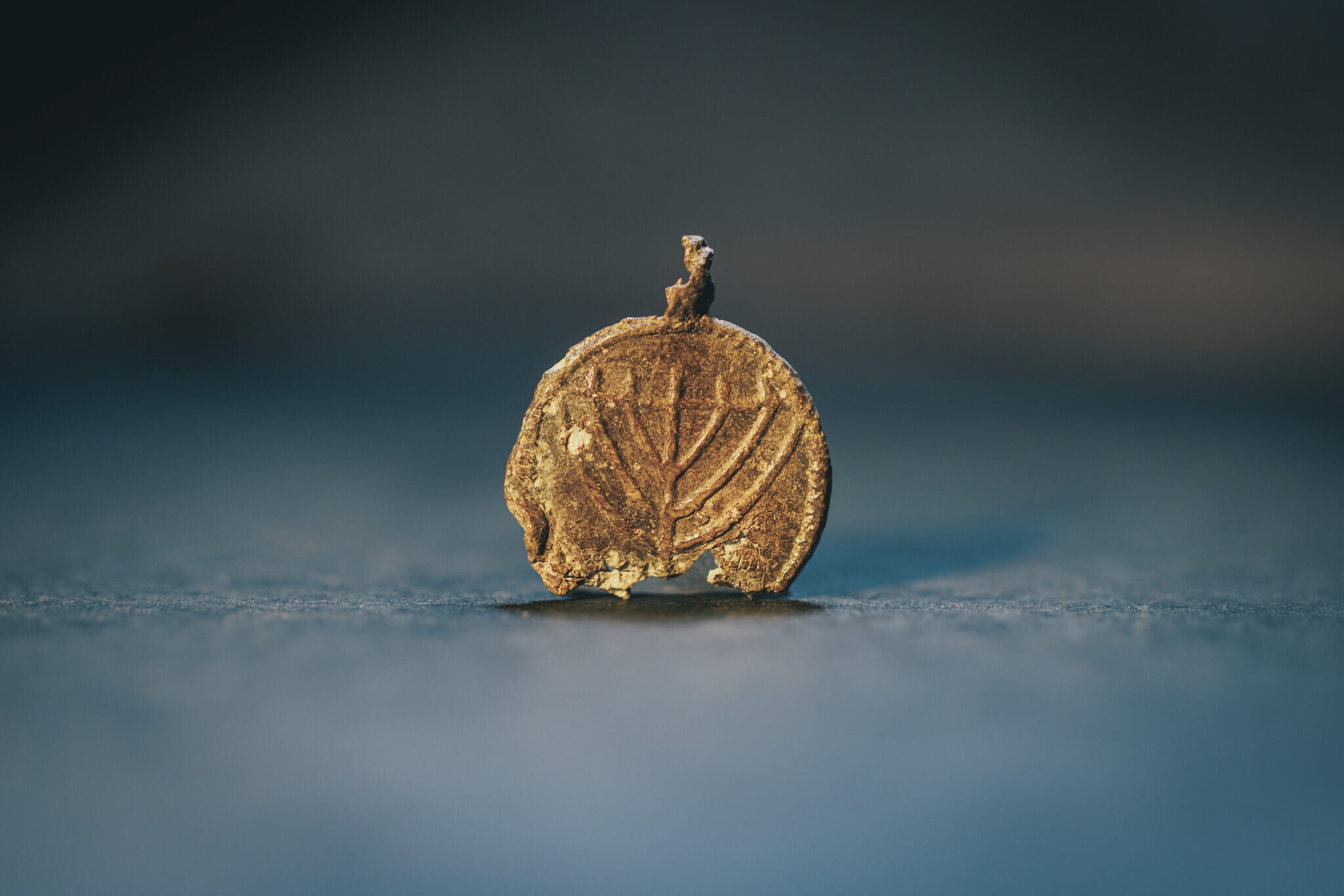
A very rare, personal necklace pendant from the 6th – early 7th centuries CE (Late Byzantine period) was recently discovered in a large-scale archaeological excavation in the Davidson Archaeological Park of Jerusalem.
Decorated on both sides with an identical image of a seven-branched menorah, it was apparently worn by a Jew who arrived in Jerusalem during the Byzantine period, when Jews were prohibited from entering the city.
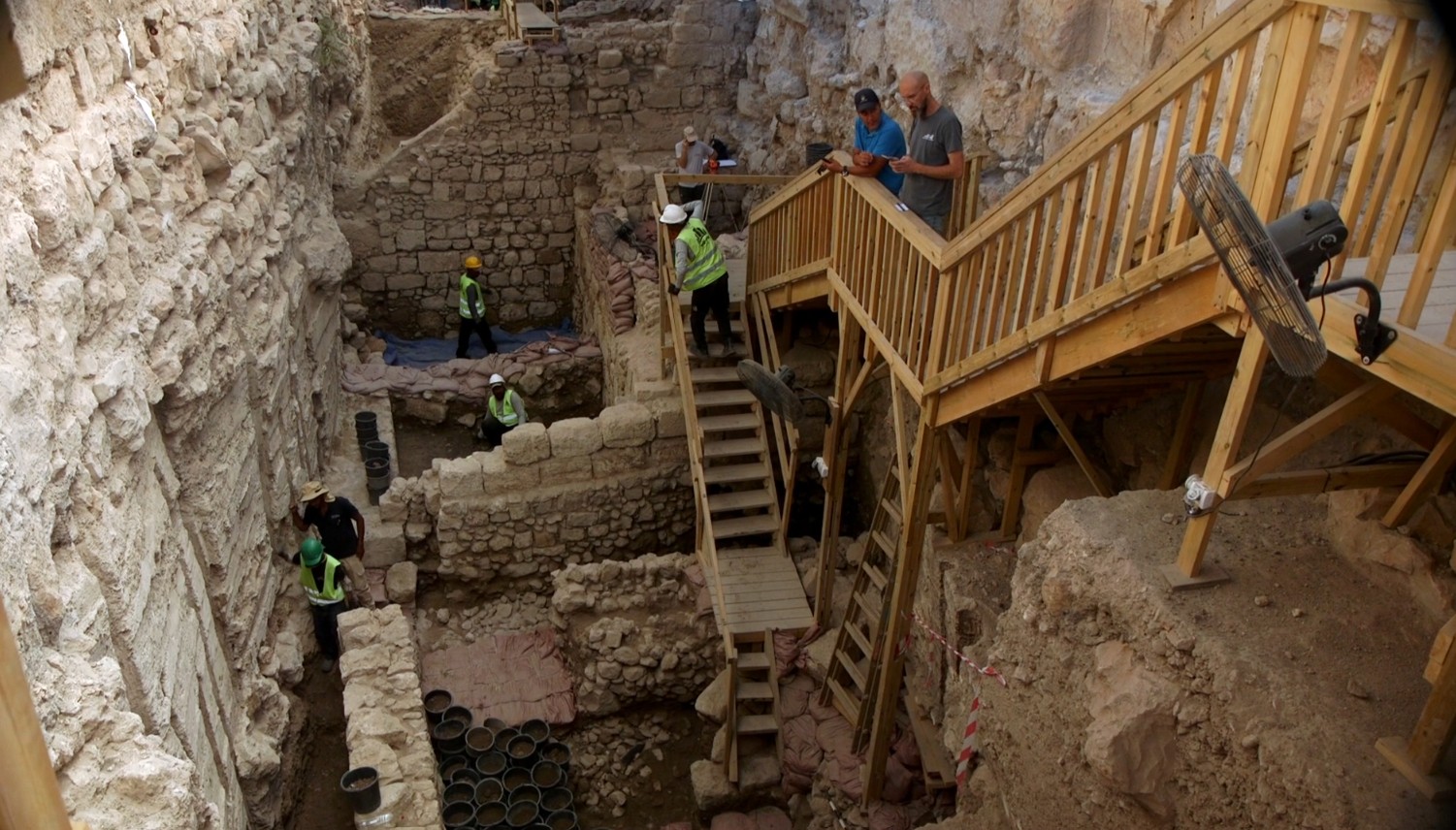
Ayayu Belete, who made the astonishing discovery, said: “One day while I was digging inside an ancient structure, I suddenly saw something different, gray, among the stones. I picked up the object out and saw that it was a pendant with a menorah on it. I immediately showed the find to Esther Rakow-Mellet, the area director, and she said it was an especially rare find. I was deeply moved and excited!”
The object bearing the menorah decoration was discovered within a layer of rubble, inside a late Byzantine period building.
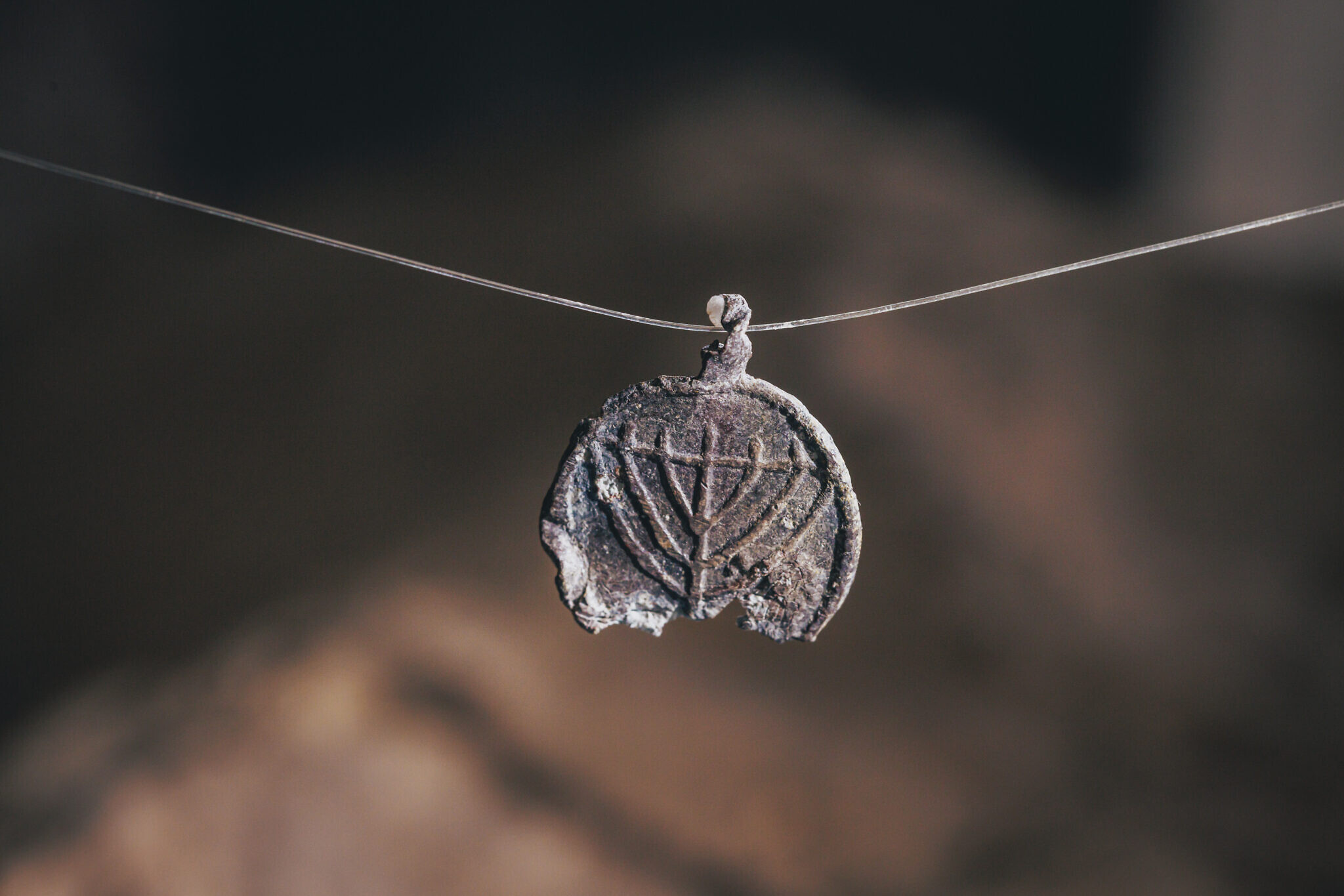
The pendant was designed as a disk with a loop at the top, most likely intended to be worn on a necklace. Both sides of the pendant depict a seven-branched menorah, highlighted by a circular frame. One side was well-preserved, while the other was covered with patina, a natural layer of weathering. Each menorah design displays three arms on either side of the central shaft.
At the top of each arm is a horizontal crossbar, with flames rising above it.
Tests conducted at the Israel Antiquities Authority’s analytical laboratories found that the pendant contains approximately 99% lead – making the find exceptionally rare.
Researchers said they know of only one other menorah pendant in the world made of lead. Of unknown origin, it is housed in The Walters Art Museum in Baltimore, USA.
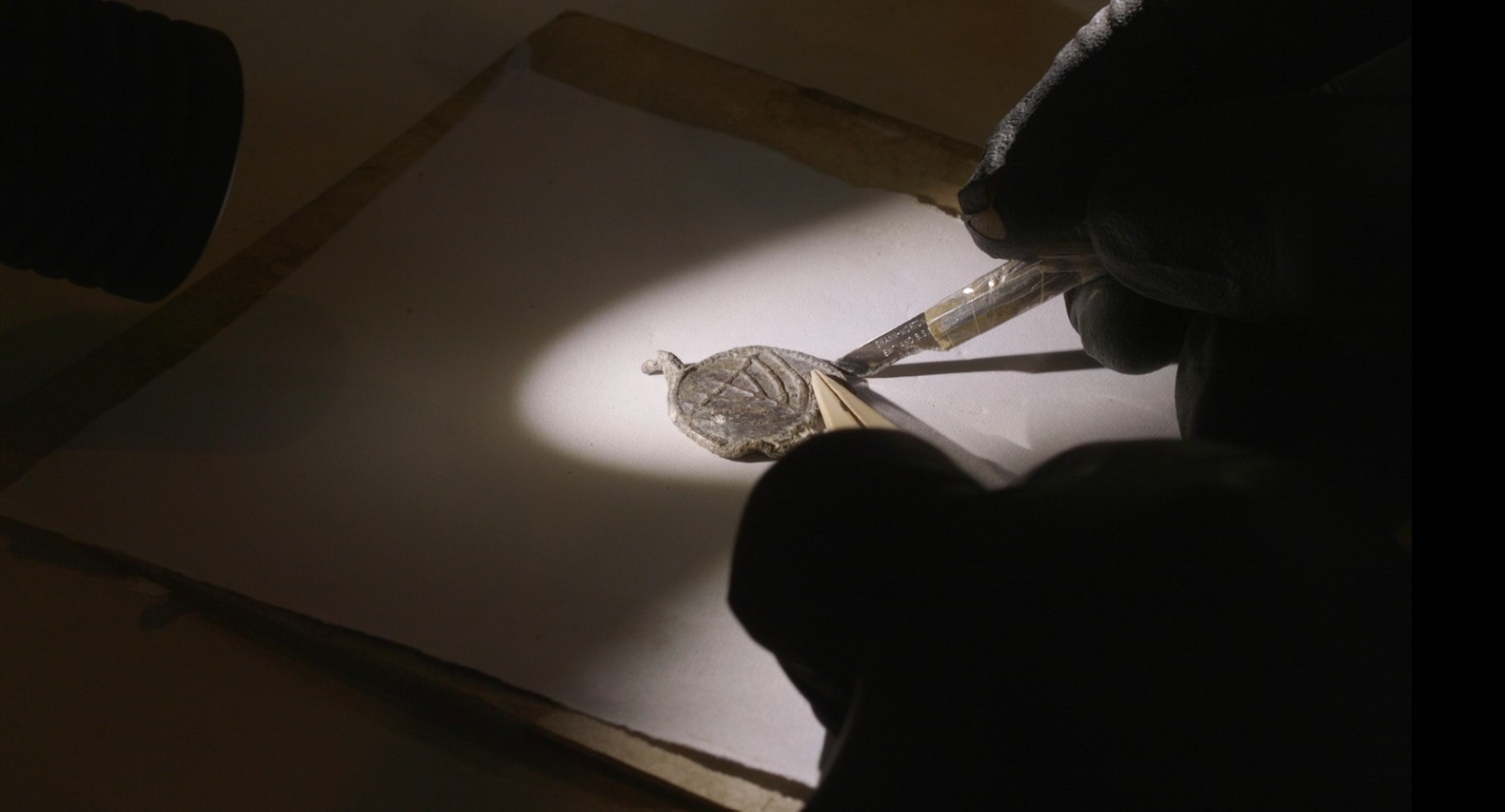
Dr. Yuval Baruch of the Israel Antiquities Authority, who has been directing the excavations at this site for 25 years, and who studies the subject of menorahs, explained that the pendant is not just a material object: “It is a personal seal, an emblem of memory and identity, which probably belonged to an anonymous Jew who chose to wear it around his or her neck.
“It also attests that during periods when imperial edicts were issued prohibiting Jews from residing in the city, they did not stop coming there!”
He added that the choice to use lead, rather than one of the more common metals “suggests that the owner of the object wore it as an amulet, not jewellery. There is a strong basis to this contention, because lead was considered a common and particularly popular material for making amulets at that time.”
The excavation was conducted by the Israel Antiquities Authority in cooperation with the City of David Foundation and the Company for the Reconstruction and Development of the Jewish Quarter.

Keep community journalism free.
Jewish News is free for everyone. No paywall. No barriers. Just trusted journalism for anyone who wants to stay connected to Jewish life in Britain.
If you value that, please support us.
From as little as £5 a month, you can help keep our journalism free and accessible to all.
Every day, we report on the issues that matter to our community. We celebrate achievements, support charities, challenge antisemitism and ensure Jewish voices are heard more widely.
From as little as £5 a month, you can help us continue to:
- Report on the stories shaping Jewish life in the UK and beyond
- Bring our community together through shared stories, events and campaigns
- Celebrate the people, culture and moments that define our community
- Support organisations doing vital work across Jewish Britain
You can make a one-off donation or become a regular supporter. Every contribution helps keep our journalism free, independent and accessible to all.
If everyone who values Jewish News gave a small amount, it would make a real difference to our future.