Prefer Jewish News on Google

A new Anne Frank musical satire forgets who’s in on the joke
Is it right that a sell-out off-Broadway show that turns the most recognised Holocaust victim into a punchline?
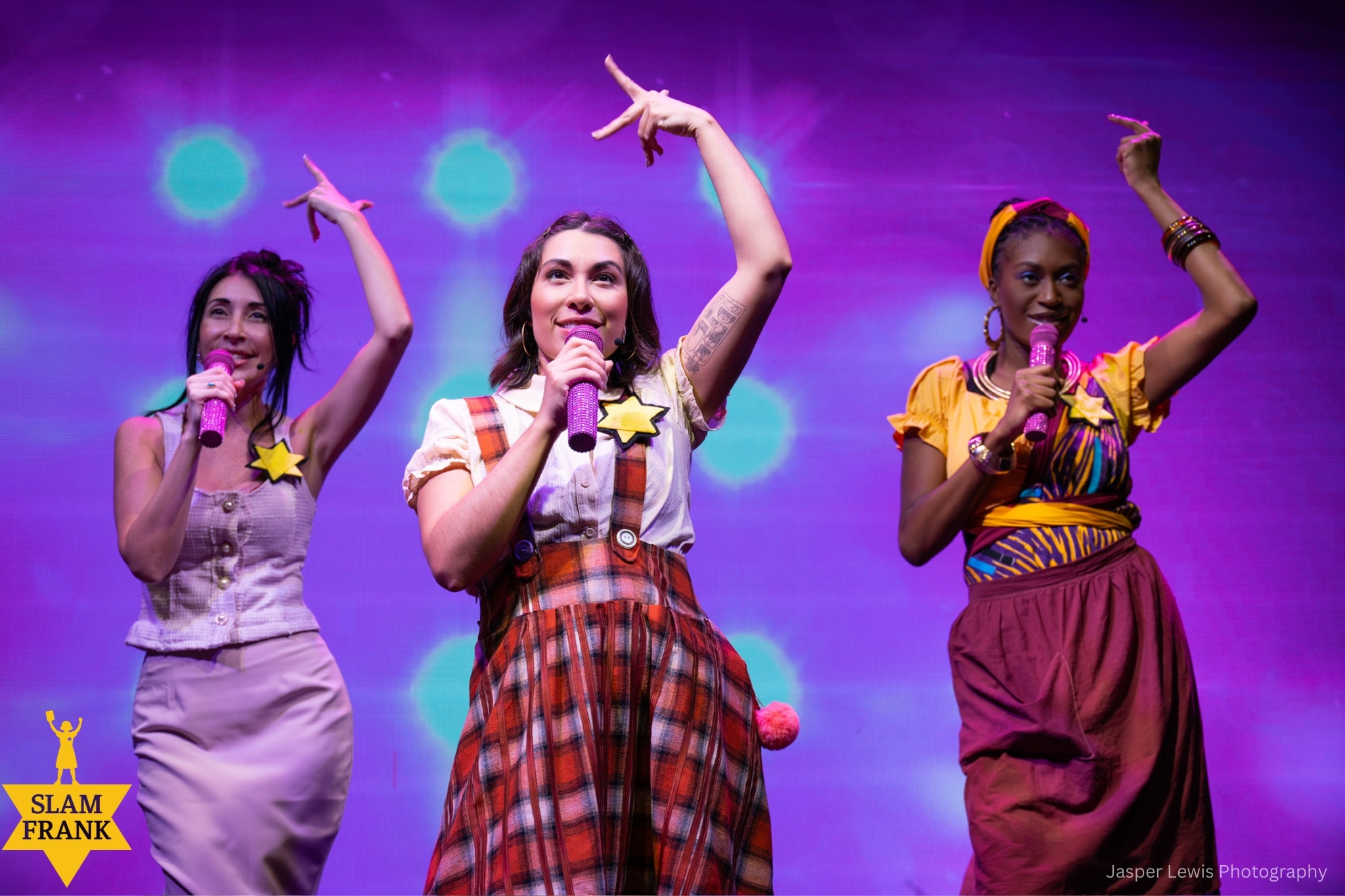
Last night, I saw Slam Frank. The show had already gone viral before it opened and I went in hopeful. It promised a sharp, unapologetically Jewish satire albeit it based on Anne Frank whose diary turned tragedy into testimony. For a moment, it seemed like it might deliver. It was cheeky and self-aware, poking fun at woke culture without apology.
Then came the bit about Palestine.
Suddenly, the laughter turned uneasy. Characters sang about some evil Zionist plan to displace Palestinians while dancing down the aisle wearing exaggerated Jewish noses that recalled Der Stürmer caricatures and dipped their hands in a bucket of blood-like substance. Then, to cap it off, Anne takes a page out of her diary and throws it from the window to the Germans so they will arrest them to stop the Zionist project. Funny, no? No.
It was not funny to me, nor to those who walked out. I sank lower in my seat, the air suddenly heavy, wondering who this was meant to entertain as a few people around me cheered in approval.
I left the theatre thinking not about Slam Frank itself but about a wider pattern I keep noticing in theatre, television, and among young Jews who have learned to equate irony with intelligence. Somewhere along the way, Jewish humour, once a weapon of survival, has become an instrument of self-diminishment.
Jewish artists either tread carefully or too carelessly.
The issue becomes charged when the target is Zionism or Israel. In today’s climate, where “Zionist” is treated as a slur in many progressive spaces, Jewish artists either tread carefully or too carelessly.
Slam Frank does not satirise the complexity of the Israeli-Palestinian conflict. It presents Zionism itself as a cynical project of displacement, a master plan to dispossess Palestinians. This was not a joke about the conflict. It was a political stance disguised as comedy. Because it came from Jewish creators, it carried a legitimacy that the same message from non-Jews would not have.
When Jews themselves use imagery borrowed from Nazi propaganda, even ironically, the damage is real. Once those depictions are on stage, irony cannot protect them. The audience is not seeing a critique of antisemitism; they are seeing that imagery validated. What begins as critique can become complicity. I am not arguing against dark humour. I grew up with it. As the daughter of a Holocaust survivor, gallows humour was part of my upbringing.
For example, a survivor dies and goes to heaven. He tells God a Holocaust joke. God does not laugh. The survivor shrugs. “Ah,” he says, “I guess you had to be there.” That joke works because it claims ownership. It says this pain is ours to process and ours to laugh about. It is humour born from trauma, asserting the right to make meaning from suffering. But there is a world of difference between that and what I saw in Slam Frank.
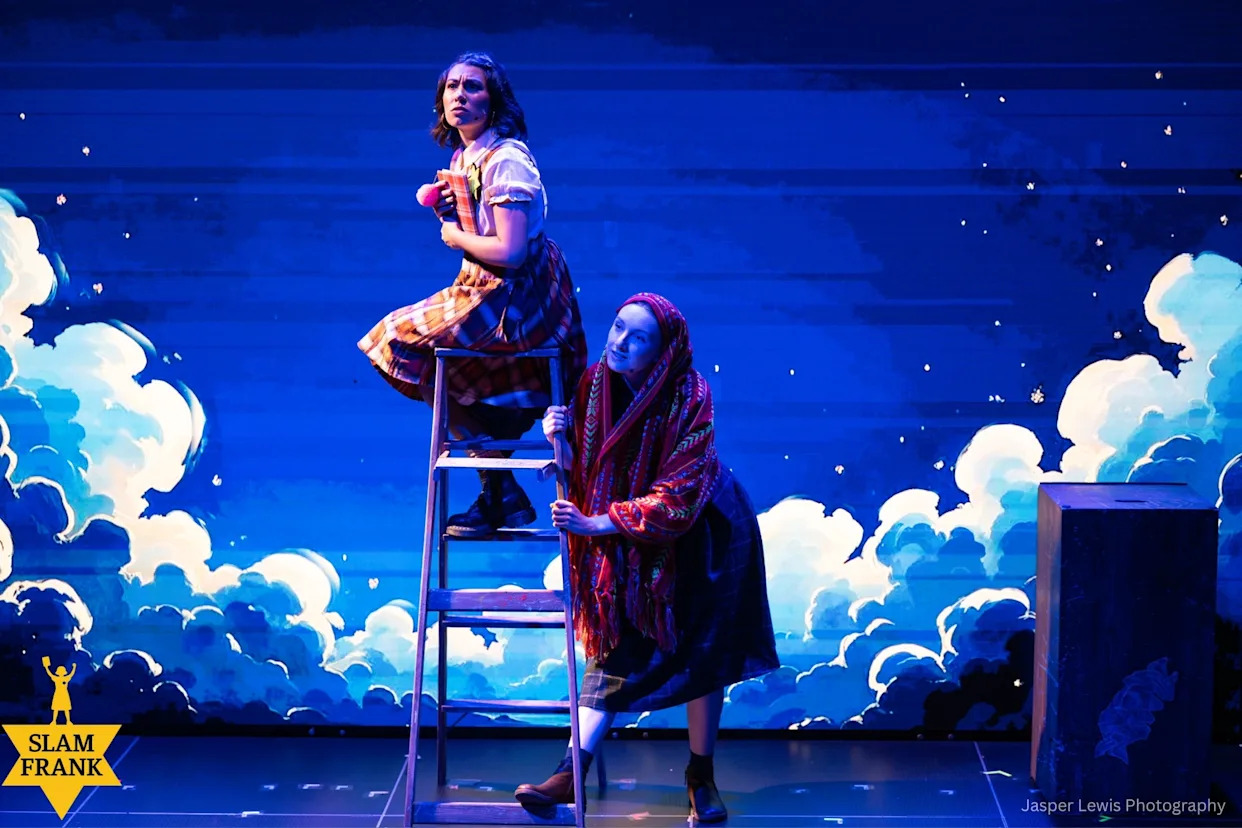
The show reimagines Anne Frank as a pansexual Latina who must hide her true identity. The parody does not explore collective memory- it uses her name for shock value, turning one of the most recognised victims of the Holocaust into a punchline. I could have lived with that if it had stopped there. Yes, it’s bad taste, but not unforgivable. But when the show depicted Zionism as an imperialist conspiracy, it did not satirise antisemitic myths about Jewish power. It reinforced them.
And that’s the difference. Gallows humour is resistance. Political satire that feeds antisemitic narratives while hiding behind “it’s just a joke” is surrender.Some will argue that nothing should be off-limits in comedy and that policing Jewish humour is a form of weakness. I am not calling for censorship. I am calling for intentionality. There is a difference between using humour to process trauma and using it to make other people’s prejudices easier to justify.
‘ A version of Jewish identity that is all apology and no pride’
As a board member of Stand With Us UK, I see this among Jewish students and young artists who have learned that distancing themselves from Israel is the price of acceptance in progressive spaces. They have internalised a version of Jewish identity that is all apology and no pride. Some of that comes from watching Jewish creators model that distance and call it sophistication.
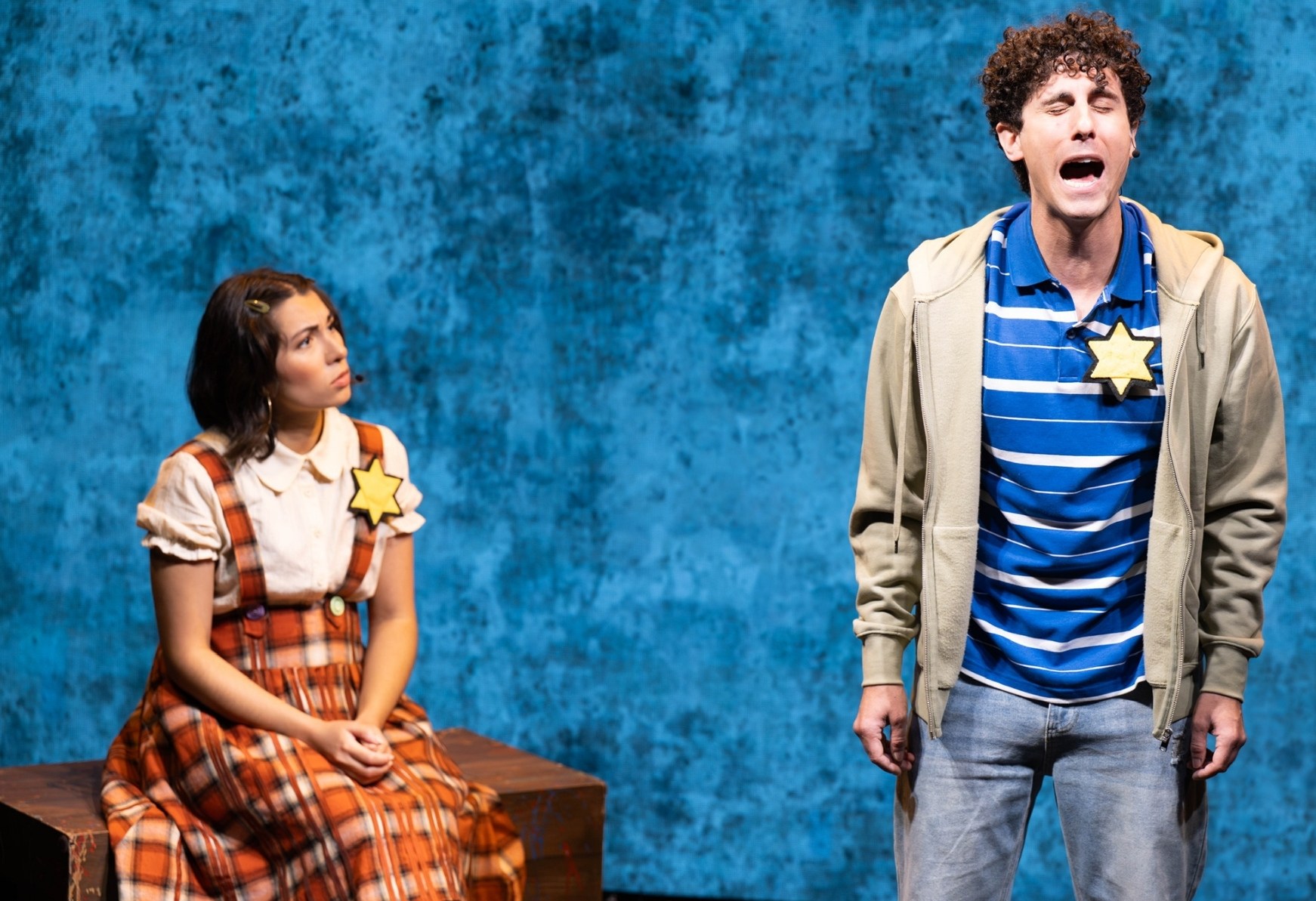
When young Jews encounter ‘Jewish satire’ that portrays Zionism as inherently evil, Israel as a colonial project, and Jewish anxiety about antisemitism as paranoia, they absorb those messages. Comedy becomes the spoonful of sugar that makes it easier to swallow. We risk raising a generation that sees Jewishness as something to be clever about rather than something to belong to. That is not liberation. It is erasure by a thousand cuts.
As a playwright exploring Jewish themes, I constantly ask: How do we use humour to process pain without trivialising it? How do we reclaim the joy that has always been part of Jewish life without turning it into a mask for shame? It is possible to be funny and fierce, ironic and unapologetic. The best Jewish art has always done both. It is what allows us to laugh with Tevye’s contradictions instead of at them. It is what makes Mel Brooks’s Producers a triumph of reclamation rather than bad taste.
Jewish artists, myself included, must know when the joke stops being ours. That does not mean censoring ourselves, but contextualising. It means asking: Would I still make this joke if no one else were watching?
If the answer is yes, if it is born of love, grief, and that ancient instinct to laugh through tears, then it is Jewish humour in its truest form. But if the joke only works because it reassures a non-Jewish audience that we can take a punch, it isn’t humour at all. It is appeasement.
We are not caricatures. We are a people whose history includes laughter at funerals, jokes in hiding, and shtick in exile. Our comedy has always been sacred because it insists on life.
So laugh, by all means. Laugh loudly. Laugh intelligently. Laugh Jewishly.
Just make sure you’re laughing because something is funny, not because you want to prove you can take a joke.
Estee Stimler is a London-based playwright, lyricist, and producer currently pursuing a PhD on comedy in musical theatre performance. She serves on the board of Stand With Us UK and uses her Instagram (@esteestimler) to explore Jewish identity, theatre, and cultural advocacy for Israel and the Jewish people.
The original version of this article included the words “Evil Zionist plan” in quotation marks, which would have suggested that those words were actually said in the show. Jewish News has clarified that these words are not specifically spoken in the musical and has therefore amended the relevant wording accordingly.

Keep community journalism free.
Jewish News is free for everyone. No paywall. No barriers. Just trusted journalism for anyone who wants to stay connected to Jewish life in Britain.
If you value that, please support us.
From as little as £5 a month, you can help keep our journalism free and accessible to all.
Every day, we report on the issues that matter to our community. We celebrate achievements, support charities, challenge antisemitism and ensure Jewish voices are heard more widely.
From as little as £5 a month, you can help us continue to:
- Report on the stories shaping Jewish life in the UK and beyond
- Bring our community together through shared stories, events and campaigns
- Celebrate the people, culture and moments that define our community
- Support organisations doing vital work across Jewish Britain
You can make a one-off donation or become a regular supporter. Every contribution helps keep our journalism free, independent and accessible to all.
If everyone who values Jewish News gave a small amount, it would make a real difference to our future.