Accountant-turned-founder takes on Britain’s growth gap
From a £500,000 funding shortfall to rising fixed costs, Bobby Lane explains how growing firms can stay flexible to scale in a tougher economy
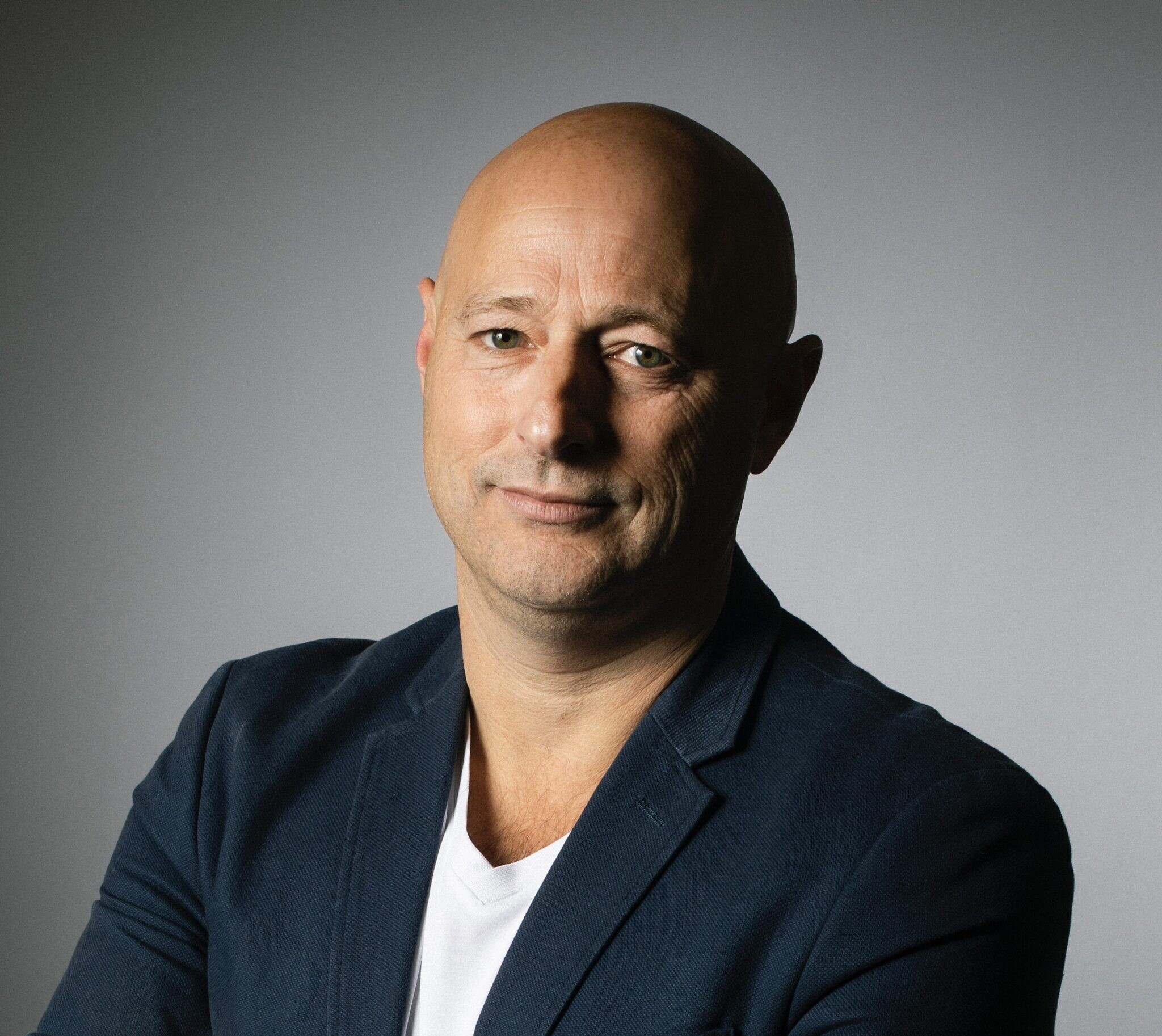
Chartered accountant Bobby Lane has spent three decades helping Britain’s entrepreneurs build companies while watching too many of them struggle to scale.
For small and medium-sized businesses are the backbone of the UK economy, accounting for 99.9 per cent of all companies, yet according to Lane, they remain one of the country’s most overlooked and under-supported groups.
“SMEs are often forgotten,” Lane, the founder of Factotum, tells Jewish News. “They are underfunded, under-supported and expected to scale without the systems, capital or advice they actually need.”
That belief – shaped over three decades in accountancy, outsourcing and advisory work – is what led Lane to create Factotum, a multi-disciplinary outsourcing business designed to make life simpler and more efficient for growing companies. Instead of building expensive in-house back-office teams, founders can access finance, HR, IT, marketing and recruitment in one place, scaling support up or down as their business evolves.
“No one goes in and sets up a company to be really good at the HR, IT or accounting,” he says. “They go into business to sell a product or service they’re passionate about, and then they get caught in the weeds.”

The demand, he says, has proved stronger than even he expected, as SMEs grapple with rising costs, tighter margins, supply-chain disruption and the growing complexity of running a business.
Today, Factotum serves more than 200 clients, employs close to 70 people in the UK and has recently expanded into the US.
But the ideas behind Factotum had been forming for decades.
Lane’s professional journey began in accountancy, after following advice from his father that he now passes on himself, including to his son, a qualified accountant. “The accounting professional qualification is still probably the best qualification you can get,” says Lane. “By the time you’re 24 or 25, you’re fully qualified. It sets you up for business; you understand balance sheets, numbers and cash flow. It gives you a very solid grounding in anything.”
After starting his career at BDO in the 1990s, Lane was headhunted into the Saatchi & Saatchi group, where he began questioning the logic of large in-house back-office teams. “I wanted to be flexible so that if we got really busy, I could scale up, and if we got quiet, I wasn’t stuck.”
By 2003, that thinking had evolved into a new model. “I thought; wouldn’t it be great if you could offer businesses an outsourced finance department?
“They could pay me a monthly fee and I’d be there in-house.” He became, as he puts it, “a fractional CFO before people knew what fractional CFOs were”, handling everything from paying bills to raising funding. He later went on to build the first multi award-winning SME outsourcing team at Shelley Stock Hutter, which was bought by Blick Rothenberg in 2017.
When Factotum launched in February 2020, Lane had no idea the world was about to shut down. Three weeks later, the UK went into lockdown. “It was really badly timed,” he laughs. “I spent a year wandering around the garden thinking, what have I done?”
Yet the enforced pause meant Lane “had no choice but to think carefully about what the business should really look like before the market truly met it.”
He built the first years at Factotum “with the handbrake on. We wanted to prove the model and be absolutely sure we could deliver.”
It also reinforced his view of entrepreneurship as an exercise in controlled risk. “Building a start-up is like jumping off a cliff and building a plane on the way down,” he says – a metaphor that feels particularly apt for a man who is also a qualified pilot, flying regularly from Elstree Aerodrome.
That said, Lane admits he built the first five years at Factotum “with the handbrake on. We wanted to prove the model and be absolutely sure we could deliver.”
Two early projects became turning points: Future Dreams House in King’s Cross, the flagship support centre for people affected by breast cancer and part of the Future Dreams charity, and Sassoon, which began as a payroll brief and expanded into wider finance support.
Last year, the handbrake came off and Factotum will soon have completed five acquisitions in six months.
Lane’s frustration with the way the UK treats SMEs has only deepened. Growing companies face an estimated £15 billion annual funding gap, with the biggest shortfall sitting between £100,000 and £500,000 – the stage where businesses most need capital to hire, invest and build systems. “This amount of lending is almost impossible to get,” says Lane.
“Unless you’ve got assets to put up as security, you just can’t access it. I’ve seen incredible businesses run by really smart people never achieve what they could have, because they were undercapitalised and lacked support.”
Factotum was recently named among the UBS High Growth 100, ranked the fastest growing professional services practice in London and second in the UK, while Lane himself was named UK Outsourcing CEO of the Year.
His proudest achievements, though, are his children. His son is a qualified accountant; his daughter is a professional singer who runs a dance school and sang at the opening ceremony of the Maccabiah Games. He and his wife are childhood sweethearts – they started dating after Israel tour aged 16.
Looking ahead, his ambition for Factotum remains simple: “We want business owners to focus on what they do best, and let us do the bits they’re not trained to do.”

Keep community journalism free.
Jewish News is free for everyone. No paywall. No barriers. Just trusted journalism for anyone who wants to stay connected to Jewish life in Britain.
If you value that, please support us.
From as little as £5 a month, you can help keep our journalism free and accessible to all.
Every day, we report on the issues that matter to our community. We celebrate achievements, support charities, challenge antisemitism and ensure Jewish voices are heard more widely.
From as little as £5 a month, you can help us continue to:
- Report on the stories shaping Jewish life in the UK and beyond
- Bring our community together through shared stories, events and campaigns
- Celebrate the people, culture and moments that define our community
- Support organisations doing vital work across Jewish Britain
You can make a one-off donation or become a regular supporter. Every contribution helps keep our journalism free, independent and accessible to all.
If everyone who values Jewish News gave a small amount, it would make a real difference to our future.