Prefer Jewish News on Google

After Corbyn and Mamdani: defending community in a fractured landscape
Two campaigns, two outcomes, one lesson
When British Jewry mobilised against Jeremy Corbyn, we witnessed something remarkable: the Board of Deputies and Jewish Leadership Council spoke with one voice, the Jewish Chronicle and Jewish News aligned, and the mainstream media amplified our concerns. Those that remained within the party campaigned strongly from within against Corbyn, Jewish and non-Jewish activists and politicians working together. It was a moment of powerful unity and victory.
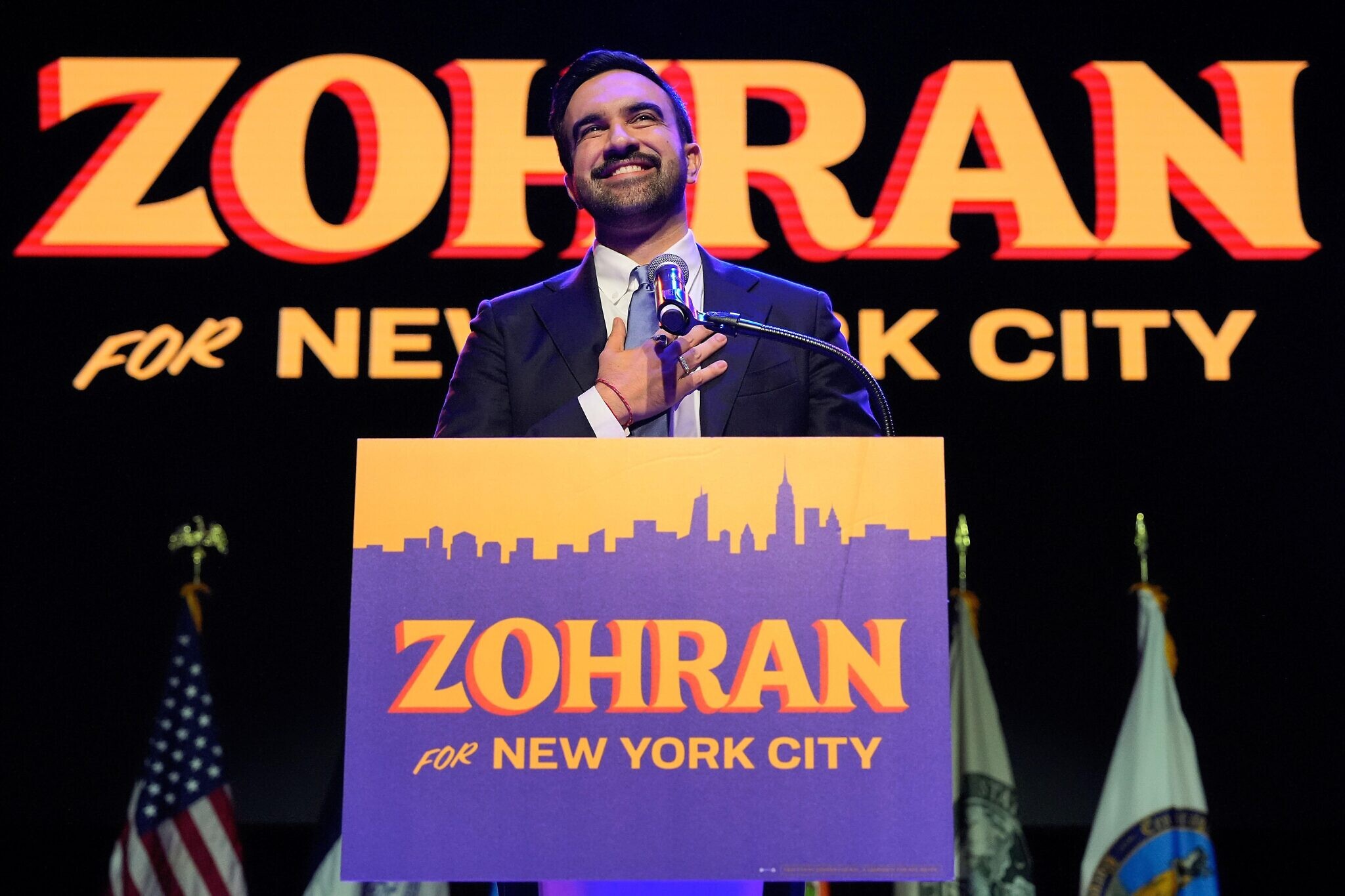
In New York’s recent mayoral election, institutional Jewish leadership, Reform, Conservative, and Orthodox, united to oppose Zohran Mamdani’s campaign. The Democratic Party failed to unite behind the community. Some prominent Jewish Democrats like Jerry Nadler endorsed Mamdani. Others like Chuck Schumer and Dan Goldman remained silent. The response was fractured.
Mamdani won with more than 50% of the overall vote and 31% of Jewish voters backing him.
What lessons should we learn?
A Darker Landscape
The Corbyn battle was fought before 7 October, before two years of Gaza war reshaped Western discourse. Today’s environment is more polarised, more volatile, and more dangerous. The political landscape has shifted beneath us.
The community now faces a Labour government taking increasingly negative policy decisions towards Israel.
The Mamdani result exposes an uncomfortable truth: communal unity among institutions does not guarantee communal unity at the ballot box. Nearly a third of New York Jews prioritised other concerns or rejected institutional guidance entirely. Understanding this is crucial.
The Strategy Question
Some will argue for partisan alignment, left or right, to secure protection. This is precisely the trap we must avoid. Any movement that demands we subordinate communal safety to broader ideological projects, or that seeks to split us along political lines, cannot be our partner. It also splits and weakens the community. The answer must be the same whether from left or right: our security is non-negotiable, and our right to express support for Israel is non-negotiable.
This is the inherent weakness of minority status, but we cannot allow others to set the terms. Weakness is not the same as victimhood, and we must reject the latter absolutely. British Jewry proved during Corbyn that we can organise, mobilise, and win. Our institutions have long memory and proven capability. The Board of Deputies’ democratic structure gives us legitimacy. We know how to work cross-party and cross-denominational.
But the Mamdani case demands we evolve. We must maintain unity while acknowledging generational and ideological diversity. We must distinguish between policy disagreements and existential threats. We cannot oppose every candidate on every issue or every negative comment and expect to be heard when it truly matters.
The Path Forward
The strategy must be threefold: support and defend our institutions’ legitimacy, even as we might not agree with every decision, ensuring they genuinely represent communal diversity, including an increasingly distanced younger generation; build relationships across political divides while refusing subordination to any ideology; and uncompromisingly defend our right to speak freely, including in support for Israel, without apology.
Those two years since 7 October have made the landscape more treacherous. Populist movements left and right offer false havens. Some within our community will be tempted by these siren songs. But our strength lies in cohesion, not partisan capture. We survived Corbyn not by choosing a side, but by making all sides hear us.
The challenge now is doing so in a world where consensus is harder, divisions deeper, and the price of miscalculation higher. The Jewish community has done harder things. It can do this too.
Daniel Goldman is the founder of The Institute for Jewish and Zionist Research, and former chair of Gesher and World Bnei Akiva. Daniel is the founding partner of Goldrock, a multi-family office, and lives in Israel with Debralee and their 5 children.

Keep community journalism free.
Jewish News is free for everyone. No paywall. No barriers. Just trusted journalism for anyone who wants to stay connected to Jewish life in Britain.
If you value that, please support us.
From as little as £5 a month, you can help keep our journalism free and accessible to all.
Every day, we report on the issues that matter to our community. We celebrate achievements, support charities, challenge antisemitism and ensure Jewish voices are heard more widely.
From as little as £5 a month, you can help us continue to:
- Report on the stories shaping Jewish life in the UK and beyond
- Bring our community together through shared stories, events and campaigns
- Celebrate the people, culture and moments that define our community
- Support organisations doing vital work across Jewish Britain
You can make a one-off donation or become a regular supporter. Every contribution helps keep our journalism free, independent and accessible to all.
If everyone who values Jewish News gave a small amount, it would make a real difference to our future.