
 Prefer Jewish News on Google
AI identifies Nazi in one of the Holocaust’s most haunting images
Jakobus Onnen, a teacher from the town of Tichelwarf, uncovered as SS gunman in 1941 photograph ‘The Last Jew in Vinnitsa’
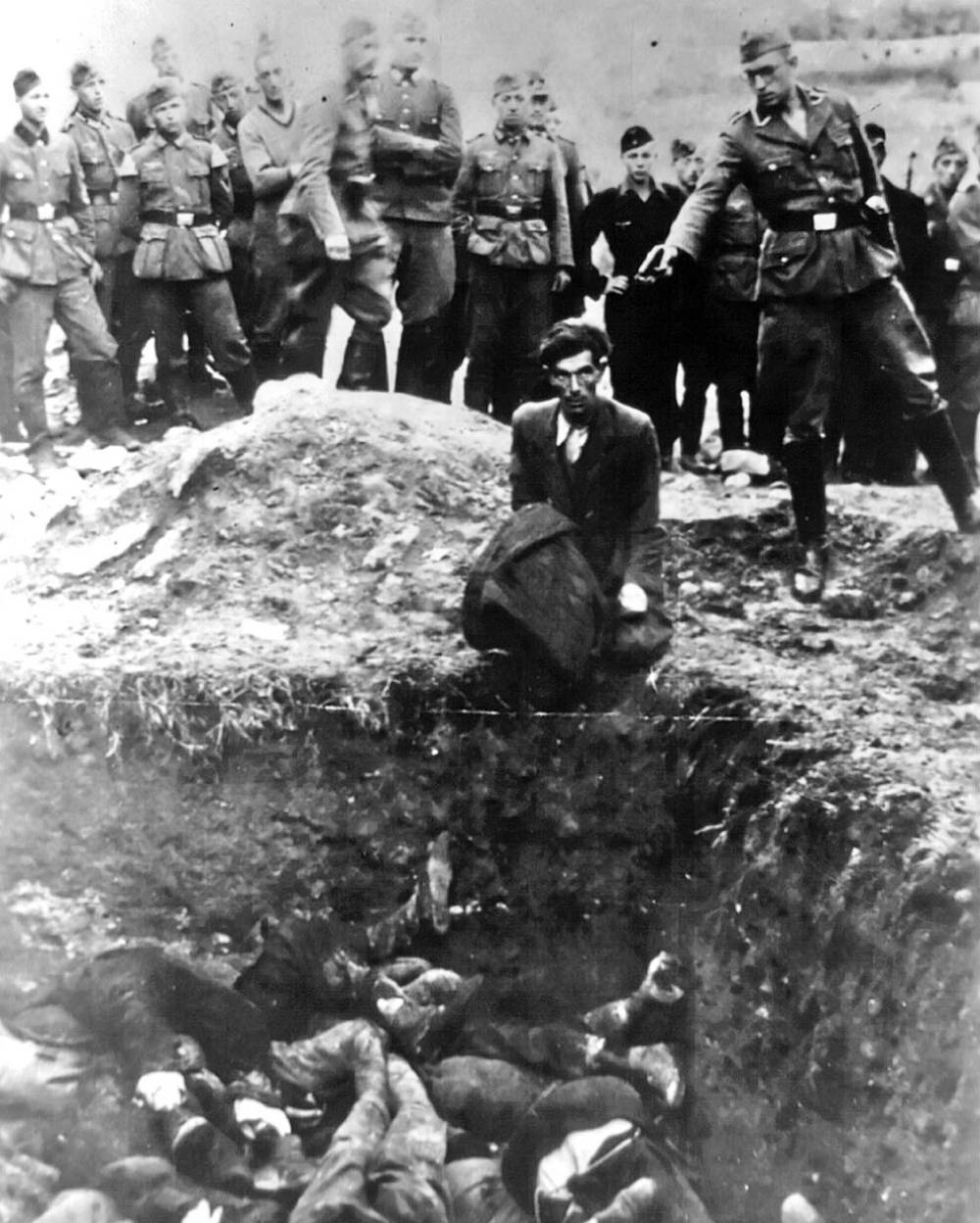
It is an image of the Holocaust forever sealed in our collective consciousness. A man kneels at the edge of a mass grave while an SS officer raises a pistol to his head. Behind them, soldiers look on with casual detachment. Now, 84 years after that shutter snapped, artificial intelligence has identified the Nazi gunman in one of the most harrowing photographs of the Holocaust.
‘The Last Jew in Vinnitsa’ is a stark black-and-white record of an execution carried out by the Einsatzgruppen, the mobile killing squads of the SS.
Long believed to have been taken in Vinnitsa, the picture was almost certainly shot on 28 July 1941 in Berdichev, around 50 miles north. The victim has never been named.
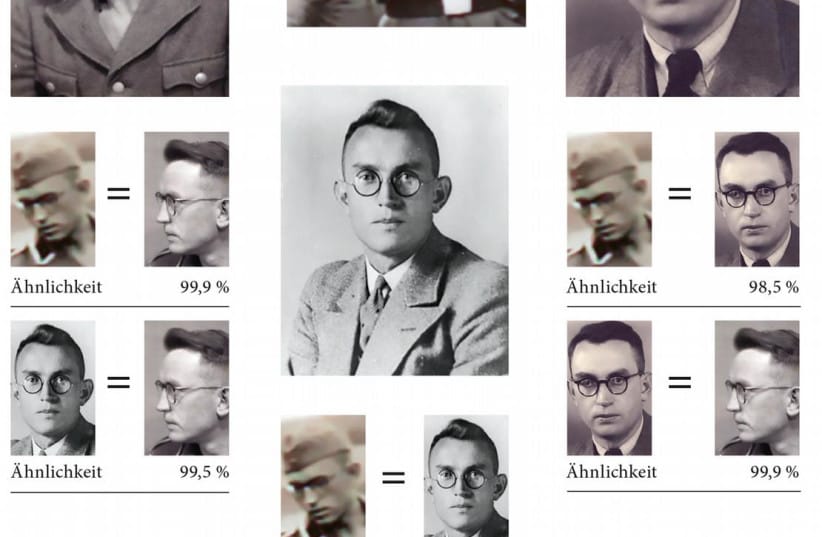
A study in the German-language Journal of Historical Studies cites US-based researcher Dr Jürgen Matthäus, who has concluded that the officer holding the pistol is 34-year-old Jakobus Onnen, a teacher from the German town of Tichelwarf. The breakthrough began when a retired teacher contacted Matthäus, convinced that the man in the photograph was his wife’s uncle.
“This horrifying image has played a role in our family for decades,” he told him.
Relatives supplied photographs of Onnen, which were analysed with AI tools and returned a 99.9 percent match with the man in the execution scene.
“This is a major step towards grasping the historical reality of the Holocaust,” Matthäus told the journal. “These are the moments when historians realise they have pushed the boundary of what can be known.”
Matthäus has studied the image for years. It first surfaced publicly in 1961 during the trial of Adolf Eichmann, after Holocaust survivor Al Moss gave it to journalists because, he said, the world needed to see “what went on in Eichmann’s time.”
Onnen came from a respectable middle-class home. His father’s death in 1924 proved a decisive turning point and by 1931 he had joined the Nazi Party; he entered the SS the following year. He died in 1943, probably killed by Soviet partisans, and never faced justice.
Nothing is known of the Jewish victim in the photograph, or of the person who took it. Matthäus says resolving those mysteries is now his next priority.
Speaking to The Guardian, he argued for the picture’s place in public memory. “This image should be as significant as the gate at Auschwitz,” he said. “It shows the hands-on reality, the direct confrontation between killer and the person about to be killed.”

Keep community journalism free.
Jewish News is free for everyone. No paywall. No barriers. Just trusted journalism for anyone who wants to stay connected to Jewish life in Britain.
If you value that, please support us.
From as little as £5 a month, you can help keep our journalism free and accessible to all.
Every day, we report on the issues that matter to our community. We celebrate achievements, support charities, challenge antisemitism and ensure Jewish voices are heard more widely.
From as little as £5 a month, you can help us continue to:
- Report on the stories shaping Jewish life in the UK and beyond
- Bring our community together through shared stories, events and campaigns
- Celebrate the people, culture and moments that define our community
- Support organisations doing vital work across Jewish Britain
You can make a one-off donation or become a regular supporter. Every contribution helps keep our journalism free, independent and accessible to all.
If everyone who values Jewish News gave a small amount, it would make a real difference to our future.





















