Prefer Jewish News on Google
AI will replace jobs – but breadth and creativity will thrive, says industry expert
Judah Taub, the founder of Israeli-based Hetz Ventures, told a business breakfast that adaptability, not over-specialisation, will define the next generation of success
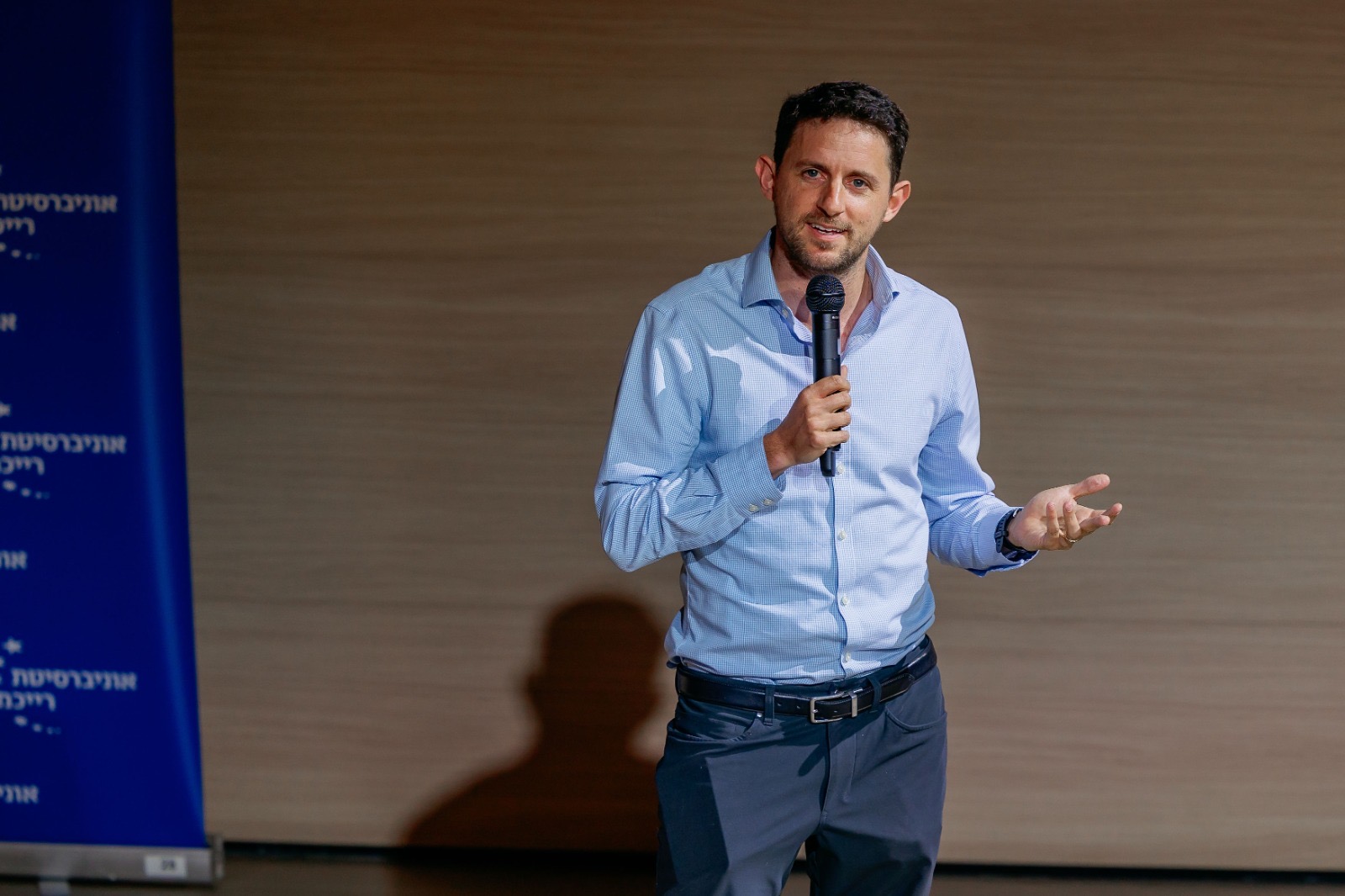
In an era when artificial intelligence is transforming the workplace, young professionals should not over-specialise too early, as breadth of knowledge and adaptability will become increasingly valuable.
That was the message from leading venture capitalist and AI expert Judah Taub, who spoke at an exclusive business breakfast in London this week.
Taub, the founder and managing partner of Israeli-based deep-tech fund Hetz Ventures, addressed entrepreneurs, investors and community business leaders at the event, which was organised by Stern Power Strategies in association with Jewish News and Chabad Hampstead Garden Suburb and focused on decision-making in the age of AI.
Hetz is one of Israel’s leading early-stage venture capital firms specialising in AI, cybersecurity and data infrastructure and was an early backer of Fundamental, which made headlines last week with a $255 million Series A.
“I increasingly believe that people who have a broader background and a more varied background are going to become more valuable,” said Taub. “Some of the most successful startups are often founded by entrepreneurs who come from outside the industries they go on to disrupt.”
He cited one company he has backed that is performing strongly despite its founders coming from unexpected disciplines. “It’s a healthtech company and one of the founders is a computer scientist and the other one’s a mathematician,” he said, describing a wider trend of entrepreneurs applying skills from outside an industry to drive innovation within it.
The breakfast was opened by Eze Vidra, managing partner of Remagine Ventures, who spoke about the strength and resilience of Israel’s tech ecosystem since October 7. Vidra noted that Israel’s private tech funding reached $14.2 billion in 2025, up 36% year-on-year. He pointed to continued global confidence in the country’s innovation, citing Nvidia’s expanding presence in Israel and CEO Jensen Huang describing the country as “the company’s second home”.
Taub went on to address the rapidly changing jobs market, acknowledging that AI is already automating many routine and junior engineering roles. “The junior engineering jobs basically have been automated,” he said, adding that the engineering profession is now “bifurcating”.
Taub predicted growing demand in two main areas. “I think there will be immense value in low-level coders… those touching the metal and working close to hardware optimisation. The second is “the creative people who are more like product designers and will be able to bring imagination and product thinking to new tools.”
The discussion also highlighted the pace of growth in AI infrastructure. Taub referenced a portfolio company that has rapidly scaled into a unicorn, raising a major funding round to develop a “large tabular model” designed to work more accurately with structured business data such as spreadsheets.
The event marked a London spotlight for Taub’s recently published book, How to Move Up When the Only Way Is Down: Lessons from Artificial Intelligence for Overcoming Your Local Maximum, in which he draws on his experience guiding early-stage AI startups, serving in military intelligence, and leading innovation throughout his career.
Taub said his book draws on a concept from artificial intelligence known as the “local maximum” – the point at which a system settles for a solution that is good enough, rather than pushing towards something better. He argues that the same trap can apply to people and organisations.
Taking questions from the audience, Taub warned that while AI is likely to generate enormous wealth globally, the “the bad thing is that this is highly likely to be split extremely unevenly,” he said, both across countries and within societies.
He also reflected on the importance of communal values, noting that philanthropy and giving back are deeply embedded in Jewish life in Britain. “You grow up with values of giving a lot more than you typically do in certain parts of society,” he said, suggesting that education and shared responsibility will be critical as technological change accelerates.
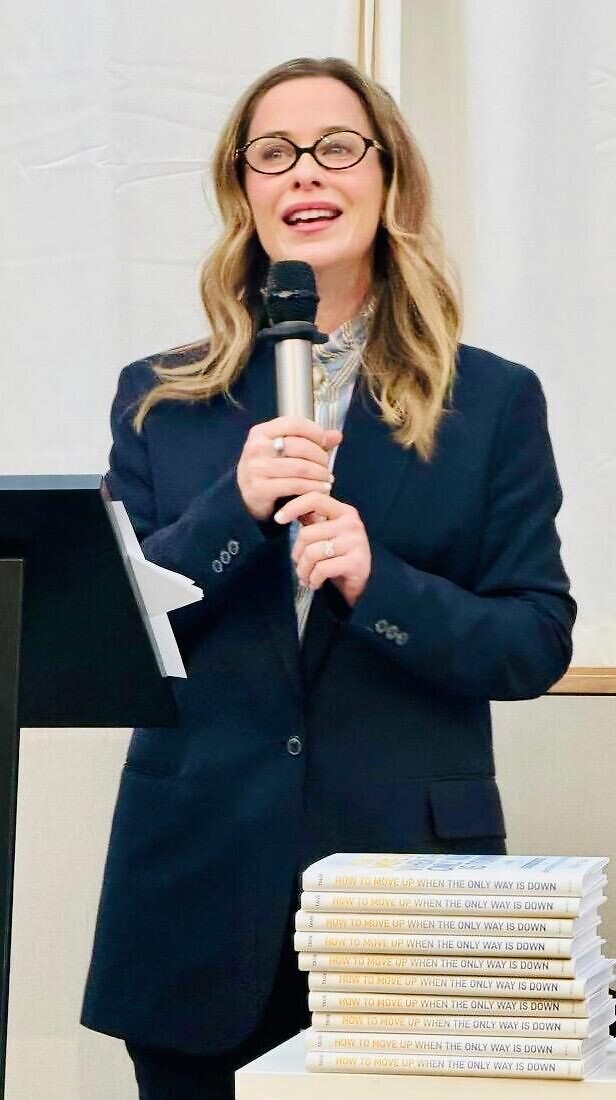
Leah Stern, founder of Stern Power Strategies said the event highlighted the importance of hearing directly from innovators shaping the next phase of technological and economic change.
“Judah represents a new generation of Israeli venture capitalists who are not just allocating capital, but shaping the future,” she said. “The companies they are backing today in AI and deep technology will influence everything from how businesses make decisions to how countries compete. It’s essential that we hear directly from the people investing at the cutting edge of that transformation.”

Keep community journalism free.
Jewish News is free for everyone. No paywall. No barriers. Just trusted journalism for anyone who wants to stay connected to Jewish life in Britain.
If you value that, please support us.
From as little as £5 a month, you can help keep our journalism free and accessible to all.
Every day, we report on the issues that matter to our community. We celebrate achievements, support charities, challenge antisemitism and ensure Jewish voices are heard more widely.
From as little as £5 a month, you can help us continue to:
- Report on the stories shaping Jewish life in the UK and beyond
- Bring our community together through shared stories, events and campaigns
- Celebrate the people, culture and moments that define our community
- Support organisations doing vital work across Jewish Britain
You can make a one-off donation or become a regular supporter. Every contribution helps keep our journalism free, independent and accessible to all.
If everyone who values Jewish News gave a small amount, it would make a real difference to our future.