Prefer Jewish News on Google
Angela Merkel visits Auschwitz-Birkenau for first time while in office
The German chancellor met a camp survivor and Polish Prime Minister Mateusz Morawiecki ahead of the 75th anniversary of the liberation of Auschwitz-Birkenau
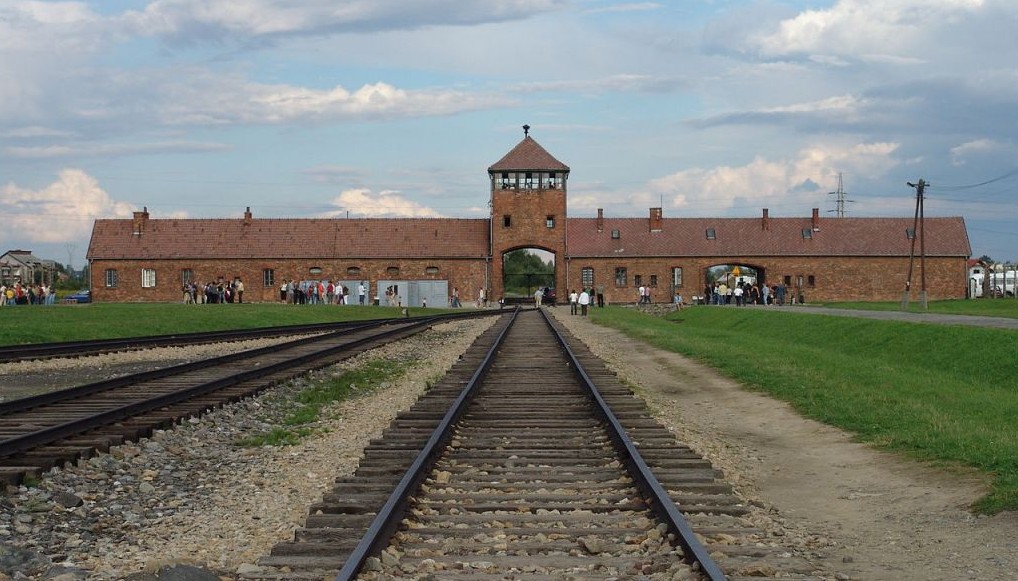
German Chancellor Angela Merkel has visited the site of Auschwitz-Birkenau concentration camp for the first time and pledged £51 million to help preserve it.
Merkel, 65, who will soon step down after 14 years in the job, met a camp survivor and Polish Prime Minister Mateusz Morawiecki, six weeks before the 75-year anniversary of the camp’s liberation by Soviet troops on 27 January.
She said the money would go to the foundation that runs the site, to help preserve the physical remnants such as the barracks, the guard towers and personal items.
The Chancellor has already visited Dachau and Buchenwald, camps located in present-day Germany, as well as Israel’s Yad Vashem, which she has visited five times. Auschwitz is in present-day Poland, which was occupied by Nazi forces in the period when 1.1 million people were killed there.
Merkel’s visit on Friday was the first by a German Chancellor in 24 years and follows a deadly attack on a synagogue in the central city of Halle on Yom Kippur. A 27-year old neo-Nazi has admitted to killing two people.
The International Auschwitz Committee called Merkel’s visit “especially important” as a sign of solidarity with Holocaust survivors, while Poland’s foreign ministry said her visit was “historic”.
An evangelical Christian, Merkel has been praised by Jewish groups for her support for the Jewish people. She was awarded the Leo Baeck Medal in 2010 and the Elie Wiesel Award from the US Holocaust Memorial Museum in 2017.
Famously, former German Chancellor Helmut Kohl was deeply affected by his visit to Auschwitz in 1989, which prompted him to give one of recent history’s most stirring speeches in Berlin upon his return. He went back to the camp in 1995, after a month in Jerusalem.
Before she set off, Merkel said her Government was “prioritising the fight against antisemitism and all forms of hate,” adding that people could expect her “determination” to help Jewish life in Germany flourish.

Keep community journalism free.
Jewish News is free for everyone. No paywall. No barriers. Just trusted journalism for anyone who wants to stay connected to Jewish life in Britain.
If you value that, please support us.
From as little as £5 a month, you can help keep our journalism free and accessible to all.
Every day, we report on the issues that matter to our community. We celebrate achievements, support charities, challenge antisemitism and ensure Jewish voices are heard more widely.
From as little as £5 a month, you can help us continue to:
- Report on the stories shaping Jewish life in the UK and beyond
- Bring our community together through shared stories, events and campaigns
- Celebrate the people, culture and moments that define our community
- Support organisations doing vital work across Jewish Britain
You can make a one-off donation or become a regular supporter. Every contribution helps keep our journalism free, independent and accessible to all.
If everyone who values Jewish News gave a small amount, it would make a real difference to our future.