Prefer Jewish News on Google
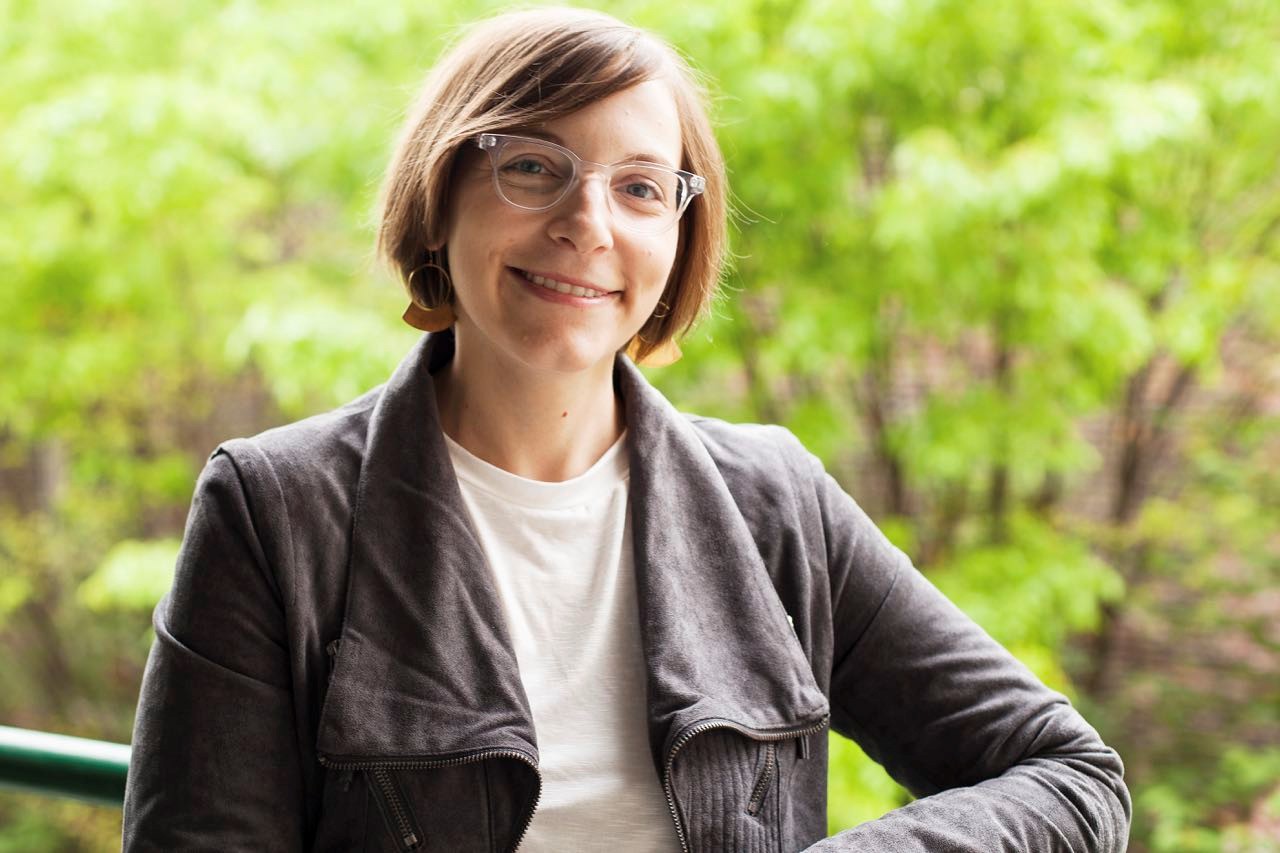
Anna Ziegler says growing up in Brooklyn inspired her to write The Wanderers
Award-winning US play opens at Marylebone Theatre later this month
For the second time this year, arranged Jewish marriage looms large in a London play – though unlike Tzeitl in Fiddler on the Roof, the principals of The Wanderers don’t defy the shidduch-makers. Not just one couple but two submit to nuptials ordained by their elders, their lives ingeniously stitched together by award-winning playwright Anna Ziegler.
Growing up in Brooklyn inspired the story of the Chasidic pair, who must deal with the challenge feminism poses to traditional values in changing times. “I’ve been fascinated for years by these Jewish communities living close to me but pursuing very different lives,” says the New Yorker, whose intriguing drama investigating what we expect of a life partner opens at the Marylebone Theatre later this month.
And indeed Esther, the bride of conservative Schmuli, inspired by a radical friend to seize control of her life, seems typical of the Big Apple’s new wave of ultra-Orthodox Jews whose women have dared to disrupt the old order.
Not that Ziegler, whose family are Reform, is drawing on personal experience, having grown up with parents who are “fairly secular, High Holiday Jews, although I did have a bat mitzvah.” But her mother clearly feels a deep spiritual connection to the faith: “She was not raised religious but always felt very attached to Judaism and had a bat mitzvah as an adult. It was her attachment to Judaism which kept our family attached and wanting to be part of our community.
“That transferred to me, and I now have two kids who are going to Hebrew school,” says the playwright who intermarried herself, perhaps inspiring the contemporary bride in The Wanderers, who is Jewish but bi-racial. “When her husband, the central character, has his dalliance with a shiksa, the contrast with his wife is even more extreme.”
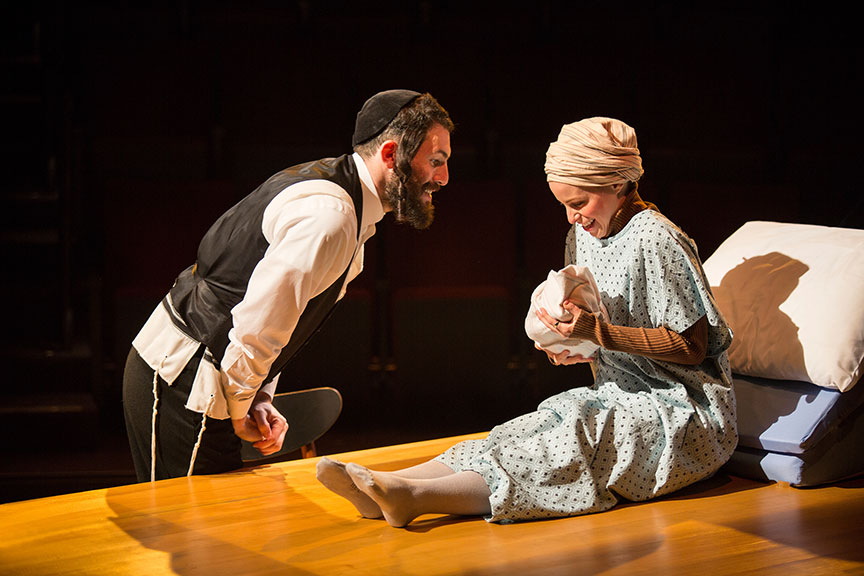
But although discontent with the realities of the hand one has allowed oneself to be dealt is a central theme of The Wanderers, it was not why Ziegler decided to explore arranged marriage. “It started when I became fascinated by how different the traditions and rhythms of Chasidic life are to those of others in modern times. But my interest in the play was to show that all our lives are governed by many of the same challenges, heartaches and frustrations. The title is more about the notion of the wandering Jew – a kind of restlessness which means never being quite content, an inability to be happy with what you have.”
This is even more true of Abe, the central character living in the present, than Esther and Schmuli, who reflect on the losses brought by their divergent paths, while Abe and his own wife Sophie, brought up from childhood to consider each other their bashert, question whether that is even a valid concept.
Although her highest-profile plays have had Jewish subjects, Ziegler says she has not experienced any overt antisemitism in the US as a Jewish creative in the past two years. That is not to say she denies it exists. “There may be less Jewish writing being programmed, though it’s hard to know. It does feel like you have to be very careful what you say and who to you talk to – it’s a very delicate time to be Jewish in the arts. Not a moment when we can speak freely, which is a shame.”
The Wanderers, produced in New York before October 7 and staged across the US, does not seem to have been affected by a changing political climate in America and nor does Ziegler expect it to be in London: “This play is not political or about the Middle East; I hope it will be seen as a play about people struggling with their family and heritage and identity.”
She admits, though, that Actually, another of her award-winning plays, hit home a little harder as a campus drama about a Jewish student who brings a claim for sexual misconduct. “My husband is a lawyer at NYU who oversaw a lot of those sexual misconduct cases, and in the past two years has been overseeing all the cases around antisemitism. So we have been deeply enmeshed at home in those conversations about what is happening around the Middle East and Jewish issues on campus. “It’s fascinating and difficult; my personal opinion is that the antisemitism exists, though it’s been a much bigger issue at Columbia than at NYU, as a result of which all the colleges have had to be on alert.”
Following mostly positive reviews for The Wanderers, which won the San Diego Critics’ Circle award for Best New Play, producers have spent a couple of years seeking for a home for the show in London, where Ziegler’s Photograph 51, starring Nicole Kidman, picked up its own prize in 2015. So the poet and playwright, who has had a few plays on in the capital, knows British audiences are pickier than their American counterparts (who are infamous for a tendency towards endless standing ovations).
“There’s a different sense of humour in the UK, and audiences get ahead of the play a little faster; there’s a different quality of listening. And there’s a bit more interest and tolerance in the UK for more experimental theatre and for playing with style and form.”
While she found time to come to London for rehearsals and is planning to be back for the opening following a return to New York to celebrate the chagim with her family, Ziegler is much in demand at home. She has a new play, an adaptation of Antigone, opening off-Broadway this winter, and a movie adaptation of Photograph 51 shooting in 2026. She has also written her first TV pilot – about the ripple effect through a group of mothers when one of their circle disappears. Another wandering Jew on the run? “Go, Team is also about restlessness in a way, but I don’t think any of these women are Jewish – at least not so far.”
The Wanderers is at Marylebone Theatre from 17 October to 29 November marylebonetheatre.com

Keep community journalism free.
Jewish News is free for everyone. No paywall. No barriers. Just trusted journalism for anyone who wants to stay connected to Jewish life in Britain.
If you value that, please support us.
From as little as £5 a month, you can help keep our journalism free and accessible to all.
Every day, we report on the issues that matter to our community. We celebrate achievements, support charities, challenge antisemitism and ensure Jewish voices are heard more widely.
From as little as £5 a month, you can help us continue to:
- Report on the stories shaping Jewish life in the UK and beyond
- Bring our community together through shared stories, events and campaigns
- Celebrate the people, culture and moments that define our community
- Support organisations doing vital work across Jewish Britain
You can make a one-off donation or become a regular supporter. Every contribution helps keep our journalism free, independent and accessible to all.
If everyone who values Jewish News gave a small amount, it would make a real difference to our future.