
 Prefer Jewish News on Google

Are we being misled about settler violence?
A diaspora call to curb “extremism” ignores context, competing narratives and decades of violence shaping life in the West Bank
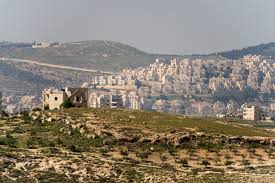
Jewish leaders in the diaspora have called on Israel’s president to take “urgent action” over “Jewish extremist terror” in the West Bank and many people who are passionately pro-Israel support the leaders’ stand.
Not me.
I’m neither a hard-liner nor a supporter of the present government. I’m simply an old-fashioned Zionist who believes in the inalienable right of the Jews to dwell peacefully in their tiny slice of the Levant, but I utterly reject that call because I believe that “settlers” have become to the Jewish community what “Zionists” are to critics of Israel in the wider community. And it is a perception created in much the same way.
Indeed, even calling them “settlers” is, in my view, to adopt a highly contested and politically loaded framing that gained prominence in the 1970s and has been widely used ever since. Over the decades, this framing has been amplified through reporting on the “West Bank”, with “settlers’” actions often portrayed as “unprovoked violence.”
Undeniably there has been violence by Jews directed at Palestinians and undeniably the violence by “settlers” has resulted in harm to some innocent Palestinians, which is deeply regrettable. But that does not mean Palestinians are always “innocent” in every incident. To frame it that way, with West Bank Palestinians portrayed purely as “victims,” risks ignoring context and complexity.



I am not, by the way, condoning violence. But calling it “Jewish extremist terror” may also adopt another premise – that the violence was “unprovoked” – when that is not always fully established. Jewish leaders – and most Jews – may not be aware of alternative accounts because of the perception created by headlines, such as those seen on BBC or The Guardian, which often emphasise Palestinian claims about expanding settler violence.
The Palestinian narrative is that these “extremist” Jews go on a violent rampage because, well, they are violent and “extremist”. This narrative is, at times, reinforced within Israeli society, which often regards West Bank Jews as politically or socially problematic.
There is a competing “settler” narrative that they are responding to violent acts of often small-scale terrorism directed at them. But which narrative is heard? Which one is echoed by parts of the Israeli Left; amplified in international coverage; and reinforced by documentaries that some critics argue present a one-sided view of events?
As an example, it was reported that last week “extremists” went on a rampage after a “traffic accident”. However, others have claimed – with what they say is supporting evidence – that Palestinians deliberately rammed a car, resulting in the death of a young man. It is a similar scenario to one included in a documentary by Louis Theroux, in which “settlers” were shown setting a car alight, allegedly for no other reason than that they were Jewish “extremists.” Other footage circulated suggesting the “settlers” were responding to a prior attack that was not included.

There is also a long record of Palestinian violence in the West Bank, including stabbings, shootings, ramming attacks and Molotov cocktails. After the Oslo Accords, when parts of the West Bank were placed under Palestinian administration, such attacks continued in various forms, including roadside shootings, car bombs, ambushes and drive-by shootings.
The most horrific attacks have, of course, made headlines. These include the slaying of five members of the Fogel family in Itamar in March 2011, the 2017 murder of the Solomon family in Halamish, and the June 2014 kidnapping and murder of three Israeli teenagers in Gush Etzion. In April 2023, rebbetzin Lucy Dee and her two daughters were shot while driving on a highway, resulting in the deaths of Mrs Dee and two of her children.
But many attacks, though deadly or causing grievous, life-changing injuries, are smaller in scale and receive less international coverage. The retaliation is not, of course, ignored, along with coverage given to every “extremist” soundbite promising revenge, and to Palestinian accounts expressing victimhood.
With the harm to Palestinians highlighted and reported – and labelled as “Jewish extremist terror” – while preceding incidents may receive less attention, it is perhaps unsurprising that some of the most passionate Zionists believe that “settlers” are “bad”, “evil”, and “extremists”.
I find this perplexing, however, because most Jews are able to see with clarity how repetition, omission of context and selective reporting can shape narratives about Israel. Yet when similar dynamics may apply to discourse about “settlers”, we often fail to question it.
Combine that with decades of the Israeli Left’s criticism of “settlers”, and it is hardly surprising that Jews are joining in the condemnation and that “Jewish leaders” are calling on the president to curb what they term “Jewish extremist terror”.
The “settler violence” may make many of us feel uncomfortable and embarrassed. It should. Violence against innocent people is indefensible.
But what if we’ve been misled, as many believe the wider world has been misled about Israel – and by similar means? Maybe “settlers” are to Israel and the Jewish diaspora what “Israel” and “Zionists” are to its critics – shaped by narrative, repetition and framing.
Maybe the “extremists” are not always “extremists” at all, but, in some cases, Jews who see themselves as defending their right to exist.
- Jan Shure is a writer, editor and blogger

Keep community journalism free.
Jewish News is free for everyone. No paywall. No barriers. Just trusted journalism for anyone who wants to stay connected to Jewish life in Britain.
If you value that, please support us.
From as little as £5 a month, you can help keep our journalism free and accessible to all.
Every day, we report on the issues that matter to our community. We celebrate achievements, support charities, challenge antisemitism and ensure Jewish voices are heard more widely.
From as little as £5 a month, you can help us continue to:
- Report on the stories shaping Jewish life in the UK and beyond
- Bring our community together through shared stories, events and campaigns
- Celebrate the people, culture and moments that define our community
- Support organisations doing vital work across Jewish Britain
You can make a one-off donation or become a regular supporter. Every contribution helps keep our journalism free, independent and accessible to all.
If everyone who values Jewish News gave a small amount, it would make a real difference to our future.





















