Prefer Jewish News on Google
As the Ayatollah’s regime totters, free Iranians discuss what must come next
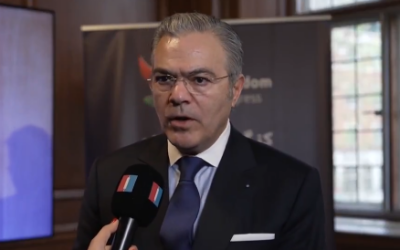
Jewish News speaks to Mehrdad Youssefiani, one of the key individuals behind a recent Congress of free Iranians in London
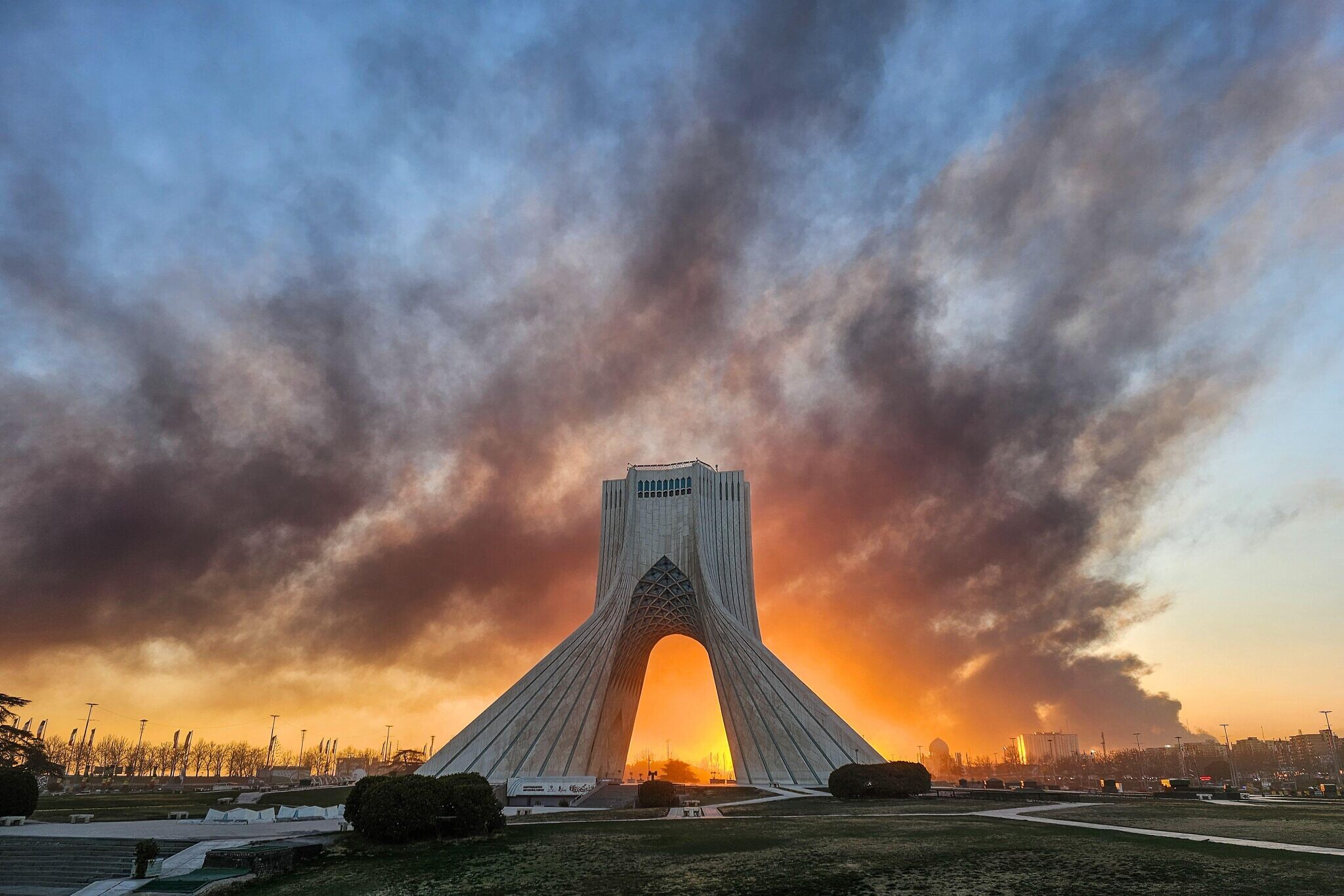
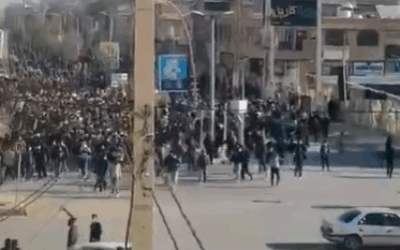
On 28 March, exactly a month after the elimination of Ayatollah Khamenei, free Iranians gathered at a landmark Congress in London to discuss what has for so long been almost unthinkable; what should the country’s future look like if the current brutal theocratic regime is finally toppled?
The latest meeting, bringing together a range of international Iranian diaspora voices, was made possible by a number of key individuals working together, including Mehrdad (Marty) Youssefiani, Middle East Forum’s Director of the Iran Freedom Initiative.
Speaking to Youssefiani, he describes how there is a “conundrum…it is almost unnerving to see that there might be a situation where after half a century of brute force, there might be a situation where the regime collapses and immediately thereafter – what?”
It’s a question, he says, which is being pondered in world capitals, including Washington, London and Jerusalem. On the one hand, to confidently assert that Iran would suffer a similar fate to other Middle Eastern countries where the ousting of a dictator led to fragmentation or civil war is to fundamentally ignore key differences (to give one example, in other countries the dictatorships were broadly secular, in Iran, the opposite is true). On the other, “it’s a country of 92 million, a massive geographic footprint needed to feed those people, and whatever, whoever, however the next government takes over, it’s going to inherit a deeply affected economy, a collapsed banking system, no army, navy or air force – from what I understand, there are like five squadrons of helicopters left in the entire country – so one questions, what is, who is [to be]?”
Naturally, he calls the current situation “a deeply emotional moment”. On the one hand, the actions of 28 February marked “the end of 37 years of the rule of the iron fist by this Ayatollah. But yet, every day that the war extends, it’s natural to wonder and worry. For those of us here in the security of the West, it’s almost discomforting to sit back and sort of telegraph a ‘bravo’, because bombs are still falling, and the innocent people of Iran are still wondering what comes next.”


In terms of the efforts to decide what should come next, he is very frank.
“It’s no secret – the politics of exile have always been messy and chaotic. There are anxieties, a lot of mistrust, experiences that lead to finger pointing – and most importantly, the regime itself has mastered the art of splitting the diaspora – divide and conquer. So combine all that, and it has been very, very challenging.
“But the difference is, I think, especially after the slaughter of 40,000 men and women [in January], right before the threat of war, we assembled right here in London to see what might be done. There was a sort of collective shame, 47 years of lack of talking bore in us a sense of collective responsibility – because had we gotten together [sooner], we might have been able to offer a political solution and avoid that sort of bloodshed.”

That first session in February led to the Iran Freedom Congress in March, which Youssefiani describes as “the first time in 47 years that [so many] opposition figures have come together, with the driving force being pluralism, mirroring the non-monolithic profile of Iran. Iran is the original melting pot, resulting from 3,000 years of civilisation and empire.
“This is a chance to bring together those who desire a republic, with constitutional monarchists and all ethnicities, including Kurds, Turks, Baluch, Azeris and Arabs, and major leaders of Iranian civil society.”
Youssefiani himself served for around 16 years as a chief strategic counsellor to the Iranian Crown Prince in Exile, Reza Pahlavi, before leaving – “perfectly amicably”- to manage the a group known as the “Deans of Iranian Opposition”, which, he says, is a group of “deeply experienced sage leaders that have been around for a long time, that have deep ties into the society inside and…can move the needle effectively inside Iran”. While he says that the Crown Prince remains “a dear friend”, he does not “know or engage with his current team”. He also emphasises that the current effort to plan for a post-regime future in Iran must focus around “coalition building”. The reason for this is straightforward.
“It’s very important for the world to recognise that yes, Reza Pahlavi, the Crown Prince is perhaps the best recognized name in Iran, with the optics associated with him symbolising modernity and secularism. But it’s also important to point this out – no-one in Iran, including him, carries a convincing supermajority which would enable them to manage a transition [post-dictatorship]”, he says.
Despite Youssefiani’s own support for Pahlavi, he perfectly understands that many others envision a democracy along republican lines, and that “not holding a super majority requires that everybody else be brought in. If the approach is exclusionary, pre-anointed, then the balance will unite against.”
He specifically cites Israel, now approaching its eighth decade, as a positive example.
“Since day one, Israel has exercised and taught the world the sophisticated challenge of coalition building. Israel is not a monolith. The current Prime Minister has assembled how many governments – all through coalition. Why? Because neither he nor anyone else in Israel holds a supermajority. So too with our society and polity in Iran.
“The process today must be an exercise in coalition building, because that’s how you build for the day after.”
Further discussing the link between a free Iran and Israel, he describes how “Jewish tradition is deeply intertwined in the Persian civilization, and vice versa…some of the most profound contributions to Persian art, literature, medicine have been contributed by Persians or Iranians of Jewish faith”. He emphasises his wording, that these are not “Jews in Iran, but Iranians whose faith is Jewish.”
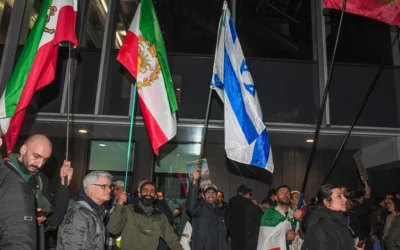
Likewise, he describes how the relationship between a free Iran and Israel “will be a fraternal, deeply respectful friendship as with everybody else, but ours will be even more profound because of what I just told you. And that’s where you see a lot of the visuals that people in the West may find odd. ‘Oh look, the Iranians are demonstrating with the [Free] Iranian flag, and then some carry the Israeli flag. What is that?’ But beyond it being a political reference, or a sort of salute and appreciation to what is happening today, that [relationship] is not counter-intuitive for many Iranians, though this regime has been trying to whitewash it and brainwash it out of our psyche for 50 years.”
He does, however, offer a thoughtful note of caution in relation to the ongoing strikes by Israel and America.
“There’s a very thin margin of error”, he warns. Of course, there is the knowledge that a great many strikes are strategic in nature, either targeting the regime’s soft spots or to encourage Iranian civilians to consider rising up to collapse. But it’s “a double-edged sword. I worry that if it goes too far in terms of [targeting] deep, heavy infrastructure, with spring and summer around the corner, a country that is deeply in trouble in terms of its drought, possible famine conditions, and a collapsed economy…the regime will seek to capitalise on that. So being aware of that is very important.”

Keep community journalism free.
Jewish News is free for everyone. No paywall. No barriers. Just trusted journalism for anyone who wants to stay connected to Jewish life in Britain.
If you value that, please support us.
From as little as £5 a month, you can help keep our journalism free and accessible to all.
Every day, we report on the issues that matter to our community. We celebrate achievements, support charities, challenge antisemitism and ensure Jewish voices are heard more widely.
From as little as £5 a month, you can help us continue to:
- Report on the stories shaping Jewish life in the UK and beyond
- Bring our community together through shared stories, events and campaigns
- Celebrate the people, culture and moments that define our community
- Support organisations doing vital work across Jewish Britain
You can make a one-off donation or become a regular supporter. Every contribution helps keep our journalism free, independent and accessible to all.
If everyone who values Jewish News gave a small amount, it would make a real difference to our future.