Prefer Jewish News on Google
Avadim Hayinu: Why Jewish values demand we stand with refugees
This article is the first in a series for UJS’ ‘7 Weeks, 7 Values’ Omer campaign. This weeks’ value is Chesed - loving-kindness
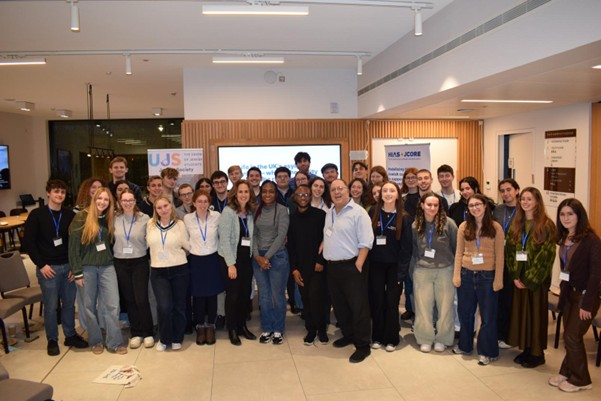
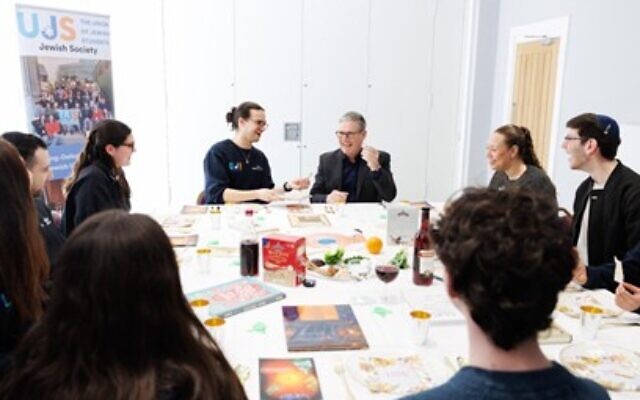
From generation to generation, Jewish people have told the story of the Exodus. This recitation has always been accompanied by a call to learn from our persecution; ‘to love the stranger’ and to invite ‘all who are hungry [to] come and eat’. At UJS, our students have been placing the values of Pesach, of Chesed (loving-kindness) and community, at the forefront of our celebrations.
Every year during Seder, not only do we remember our liberation, but we are meant to feel as if we, ourselves, are escaping slavery. We put ourselves into the shoes of our ancestors as they were persecuted and as they were liberated. We sing Avadim Hayinu – we were slaves, not they were slaves.
We are meant to feel deep empathy. By reliving our own historical experience of oppression at the Seder, we are reminded of what it feels like to be marginalised, scapegoated, and targeted. And that empathy is not intended to be a passive emotion. Rather, it is our responsibility to extend an outstretched arm to those in need of Chesed. To those experiencing food insecurity, to asylum seekers, to refugees.
And of course, while Pesach encourages specific reflection on Chesed, it is a prominent value all year round. Indeed, in Psalms we are told that ‘Olam Chesed Yibaneh’, that from loving-kindness the world is built. If Chesed builds our world, how destructive can polarisation and cruelty be?
Indeed, our student communities have expressed grave concern at the rise of hatred and division spread by the far right. Our democratically-determined policy, voted for by hundreds of Jewish students, calls for us to speak out against racism, support refugees, and condemn figures on the far-right who spread racism and antisemitism.



Many students and young Jews feel compelled to challenge the indifference of some in our broader community, to ensure that we condemn hatred in all its forms.
The far-right rhetoric has increasingly targeted vulnerable migrant communities, spreading damaging narratives that villainise civilians, in clear opposition to our own values of loving the stranger.
And yet, the far-right often demonstrate allyship with Jews, whether that be through support of Israel or condemnations of antisemitism. When so many in society have failed to show sufficient solidarity with the Jewish community experiencing an antisemitism crisis, it can be easy to cling onto allyship, wherever it can be found.
But solidarity which comes mixed with Islamophobia, racism, and homophobia is not real solidarity. Indeed, it often comes with antisemitism too – take Stephen Yaxley-Lennon, aka Tommy Robinson, who has talked about the outsized influence of Jews in the media and politics.
Our Jewish values should compel us to educate ourselves, and to act to minimise the harm caused when our Jewish identity is employed by non-Jewish people to deepen division in society.
This year, over 50 Jewish students committed to learning more about the experience of refugees in the UK, equipping them with the ability to correct misinformation they may encounter on campus and beyond, through our Student Refugee Ambassador Programme with HIAS+JCORE.
SRAP participants have had the chance to meet with refugees living in the UK, building genuine relationships and a deeper understanding of their lived realities. Crucially, these students have taken this advocacy work onto campuses, creating Refugee Shabbat projects on their universities to spread awareness and have meaningful conversations with both Jewish and non-Jewish students.

This solidarity work is an important step, but the work is far from complete. Our whole community needs to be doing more. We were slaves in Egypt. We were migrants to the UK. We have a duty to do acts of Chesed and to learn the lessons of Pesach.
We must recognise that as Avadim Hayinu, as we were slaves, we cannot stay silent while others are targeted. Working together to build welcoming communities has never been more essential.
- Ruben Persey, UJS campaigns officer and Samantha Lewkowicz, UJS social action officer

Keep community journalism free.
Jewish News is free for everyone. No paywall. No barriers. Just trusted journalism for anyone who wants to stay connected to Jewish life in Britain.
If you value that, please support us.
From as little as £5 a month, you can help keep our journalism free and accessible to all.
Every day, we report on the issues that matter to our community. We celebrate achievements, support charities, challenge antisemitism and ensure Jewish voices are heard more widely.
From as little as £5 a month, you can help us continue to:
- Report on the stories shaping Jewish life in the UK and beyond
- Bring our community together through shared stories, events and campaigns
- Celebrate the people, culture and moments that define our community
- Support organisations doing vital work across Jewish Britain
You can make a one-off donation or become a regular supporter. Every contribution helps keep our journalism free, independent and accessible to all.
If everyone who values Jewish News gave a small amount, it would make a real difference to our future.