Prefer Jewish News on Google
BBC Arabic promotes terrorist’s new book called The Holocaust Custodian – written by killer of a Holocaust survivor
Taxpayer-funded channel showed footage of Basem Khandaqji signing copies of his book The Holocaust Custodian, without disclosing that one of his victims survived the Nazi camps
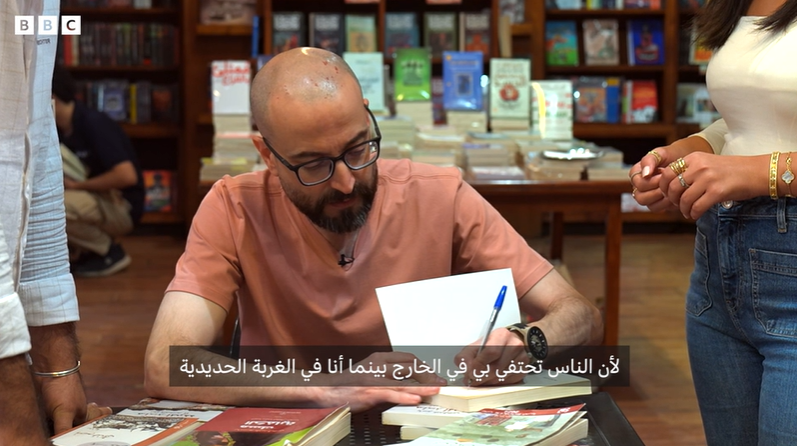
BBC Arabic is facing further questions about its conduct after the channel showed viewers the latest book by a released Palestinian terrorist called The Holocaust Custodian – without mentioning that one of the people he was imprisoned for his role in murdering was herself a Holocaust survivor.
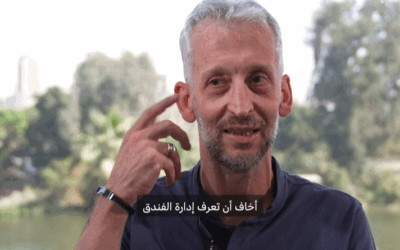
Last month, the Arabic-language BBC channel, which is partially funded by the Foreign Office, as well as the British taxpayer, interviewed two convicted terrorists, Basem Khandaqji and Nader Sadqa, who were among the hundreds of Palestinian prisoners released by Israel in return for Hamas releasing the remaining Israeli captives it took on 7 October. Both Khandaqji and Sadqa are senior members of the Popular Front for the Liberation of Palestine (PFLP) who were imprisoned for their roles in separate terror attacks which killed Israeli civilians. They were not permitted to return to the West Bank, but instead were released into Egypt.
Khandaqji, who wrote books in prison, won an International Prize for Arabic Fiction in 2024. In his BBC interview he claimed that he told his Israeli prison guards that “my words will cause your colonialism pain”.
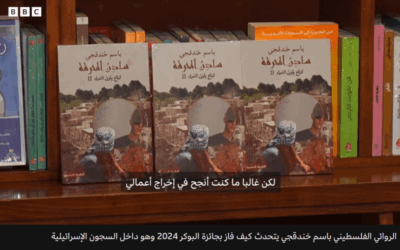
Khandaqji’s latest book is called The Holocaust Custodian; while the BBC interview does not directly ask him about it, it features video footage of him signing copies. The BBC did not see fit to question him about the fact that Leah Levine, one of the victims of the 2004 bombing which Khandaqji helped perpetrate, was herself a Holocaust survivor.
The November 2004 bombing in Tel Aviv’s Carmel Market injured 50 people and killed three – Shmuel Levy, 65, Tatiana Ackerman, 32, and Leah Levine, 64.
A child survivor of the Holocaust, Levine had been featured on Israeli television four years previously after meeting her brother, who had been living in Russia, for the first time since her childhood – at which time she learned her exact birth date.
Amer al-Fahr, a 16-year old from near Nablus, had carried out the suicide bombing. A BBC article from the time cited the Israeli newspaper Ha’aretz quoting al-Fahr’s mother, saying “It’s immoral to send someone so young. They should have sent an adult who understands the meaning of his deeds.”
Al-Fahr had been driven to the attack site by Khandaqji, who allegedly used a journalist identification card he had obtained during his studies at A-Najah University in Nablus to enter Israel from the West Bank, bringing al-Fahr with him. In 2005 Khandaqji was sentenced to three life sentences for his role in the Carmel Market bombing.
None of these details were mentioned by BBC Arabic in its interview, which was accompanied by emotive music.
Nader Sadqa, a senior member of the PFLP who was one of the commanders the organisation’s Abu Ali Mustafa brigades, is infamous as the only member of Israel’s 900-strong Samaritan population to have been imprisoned for terrorism. He was convicted and imprisoned in 2004 for his role in a series of terror attacks, including the December 2003 Geha Junction bombing, which killed four Israeli civilians and injured 26 others. The BBC Arabic interview focused on his status as the sole Samaritan imprisoned in Israel, and did not mention any of the crimes he had been imprisoned for.
A spokesperson for CAMERA UK said: “For BBC Arabic’s Doaa Fareed to uncritically romanticise terrorists—and to present their new life in Cairo with pensive, inspirational music complete with strings and piano—is not only in extremely bad taste but also an insult to their victims. This is especially true of Holocaust survivor Leah Levine, whom Khandaqji murdered 20 years before a BBC Arabic video featured his new novel titled ‘The Holocaust Custodian’.”
Danny Cohen, former Director of BBC Television and Controller of BBC One, said: “The BBC has claimed that it has made improvements to the management of BBC Arabic. This is clear evidence this is not the case and that it continues to be a deeply troubling source of journalistic failure and bias at the BBC. To interview these men and make no reference to their terrorist convictions is appalling. On BBC Arabic it appears that the murder of Jews is not relevant to their reporting.”
The latest revelations come after an expose in The Telegraph earlier this week, citing a leaked memo written by Michael Prescott, the former independent adviser to the BBC’s Editorial Guidelines and Standards Committee (EGSC). Prescott accused BBC Arabic of multiple instances of bias, including that allegations against Israel were not properly checked and were instead “raced to air”, which he declared smacked either of carelessness or “a desire always to believe the worst about Israel”.
A Jewish Leadership Council (JLC) spokesperson said: “BBC Arabic’s deeply troubling record has been well-documented for years. This has only worsened since 7 October as BBC Arabic’s coverage of the war in Gaza has repeatedly downplayed and whitewashed Hamas’s atrocities.
“This is demonstrated again by BBC Arabic platforming two recently released Palestinian prisoners who are members of the Popular Front for the Liberation of Palestine and have been convicted of the murder of innocent Israelis. In both cases the interviewer failed to mention these facts.
“As the leaked Prescott Report exposes that the BBC’s leadership is well aware of this repeated behaviour, concrete action must now be taken to restore trust and ensure that failures to uphold impartiality are not repeated. The Jewish community and the British public deserve nothing less.”
Responding to Jewish News, a BBC spokesperson said:
“BBC News Arabic has featured stories from Israeli hostages and Palestinian prisoners about their personal experiences of life in captivity. The Basem Khandakji piece is clear on the nature of his sentencing in the video introduction.
“In the case of Nader Sadqa, although the nature of his sentences and the charges against him were referenced, we acknowledge that more detailed information about his convictions should have been included for greater clarity. We are updating the story accordingly.”

Keep community journalism free.
Jewish News is free for everyone. No paywall. No barriers. Just trusted journalism for anyone who wants to stay connected to Jewish life in Britain.
If you value that, please support us.
From as little as £5 a month, you can help keep our journalism free and accessible to all.
Every day, we report on the issues that matter to our community. We celebrate achievements, support charities, challenge antisemitism and ensure Jewish voices are heard more widely.
From as little as £5 a month, you can help us continue to:
- Report on the stories shaping Jewish life in the UK and beyond
- Bring our community together through shared stories, events and campaigns
- Celebrate the people, culture and moments that define our community
- Support organisations doing vital work across Jewish Britain
You can make a one-off donation or become a regular supporter. Every contribution helps keep our journalism free, independent and accessible to all.
If everyone who values Jewish News gave a small amount, it would make a real difference to our future.