Prefer Jewish News on Google
BBC doc uncovers stories of Belsen babies – and a journalist’s hidden family link
Radio 4’s Heart and Soul releases a moving new episode today, as Amie Liebowitz uncovers long-lost Holocaust records and meets women born in Europe’s largest DP camp
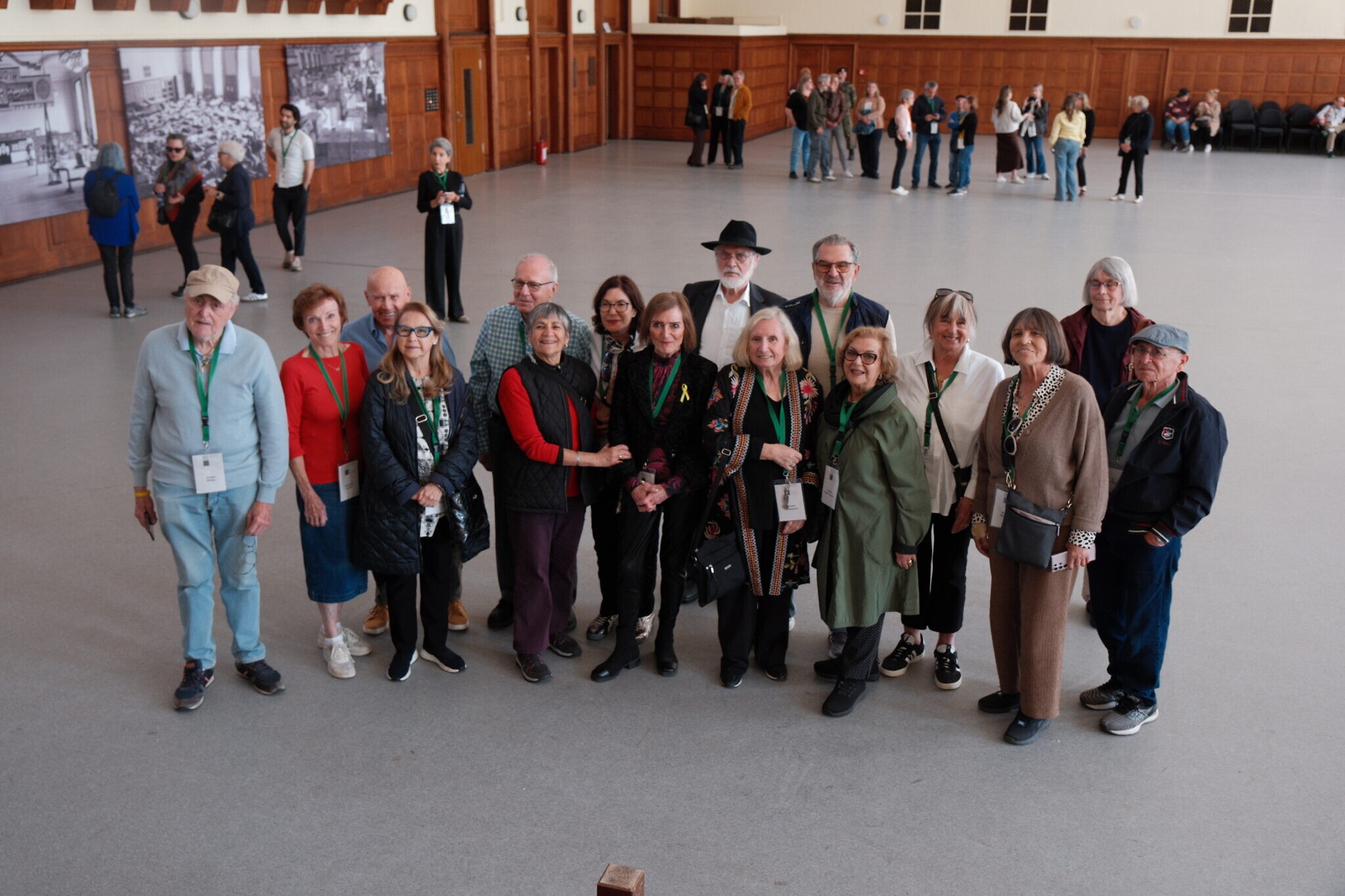
A new BBC documentary released today traces the extraordinary post-war lives of Jewish babies born in the Bergen-Belsen Displaced Persons camp – and the hidden family history of the journalist who set out to find them.
Amie Liebowitz, a Jewish-Australian reporter now based in London, presents Bergen Belsen: Among Graves, We Were Born for Radio 4’s Heart and Soul series, marking 80 years since the liberation of the former Nazi concentration camp in northern Germany.
The 28-minute programme is part memoir, part detective story. It opens with a memory from Liebowitz’s grandmother in Sydney, who reminded her of her three cousins – Mina, Leah, and Brenda – who survived Belsen. “ I really didn’t know a lot about them,” Liebowitz says in the episode, “except that they survived Belsen.”
From that seed of curiosity, Liebowitz travelled to the site of the camp, microphone in hand, to join a reunion of survivors and descendants. “I left with a recording kit to see what I could find with a vague plan,” she told Jewish News. “I had no idea about the Bergen Belsen babies or life in the DP camp – which, in the end, made my creative process a lot different to what I would have expected.”
The result is a deeply personal and profoundly moving radio documentary that captures the lives of Jewish women born amid the ruins. More than 2,000 babies were born in the DP camp before it closed in 1950 – among them Karen Lasky and Susan Schwartz, both featured in the programme.

“I was born in the DP camp,” says Schwartz, who now lives in Los Angeles. “And when I go to the DP camp, I feel comfortable. I feel like I’m at home, really.”
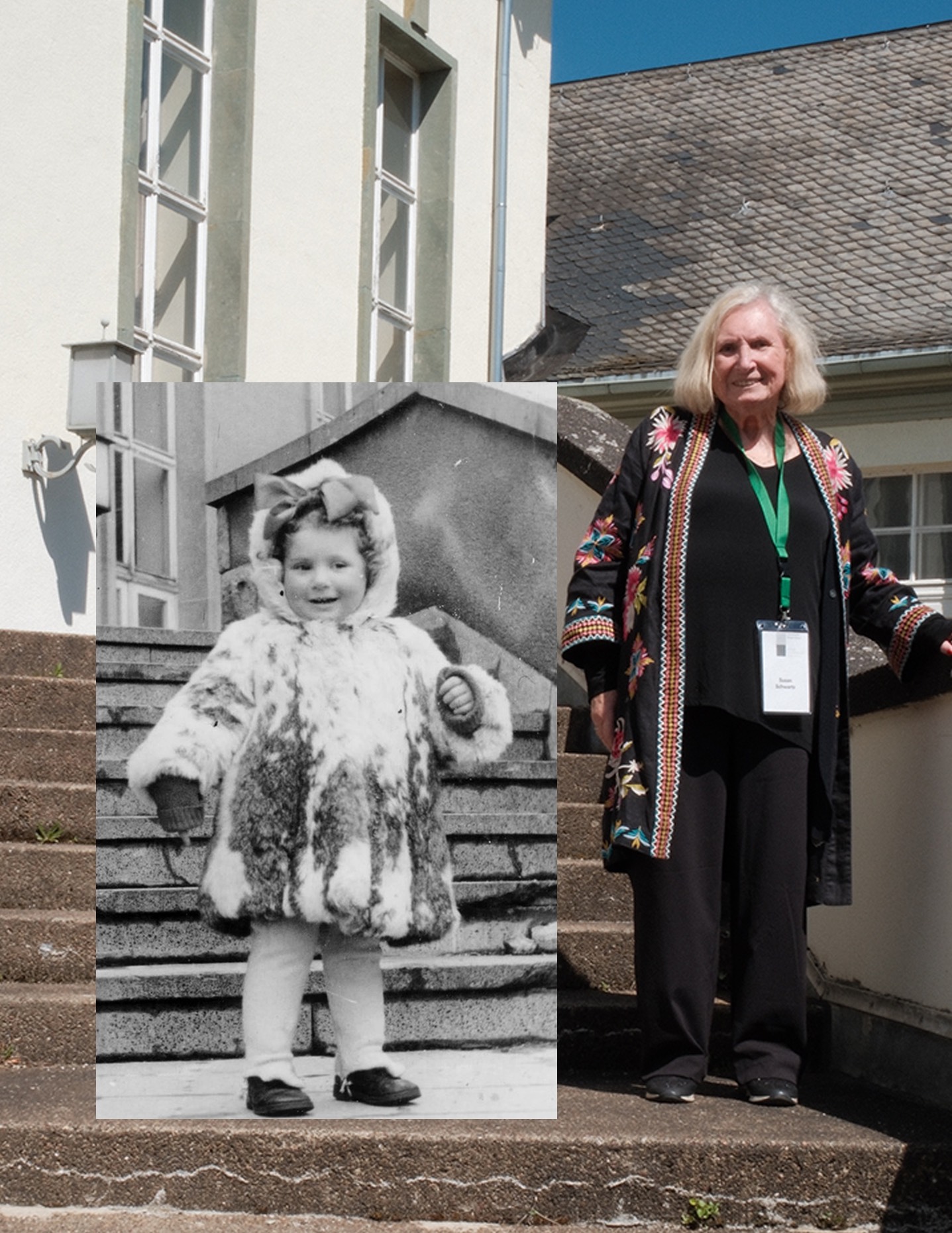
Her recollections blend humour and horror. She shows Liebowitz the steps where she played as a toddler, proudly recounts the fur coat she wore at age three, and tells stories of ice cream runs to nearby towns. But she also shares that her pet dog – a gift from her parents after liberation – had a swastika burned into its ear. Her mother had pretended to be a chef for the SS; her father sabotaged bombs during forced labour.
For Karen Lasky, born nearby in 1946, the camp was the place her parents – both Holocaust survivors – met after losing their families. “There’s so much death here,” she says, standing by one of the camp’s mass graves. “And then for me, I look at this more as a place of life… The liberation here is what I connect to.”
Lasky only discovered her original name – Krisha – decades later when she visited the Bergen-Belsen Memorial in 2007. “Coming here in 2007 was for me a coming of age,” she says. “Being rewarded with my full identity.”
Alongside these interviews, Liebowitz delves into the archives of the camp’s museum. With the help of lead archivist Bernd Horstmann, she uncovers documents confirming that her relatives were not Mina, Leah and, Brenda – but Mina, Bronka, and Lea Szach. “Everyone’s names and locations were spelt incorrectly,” she explains in the episode.
A British Red Cross form showed Mina’s uncles in London had desperately been searching for her. Eventually, Mina and the twins made it to England in April 1946. “It just makes me feel – I feel like I could – can I keep these?” her cousin Laura asks through tears. “Everything she said, the good, the bad, it’s all here in black and white.”
Liebowitz, who moved to London in 2017, told Jewish News: “This is my contribution to UK society and UK Jewry. Many people still don’t know that the British liberated Bergen-Belsen… Their face lights up when you tell them.”
She added: “There was a real discussion between the babies about concerns that once the survivors are gone, their stories would be forgotten by governments and organisations. I hope this makes people reflect on that time period and ask more questions.”
Liebowitz previously fronted the acclaimed BBC World Service documentary Death Marches: Uncovering the Truth Beneath the Soil, which investigated a Nazi death march through the former German town of Schönwald, now Bojków in Poland. The programme, part of the BBC’s 80th anniversary coverage of Auschwitz’s liberation, was praised by listeners and uncovered long-silenced local complicity.
Bergen Belsen: Among Graves, We Were Born is available now on BBC Sounds and the World Service’s Heart and Soul programme.

Keep community journalism free.
Jewish News is free for everyone. No paywall. No barriers. Just trusted journalism for anyone who wants to stay connected to Jewish life in Britain.
If you value that, please support us.
From as little as £5 a month, you can help keep our journalism free and accessible to all.
Every day, we report on the issues that matter to our community. We celebrate achievements, support charities, challenge antisemitism and ensure Jewish voices are heard more widely.
From as little as £5 a month, you can help us continue to:
- Report on the stories shaping Jewish life in the UK and beyond
- Bring our community together through shared stories, events and campaigns
- Celebrate the people, culture and moments that define our community
- Support organisations doing vital work across Jewish Britain
You can make a one-off donation or become a regular supporter. Every contribution helps keep our journalism free, independent and accessible to all.
If everyone who values Jewish News gave a small amount, it would make a real difference to our future.