Prefer Jewish News on Google
BBC removes Gaza documentary from iPlayer following ‘terrorist propaganda’ claims
Film plagued by controversy following revelations its narrator is the son of a Hamas minister

The BBC has removed a controversial Gaza documentary from its iPlayer platform following intense public backlash and governmental intervention.
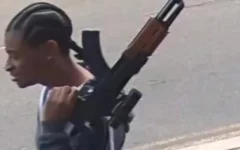
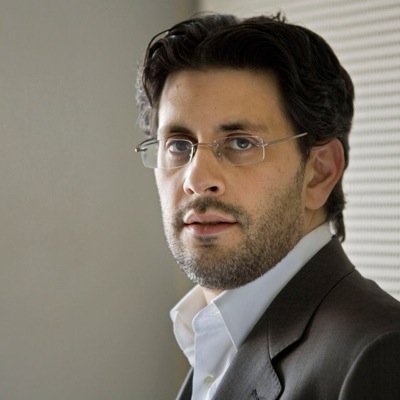
The astonishing move comes after investigator David Collier disclosed that 14-year old Abdullah, one of four children featured in the one hour programme, ‘Gaza: How To Survive a Warzone’, is actually the son of Dr Ayman Al-Yazouri, a senior official in the Hamas government, with family links to one of its founding members.
Whilst the broadcaster apologised for failing to reveal the information, corporation insiders dismissed broadcaster’s response as insufficient and “a slapdash cover-up”.
Culture Secretary Lisa Nandy vowed yesterday to raise concerns about the documentary with corporation executives following its screening by BBC2 on Monday night. The programme has also been heavily promoted on the corporation’s I-Player service.
In a statement seen by Jewish News, the broadcaster says: “Gaza: How to Survive a Warzone” features important stories we think should be told – those of the experiences of children in Gaza.
“There have been continuing questions raised about the programme and in the light of these, we are conducting further due diligence with the production company that made the film. The programme will not be available on iPlayer while this is taking place.”
In a letter today to the director-general of the BBC, Tim Davie, former BBC1 controller Danny Cohen said: “We are glad to hear that this documentary is being removed from iPlayer pending investigation. The numerous editorial failings of the programme are extremely serious. We look forward to receiving full and transparent answers to the 21 questions asked yesterday. We have one further serious question with regards to the editorial standards of this programme:
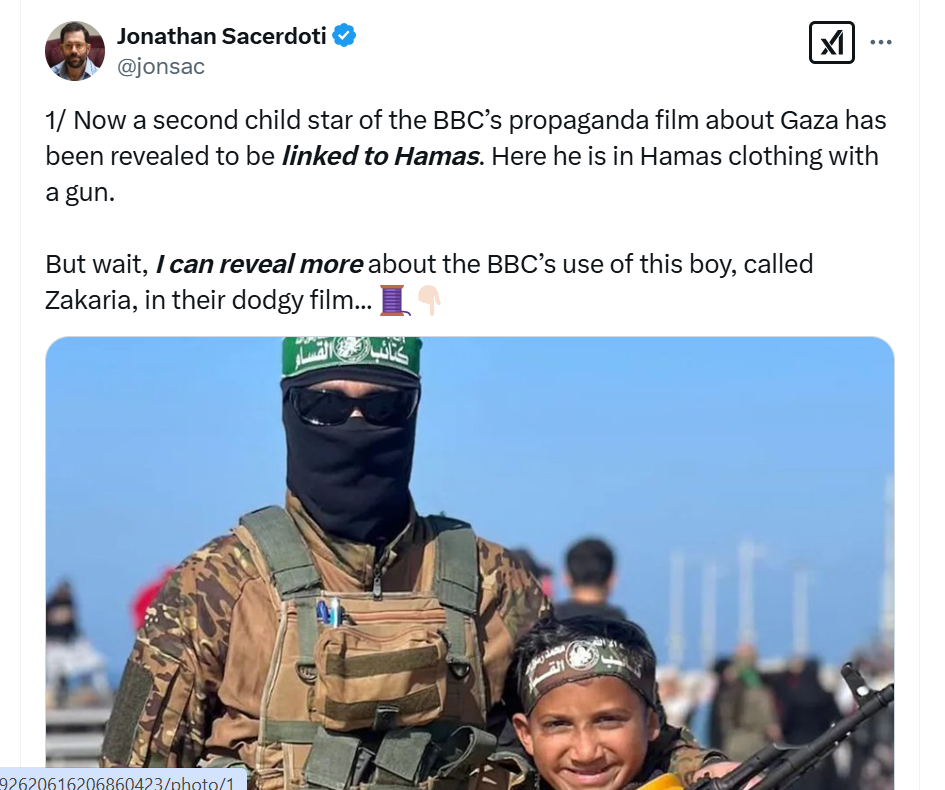
“By now you’ll have seen this very serious allegations of deception in the editing of a key scene featuring Zakaria at the Al-Aqsa hospital following what the film describes as an Israeli attack on the al-Bureij Camp.
“Can you confirm that all the daytime footage in this hospital sequence (11.07-15.29) was shot on the 245th day of the war as viewers are informed via the full-screen caption at the start of the sequence? If not, can you explain why this sequence is compliant given the BBC’s mandatory editorial guidelines on editing chronology? Is it somehow the BBC’s case that you regard this apparent conflation of sequences shot on multiple days as ‘legitimate media artifice’ rather than ‘unacceptable audience deception’?”
Cohen goes on to recall the BBC’s “handling of the seemingly much less serious mis-editing in the 2007 BBC Crowngate Affair, when a non-broadcast promotional trailer was found to have mis-edited a sequence so that the Queen seemed to be storming out of a photo-shoot rather than storming in.”
He notes that following an enquiry which reported “serious errors of judgement”, BBC director-general Mark Thompson pledged “to take all necessary steps to address the shortcomings set out in this report”, introducing the compulsory Safeguarding Trust regime for all programme-makers, also reminding Davie of “one of the biggest crises in the BBC’s history”, over the Real Lives programme in 1985.
This was pulled ahead of broadcast by the BBC Governors essentially because “its soft-focus portrayal of Northern Irish terrorists and their families was found to breach BBC Guidelines. On that occasion there was no question that the BBC had full editorial control and the programme was edited before broadcast. Nonetheless the crisis over giving terrorists the oxygen of publicity led to serious repercussions for the BBC. We look forward to all our questions being answered in your reply and in what we hope will be a full, independent enquiry. This is not one of those occasions when we believe the BBC should be marking its own homework.”

Film producer Leo Pearlman has said the removal of the BBCs Gaza film from iPlayer “only highlights just what a crisis our national broadcaster is in. This is the tip of the iceberg and a rare moment that the BBC has actually admitted wrongdoing, but BBC Arabic & BBC News in particular have systemic problems and have been working with known Hamas associates since the beginning of the war.”
He adds that the fact “it’s taken such a public embarrassment and undeniable failure of due diligence, act of complicity and duty of care negligence for us to get to this point, speaks to the arrogance displayed by those who lead our once great institution. When will we hear from (BBC chairman) Samir Shah and the board, when will we hear from the producer of this film, when will the public realise that these failures are not just a threat to the Jewish community, but to all of us who want, need & demand a national broadcaster they can trust?””
Investigative reporter David Collier also found that Amjad Al Fayoumi, one of two cameramen working on the programme, posted a salute to the October 7 Hamas attacks and shared “resistance” videos full of terrorists, rockets and Israeli funerals.
45 prominent Jewish figures across TV, film and media have written to the director-general of the BBC, Tim Davie, calling for repeats of the documentary to be postponed immediately.

Keep community journalism free.
Jewish News is free for everyone. No paywall. No barriers. Just trusted journalism for anyone who wants to stay connected to Jewish life in Britain.
If you value that, please support us.
From as little as £5 a month, you can help keep our journalism free and accessible to all.
Every day, we report on the issues that matter to our community. We celebrate achievements, support charities, challenge antisemitism and ensure Jewish voices are heard more widely.
From as little as £5 a month, you can help us continue to:
- Report on the stories shaping Jewish life in the UK and beyond
- Bring our community together through shared stories, events and campaigns
- Celebrate the people, culture and moments that define our community
- Support organisations doing vital work across Jewish Britain
You can make a one-off donation or become a regular supporter. Every contribution helps keep our journalism free, independent and accessible to all.
If everyone who values Jewish News gave a small amount, it would make a real difference to our future.