Prefer Jewish News on Google
BBC insiders condemn ‘slapdash cover-up’ despite broadcaster’s apology over Gaza film’s Hamas links
Tracy Ann Oberman and former BBC1 controller Danny Cohen amongst 45 industry professionals demanding answers from the broadcaster

The BBC has apologised for failing to reveal that the narrator of a film on Gaza is the son of a Hamas minister – but corporation insiders dismissed broadcaster’s response as “insufficient and “a slapdash cover-up”.
After investigative journalist David Collier uncovered the truth yesterday, the BBC said it is identifying the now 14-year-old Abdullah al Yazouri’s background for future screenings.
An introduction to Gaza, How to Survive a Warzone will now say: “The narrator of this film is 13-year-old Abdullah. His father has worked as a deputy agriculture minister for the Hamas-run government in Gaza. The production team had full editorial control of filming with Abdullah.”
The BBC issued the new statement after 45 prominent Jewish figures across TV, film and media wrote to the director-general of the BBC, Tim Davie, calling for repeats of the documentary to be postponed immediately and taken down from BBC iPlayer while an investigation is carried out.
Collier’s investigation disclosed the background of the child narrator to the film, which received admiring reviews across UK media. He revealed that Abdullah is actually the son of Dr Ayman Al-Yazouri, a senior official in the Hamas government, with family links to one of its founding members. Currently the deputy minister of agriculture, the doctor has held other posts in education and planning.
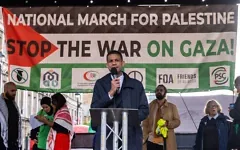
Collier also found that Amjad Al Fayoumi, one of two cameramen working on the programme, posted a salute to the October 7 Hamas attacks and shared “resistance” videos full of terrorists, rockets and Israeli funerals.
In their furious letter to Davie, the critics — many of whom have worked for the BBC and are familiar with the Corporation’s editorial procedures — asked: “Was it known to the BBC that the narrator and principal contributor of the documentary, Abdullah Al-Yazouri, is the son of a senior leader of the proscribed terrorist group, Hamas?
“If the BBC was aware that Abdullah Al-Yazouri was the son of a terrorist leader, why was this not disclosed to audiences during the programme?
“If the BBC was not aware that Abdullah Al-Yazouri is the son of a terrorist leader, what diligence checks were undertaken and why did they fail?
“If the BBC was aware that Abdullah Al-Yazouri was the son of a terrorist leader, what considerations were put in place in line with the likelihood of child exploitation concerns (BBC International Safeguarding Policy)?
“What due diligence / checks were undertaken in relation to any of the remote crew working in Gaza? Was Abdullah Al-Yazouri or his family paid any money, or any form of payment in kind, to participate in the documentary (Ofcom Rule 3.5; BBC Editorial Guidelines (Mandatory Referrals) 8.2.5)?
“Were any members of Hamas or its terrorist affiliates paid any money, or received any payments in kind or gifts, in relation to the filming of this documentary (Ofcom Rule 3.5; BBC Editorial Guidelines (Mandatory Referrals) 8.2.5)?
“Did each of Abdullah Al-Yazouri’s parents sign a release form authorising his participation in the documentary? If they did not, why not and who then authorised the appearance of the child in the programme?
“What role did Abdullah Al-Yazouri’s parents play in the supervision of the filming of the child and the BBC’s duty of care obligations in filming with under-18s? Who was the child’s chaperone (BBC International Safeguarding Policy; Ofcom Rule 1.28)?
“Given that the terrorist group Hamas remain in de facto control of Gaza, it is reasonable to presume that the documentary could only be made with their permission or authorisation. Was this the case? If so, why was this not disclosed to audiences?”
The letter writers included former BBC1 controller Danny Cohen, actress Tracy Ann Oberman, JK Rowling agent and chairman of British Friends of United Hatzalah, Neil Blair and Emmerdale actress Louisa Clein.
In its initial response to critics, a BBC spokesperson said: “Gaza: How to Survive a Warzone, a documentary showing the conflict through the eyes of three children in Gaza, was produced in line with BBC editorial guidelines and the BBC had full editorial control. The film told the children’s own stories, showing viewers their direct experiences of living through a war, and the children’s parents did not have any editorial input.
“As the BBC has previously explained, the film was edited and directed from London, as independent international journalists are not allowed into Gaza. The film gives audiences a rare glimpse of Gaza during the war, as well as an insight into the children’s lives, it hears the voices of other Gazan civilians, several of whom voice anti-Hamas sentiments.”-
But in an updated statement on Wednesday night, the BBC said that since transmission of the film it had “become aware of the family connections of the film’s narrator, a child called Abdullah”.
The statement went on: “We’ve promised our audiences the highest standards of transparency, so it is only right that as a result of this new information, we add some more detail to the film before its retransmission. we apologise for the omission of that detail from the original film”.
The Corporation added: “We followed all of our usual compliance procedures in the making of this film, but we had not been informed of this information by the independent producers who we complied and the broadcast the finished film.”
But a BBC newsroom source told Jewish News: “The BBC’s course of action is absolutely astonishing. This is nothing short of a slapdash cover-up. They have been caught out and adding a few words after the event solves nothing. There are major questions which licence-fee payers are still expecting them to address, and papering over this debacle is not an answer.”

Keep community journalism free.
Jewish News is free for everyone. No paywall. No barriers. Just trusted journalism for anyone who wants to stay connected to Jewish life in Britain.
If you value that, please support us.
From as little as £5 a month, you can help keep our journalism free and accessible to all.
Every day, we report on the issues that matter to our community. We celebrate achievements, support charities, challenge antisemitism and ensure Jewish voices are heard more widely.
From as little as £5 a month, you can help us continue to:
- Report on the stories shaping Jewish life in the UK and beyond
- Bring our community together through shared stories, events and campaigns
- Celebrate the people, culture and moments that define our community
- Support organisations doing vital work across Jewish Britain
You can make a one-off donation or become a regular supporter. Every contribution helps keep our journalism free, independent and accessible to all.
If everyone who values Jewish News gave a small amount, it would make a real difference to our future.