Prefer Jewish News on Google
BBC’s crisis of credibility: Davie’s exit won’t cure the rot within
Lawyer Trevor Asserson says BBC’s leadership shake-up masks deep institutional bias and decades of unchecked deceit
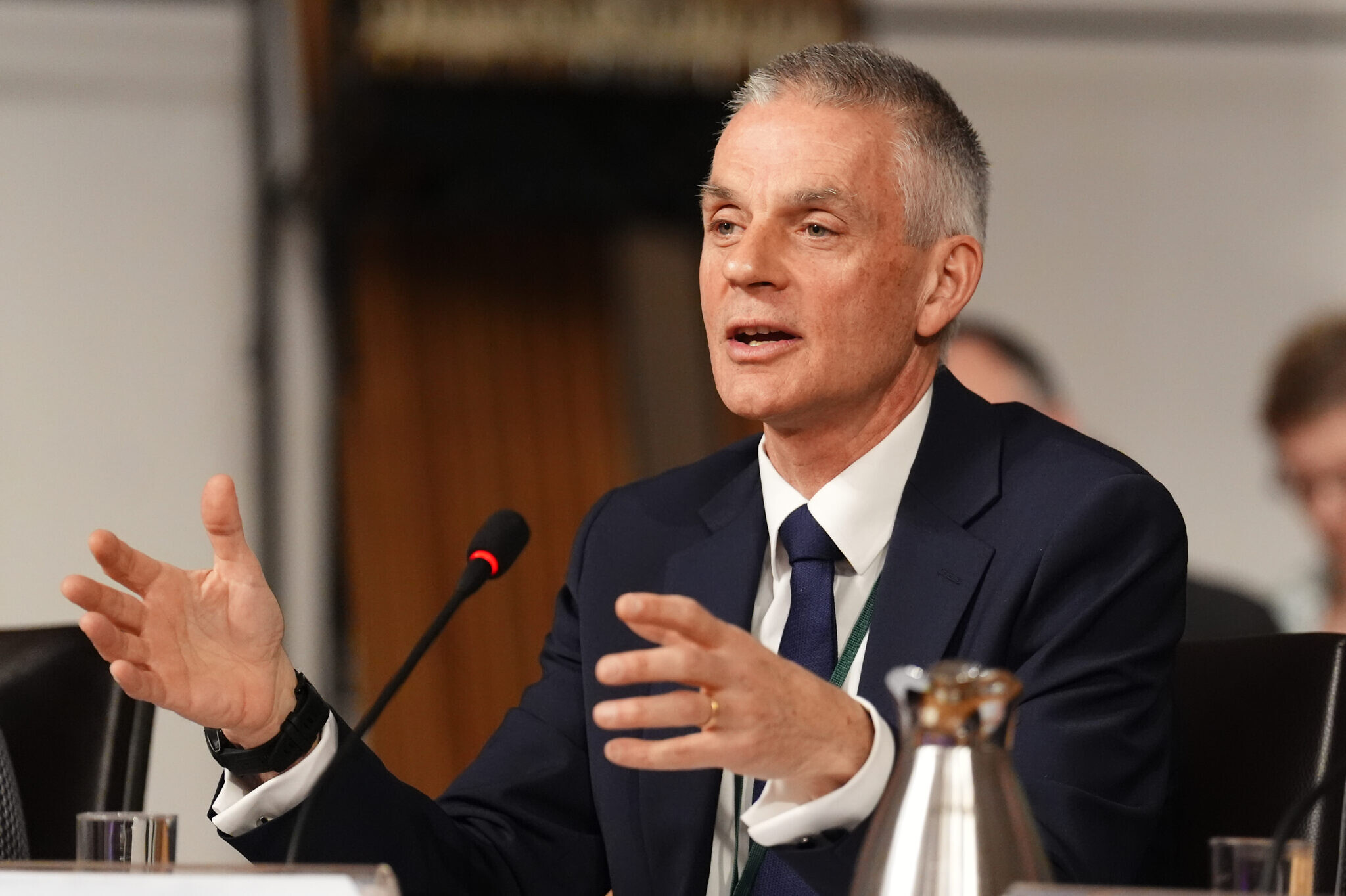
The departure of Tim Davie and Deborah Turness from the BBC is a trick to deflect critics from dealing with the true rot at the core of the institution. It has been tried before and worked.
The BBC has only been investigated properly twice. Once by Prime Minister Tony Blair, which produced the damning Hutton Report in 2003, which showed the BBC had invented evidence to criticise the decision to enter the Iraq War; and then by the Dyson Report in 2021 on behalf of the now King Charles, which uncovered the BBC’s deceitful tactics to lure Princess Diana into the infamous Panorama interview.
Both reports were led by senior judges and found that the very institution set up by the BBC as internal watchdogs – the Board – failed to do its job. Instead of acting as watchdogs, they protected the BBC, concealing, lying and obfuscating. On both occasions, senior heads rolled, and the BBC internal procedures that permitted dishonest reporting remained in place.
It seemingly takes royalty or the prime minister to compel a proper investigation. And now, an internal whistleblower has shown what previously only the most powerful forces in the land could uncover, namely that the BBC is, beyond reasonable doubt, failing to meet its public obligations.
As before, the BBC finds some senior heads to roll, thus distracting the public’s attention away from the underlying problem. Indeed, Tim Davie’s and Barbara Turness’s departures are described as a noble act of falling on one’s sword in a bid to take responsibility for “mistakes.” This is itself obscuring the depth of BBC depravity in two ways.

First, the editing of President Trump’s speech was clearly no mistake. The editor carefully selected phrases separated by 54 minutes to amplify a story that Trump urged supporters to attack Congress – a story which the editor must have known to be false. This is the BBC making up the news in their own image. Davie, apparently made aware of the dishonesty, chose to cover it up. Nothing was done at the time to investigate and dismiss all those journalists who were implicated in broadcasting such a dangerous falsehood. Nor is it said now that they will face the music.
Neither letter of resignation made any direct mention of the second scandal which emerged simultaneously, again from a whistleblower, namely the deep bias running throughout the BBC Arabic service. Both Davie and Turness disgracefully insist that the BBC is complying with its obligations of impartiality and that the widespread allegations of bias are wrong.
All the evidence points the other way.
My own report, published in September 2024 with computational neuroscientist Dr Shani-Narkiss, demonstrated that BBC Arabic was hopelessly partial, broadly aligning with Al Jazeera in its sympathies. It broke, and continues to break, BBC Guidelines with almost every word it utters.
To illustrate, our analysis showed that over 90 percent of BBC Arabic web articles and videos exhibited pro-Palestinian or anti-Israeli sentiment, including on 7 October itself. In a sample of more than 200 BBC Arabic interviewees, over a quarter were found to have connections to Hamas or affiliated terror groups and/or had posted antisemitic rhetoric online, including support for the 7 October attacks.
Neither letter of resignation made any direct mention of the second scandal which emerged simultaneously, again from a whistleblower, namely the deep bias running throughout the BBC Arabic service
The BBC should not give a platform to terrorist supporters. When it does give airtime to people with a known strong bias or affiliation, it has a duty to reveal this to its audience. It almost always conceals it.
The BBC has no internal methodology for tracking its own bias, as revealed through our painstaking research. It has a deeply ingrained institutional bias over many topics along predictable progressive lines, which it has failed to address for decades. The complaints department operates as a BBC exculpation department; Ofcom is stuffed with BBC retirees and has failed to effect change, and the legal system of judicial review makes it almost impossible for a legal challenge to be decisively successful.
Thus, the BBC remains an unchallengeable and failing monster in our midst, spreading the news it wants us to hear, making it up if it needs to, suppressing the stories it dislikes, and doing all this under the magic cloak of its Charter, lending it a now bogus reputation for probity, which protects it from the reforms so badly needed.
- Trevor Asserson is the founding partner of Asserson, Israel’s largest international law firm, specialising in UK law

Keep community journalism free.
Jewish News is free for everyone. No paywall. No barriers. Just trusted journalism for anyone who wants to stay connected to Jewish life in Britain.
If you value that, please support us.
From as little as £5 a month, you can help keep our journalism free and accessible to all.
Every day, we report on the issues that matter to our community. We celebrate achievements, support charities, challenge antisemitism and ensure Jewish voices are heard more widely.
From as little as £5 a month, you can help us continue to:
- Report on the stories shaping Jewish life in the UK and beyond
- Bring our community together through shared stories, events and campaigns
- Celebrate the people, culture and moments that define our community
- Support organisations doing vital work across Jewish Britain
You can make a one-off donation or become a regular supporter. Every contribution helps keep our journalism free, independent and accessible to all.
If everyone who values Jewish News gave a small amount, it would make a real difference to our future.