
 Prefer Jewish News on Google
BBC’s director-general and CEO of news resign
Tim Davie and Deborah Turness to leave crisis-hit corporation following a litany of editorial catastrophes
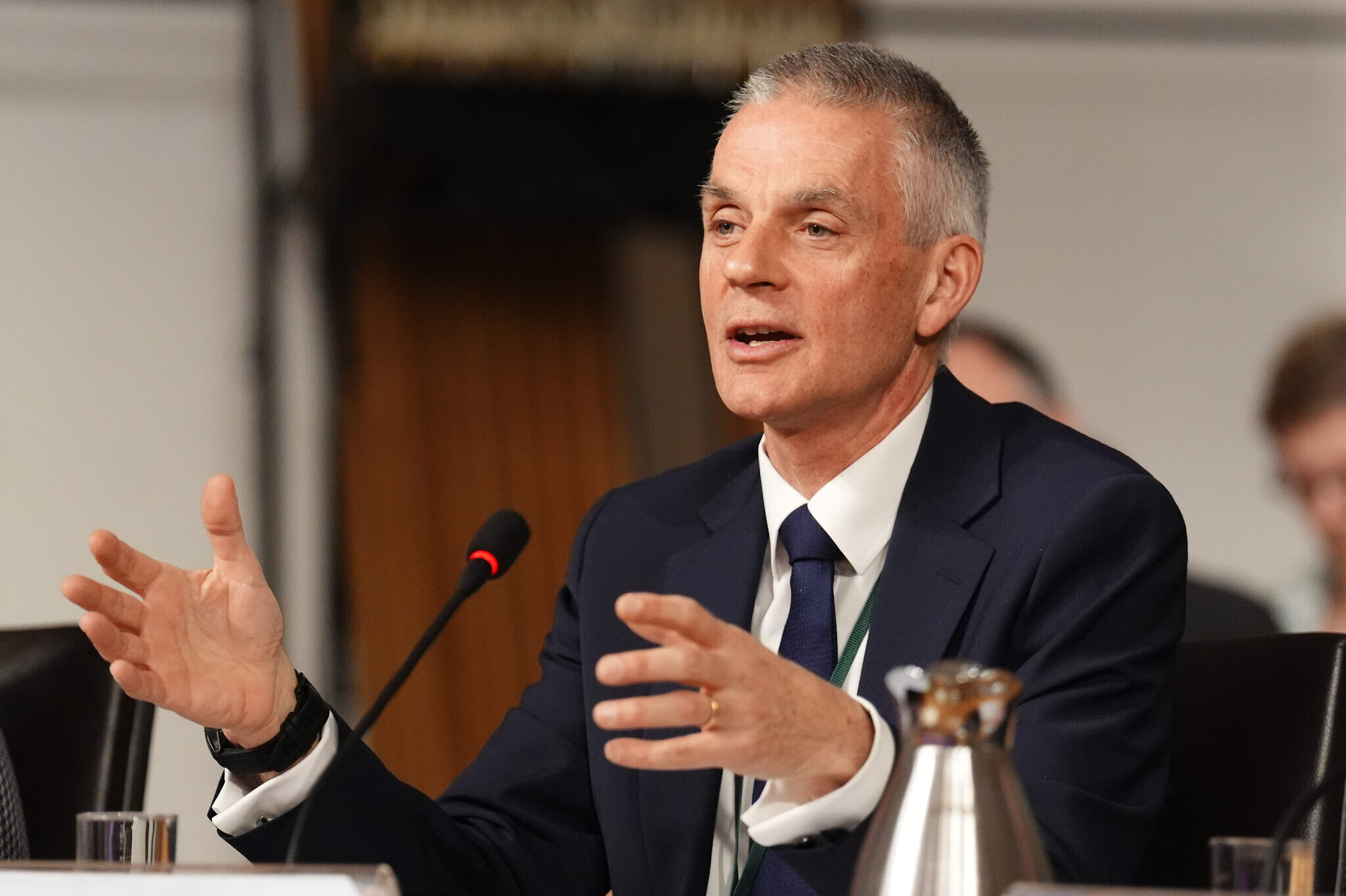
The BBC’s director-general Tim Davie and its CEO of news Deborah Turness have resigned from the BBC, the corporation has announced.
The news comes the day before the corporation is expected to apologise following mounting concerns about impartiality, including its skewed coverage of the Israel-Gaza war and how a speech by US President Donald Trump was edited in an episode of Panorama.
In July, Turness downplayed the UK’s full proscription of Hamas, instructing her staff there is a distinction between the political and military wings of the terror group. In the widely circulated clip, Turness said: “I think it’s really important that we are clear that Abdullah’s father was the deputy agriculture minister and therefore was a member of the Hamas-run government, which is different to being part of the military wing of Hamas. And I think that externally it’s often simplified – ‘he was in Hamas’ – and I think it’s an important point of detail that we need to continually remind people of.”
Her comments directly contradicted UK law.
Davie said his departure will not be immediate and that he is “working through” timings to ensure for an “orderly transition” over the coming months.


The BBC said Davie sent a statement to staff which said: “This is entirely my decision, and I remain very thankful to the chair and board for their unswerving and unanimous support throughout my entire tenure, including during recent days. I am working through exact timings with the board to allow for an orderly transition to a successor over the coming months.
“I have been reflecting on the very intense personal and professional demands of managing this role over many years in these febrile times, combined with the fact that I want to give a successor time to help shape the charter plans they will be delivering. While not being the only reason, the current debate around BBC News has understandably contributed to my decision.”
BBC chairman Samir Shah said: “This is a sad day for the BBC. Tim has been an outstanding director-general for the last five years. He has propelled the BBC forward with determination, single-mindedness and foresight. He has had the full support of me and the Board throughout. However, I understand the continued pressure on him, personally and professionally, which has led him to take this decision today. The whole Board respects the decision and the reasons for it.”
The Board of Deputies reacted to the resignations with a call for “deep cultural change” in the corporation. It said: “The Jewish community has long had profound concerns about the BBC’s coverage of the Middle East, but this has sunk to ever-greater depths over the last two years. The BBC has been hit by scandal after scandal, whether in terms of a Gaza documentary involving the son of a Hamas official, its Glastonbury coverage, the open sore of BBC Arabic, or by continuing to call Hamas what they are – a terrorist organisation. Jewish staff and contractors have also repeatedly complained about their treatment at the corporation.
“In this light, Tim Davie’s and Deborah Turness’s resignations must be seen as the beginning, rather than the end, of a process of renewal. Deep cultural change will be necessary to once again restore trust in one of our nation’s most cherished institutions.”
Ahead of the announcement, Culture Secretary Lisa Nandy told the BBC’s Sunday With Laura Kuenssberg show she was “confident” BBC bosses are treating allegations of bias with “the seriousness that this demands”.
She added: “It isn’t just about the Panorama programme, although that is incredibly serious. There are a series of very serious allegations made, the most serious of which is that there is systemic bias in the way that difficult issues are reported at the BBC.
“I have complete confidence that both Samir Shah, the chair of the BBC, and (BBC director-general) Tim Davie are treating this with the seriousness that this demands.”
Conservative leader Kemi Badenoch MP said: “BBC Arabic must be brought under urgent control. The BBC’s US and Middle East coverage needs a full overhaul. And on basic matters of biology, the corporation can no longer allow its output to be shaped by a cabal of ideological activists.”
“The new leadership must now deliver genuine reform of the culture of the BBC, top to bottom – because it should not expect the public to keep funding it through a compulsory licence fee unless it can finally demonstrate true impartiality.”
On Tuesday, The Telegraph reported that a memo by Michael Prescott, a former external adviser to the BBC’s editorial standards committee, raised concerns in the summer.
A significant section of the dossier looks into a series of examples of highly concerning anti-Israel bias by the broadcaster – primarily on the BBC Arabic channel, but with examples also present on the Corporation’s English-language news offerings, including BBC News and Newsnight.
Prescott’s wrote: “The [BBC’s] executive repeatedly failed to implement measures to resolve highlighted problems, and in many cases simply refused to acknowledge there was an issue at all… On no other occasion in my professional life have I witnessed what I did at the BBC with regard to how management dealt with (or failed to deal with) serious recurrent problems.”
Following the leaked memo, a row erupted between Boris Johnson and BBC presenter Nick Robinson after the former prime minister accused the broadcaster of arrogance over claims of a political campaign to “destroy” the corporation.
The BBC Radio 4 presenter said on the Today programme there was a “genuine” concern regarding the broadcaster’s editorial standards and mistakes, however he believes there is a “political campaign by people who want to destroy the organisation”.
Johnson told the Mail On Sunday: “There is a difference between trying to destroy the BBC and trying to hold it to account. This is just a diversionary tactic from an organisation that is too arrogant to think it might be at fault.”
Robinson hit back in a post on X, saying: “Hands up all those who think (Boris Johnson) is well placed to lecture anyone else on upholding standards (and) admitting mistakes.” The presenter was backed up by fellow senior BBC journalist John Simpson, who said his initial remarks had been “exactly right”.

Keep community journalism free.
Jewish News is free for everyone. No paywall. No barriers. Just trusted journalism for anyone who wants to stay connected to Jewish life in Britain.
If you value that, please support us.
From as little as £5 a month, you can help keep our journalism free and accessible to all.
Every day, we report on the issues that matter to our community. We celebrate achievements, support charities, challenge antisemitism and ensure Jewish voices are heard more widely.
From as little as £5 a month, you can help us continue to:
- Report on the stories shaping Jewish life in the UK and beyond
- Bring our community together through shared stories, events and campaigns
- Celebrate the people, culture and moments that define our community
- Support organisations doing vital work across Jewish Britain
You can make a one-off donation or become a regular supporter. Every contribution helps keep our journalism free, independent and accessible to all.
If everyone who values Jewish News gave a small amount, it would make a real difference to our future.





















