Prefer Jewish News on Google
BMA passes motion at conference attacking IHRA definition of antisemitism
Jewish Medical Association: 'The majority of Jewish members of the BMA will no doubt feel rejected and excluded by the Association, had they not felt so before'
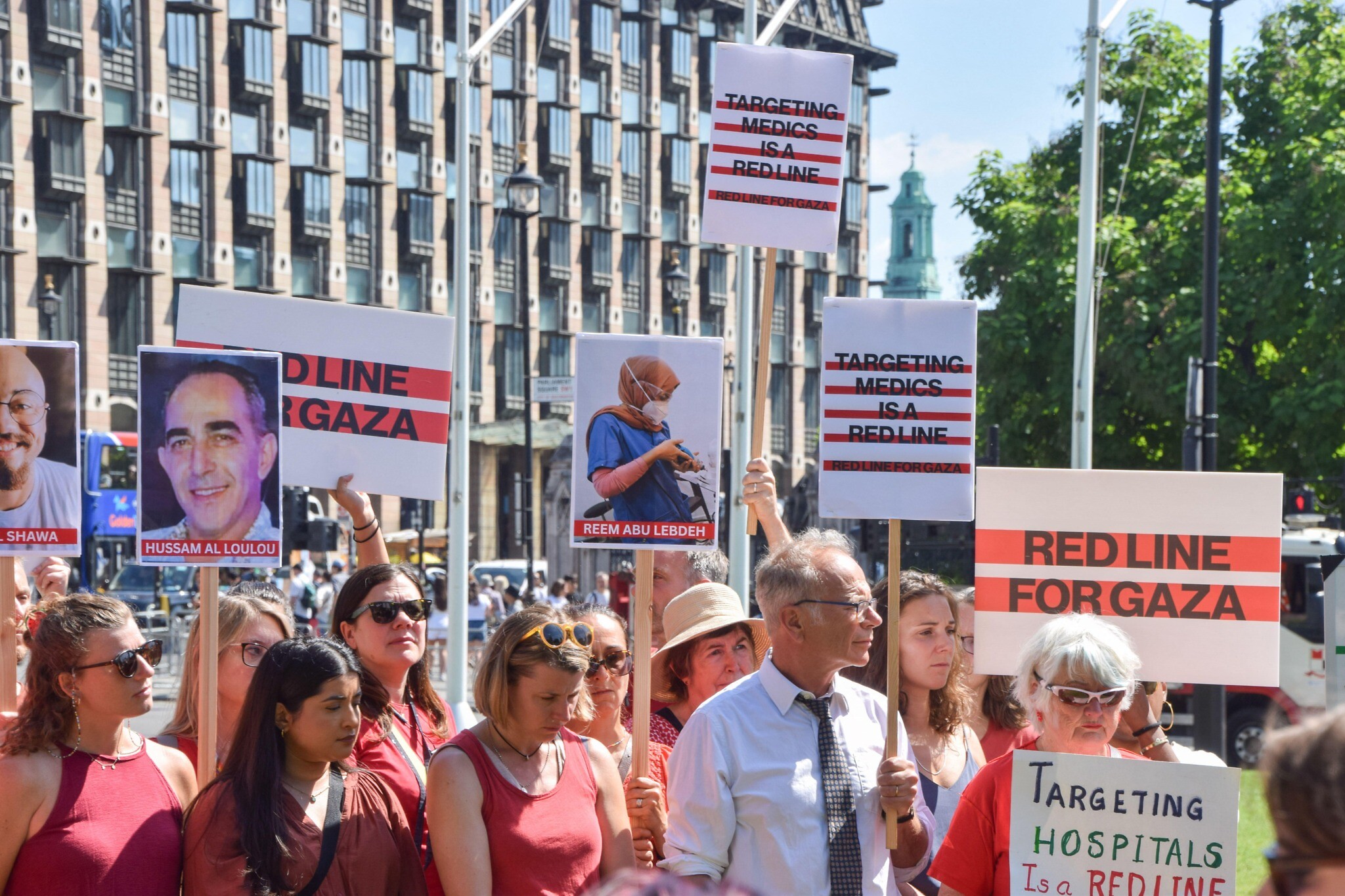
The British Medical Association has endorsed a motion at its annual conference effectively rejecting the International Holocaust Remembrance Alliance definition of antisemitism, claiming that it has had a “chilling effect on legitimate political speech and professional expression of ethical concerns about Israel’s actions in Palestine.”
The motion, which was voted on by the conference on Tuesday, also included a “demand that NHS England and all NHS organisations conduct comprehensive risk assessments before implementing any speech-related policies”, as well as exhorting the organisation to “provide urgent guidance and support to members who face disciplinary action or professional detriment for expressing legitimate political view or ethical concerns about international conflicts, including Palestine/Israel”.
It also required the BMA, which serves as a trade union for doctors and medical students, to “lobby the government and NHS England to revoke the mandatory adoption of the IHRA definition across the NHS until proper safeguards, consultation processes, and clarity on implementation are established.”
Earlier this month, a review published by Lord Mann, the government’s independent advisor on antisemitism, found “routine ostracism” of Jewish staff and patients within the NHS.
His report noted that NHS England has formally adopted the IHRA definition, with he described as “the most prominent international standard of anti-Jewish racism”. NHS England, he said, had also written to trusts asking that they also consider adopting it and that last year other Department of Health and Social Care executive agencies and arm’s length bodies had adopted it after being asked to by Wes Streeting, then the Secretary of State for Health and Social Care.



A number of doctors have lost their jobs and been reported to the General Medical Council (GMC) and the Medical Practitioner Tribunal Service (MPTS) over the last few years due to a wide variety of comments about “Jewish supremacy” and conspiracy theories about Jews and Zionists in general. The motion did not mention any specific doctors or cite any particular cases.
The motion also called on the BMA to “advocate for the protection of free speech in healthcare settings, ensuring that NHS staff can engage in legitimate political discourse and express ethical concerns without fear of professional reprisal”, and to work with other healthcare unions and professional bodies to challenge any attempts to use the IHRA definition to suppress legitimate debate about human rights violations, war crimes, or colonial practices in international conflicts”.
The BMA conference passed the motion in its entirety.
In a piece written for Jewish News last year, Professor David Katz, Executive Chair of the Jewish Medical Association, described how in 2025 “the BMA had a Task and Finish Group (TFG) where the case for adopting the IHRA in its entirety was considered. I was part of it, and the Jewish members present all agreed that the IHRA should go forward within a new guidelines programme on discrimination issues.
“The JMA engages positively with Equality, Diversity and Inclusion staff at the BMA, who recognised that we are obviously an interested party on this issue and that the Macpherson principles (whereby a minority group should be able to define what is and is not bigotry aimed at it) should apply to us in the same way as they apply to all faiths, ethnicities, disabilities, and sexual orientations.
“The advice of that TFG then went to the BMA Council – and what happened next is anyone’s guess, because the Council have since observed total radio silence on the issue. They have not, as far as I am aware, notified the members of the TFG of any decision.”
Professor Katz also described how at last year’s BMA conference, “only one aspect of the entire IHRA definition was deemed worthy of being made official BMA policy by the ARM… that ‘criticism of the actions of the state of Israel are not, per se, antisemitic’. The IHRA definition begins that way but then provides a significant number of examples where criticism of Israel can cross over into antisemitism. Apparently that element of the definition was not worthy of the BMA’s focus. It was ludicrous; like making the first incision on a patient in the operating theatre before promptly wheeling them to the recovery room.”
In a statement on Thursday, the JMA said it was “highly alarmed that a motion calling for the rejection of the world’s most widely accepted definition of antisemitism was passed at the British Medical Association’s Annual Representative Meeting (ARM)”, describing it as “the third consecutive year that several motions identified as hostile to Jews have been included in the ARM Agenda.”
The JMA went on to say that “the contents of the motion were both flawed factually and, flouted normal standards of equality, diversity and inclusion. Yet this motion was selected for inclusion in the Meeting Agenda and was debated, leading to its adoption as BMA policy.
“The BMA has no right to undermine the longstanding definition of discrimination of one ethnic and religious minority in the UK. Just consider the scenario where an ARM motion might seek to oppose the definition of any other type of racism? It is not conscionable.
“It is unacceptable to select Jews from among all the ethnicities or religions represented in UK medicine, for the BMA ARM to reject, using inaccurate and biased narrative, the most-widely used worldwide definition of racial discrimination and hate against them.”
The JMA also noted that “the ARM went on to pass an ’emergency motion’ (EM2) calling, among other things, ‘for an immediate pause in the implementation of the Mann Review’… Lord Mann’s review of antisemitism and other forms of racism in the NHS and healthcare regulatory system, which was conducted as a result of serious concerns by government about rising antisemitism in the health sector, and published by DHSC earlier this month. So this motion is now BMA policy: Jewish patients and doctors must trust the NHS will ignore such an incredible request.
“The majority of Jewish members of the BMA will no doubt feel rejected and excluded by the Association, had they not felt so before.”
The group emphasised that the actions at the BMA’s latest conference had “reminded Jews in the UK that the concerns that led to Lord Mann’s review are very much live and present and that its implementation is of the utmost urgency if Jews who work in or use the NHS are to have confidence in it restored.”
Responding to the BMA’s vote, the Holocaust Educational Trust said: “It is outrageous that the BMA has voted to challenge the IHRA definition of antisemitism. This comes less than a month after the Government’s review into antisemitism in the NHS which exposed widespread, systemic discrimination including Jewish staff facing “routine ostracism” and Jewish patients hiding their identity or fearing access to care.
“The IHRA definition does not silence free speech or prevent criticism of Israel. What it does is draw a clear line between legitimate political debate and antisemitism. That is not censorship; it is a basic safeguard against hatred and discrimination. Instead of lecturing Jews on what constitutes antisemitism, the BMA should focus on restoring trust and ensuring the NHS is once again a safe and welcoming place for Jewish staff and patients alike.”
In a statement yesterday, a Campaign Against Antisemitism spokesperson said: “Antisemitism is rife in the NHS. Jewish practitioners and patients have been intimidated by NHS staff, and multiple doctors have been suspended over their extremist rhetoric in relation to Jews.
“Jews should not have to worry about their safety and fair treatment in medical institutions. The BMA – the medical practitioners’ union – should not be entertaining this motion, let alone endorsing it.”

Keep community journalism free.
Jewish News is free for everyone. No paywall. No barriers. Just trusted journalism for anyone who wants to stay connected to Jewish life in Britain.
If you value that, please support us.
From as little as £5 a month, you can help keep our journalism free and accessible to all.
Every day, we report on the issues that matter to our community. We celebrate achievements, support charities, challenge antisemitism and ensure Jewish voices are heard more widely.
From as little as £5 a month, you can help us continue to:
- Report on the stories shaping Jewish life in the UK and beyond
- Bring our community together through shared stories, events and campaigns
- Celebrate the people, culture and moments that define our community
- Support organisations doing vital work across Jewish Britain
You can make a one-off donation or become a regular supporter. Every contribution helps keep our journalism free, independent and accessible to all.
If everyone who values Jewish News gave a small amount, it would make a real difference to our future.