Prefer Jewish News on Google
Board of Deputies launches comprehensive 7 October resource
New initiative designed to provide one central resource for people to find information on the worst tragedy to befall the Jewish people in the 21st century
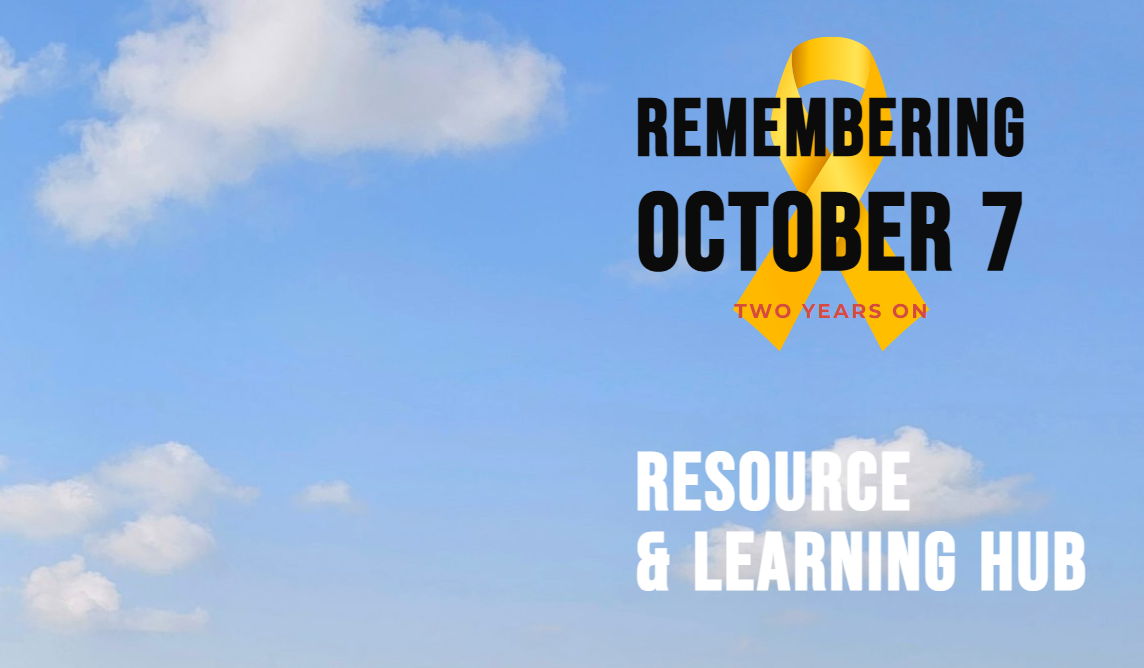
The Board of Deputies has launched a new comprehensive online platform designed to enable people to fully understand the scope of the tragedy of 7 October, with the aim of “countering the misinformation and disinformation” and to make it clear that “we’re not just talking about numbers, we’re talking about lives.”
The Remembering 7th October: Resource includes testimonies and interviews from survivors, hostages, and eyewitnesses, as well as accounts of the heroes who acted with courage and compassion on that day. Multimedia content is also present – including graphic material which is clearly signposted.
Describing the new resource, Phil Rosenberg, President of the Board, said: “Our community has been clear – we must not let the victims or the truth of that day fade from memory. This resource stands as evidence, as testimony, and as a teaching tool. It is for now and for the future.”
Adam Ma’anit, Communications Manager at the Board, lost two family members on 7 October. His 18 year-old cousin, Maayan Idan, was murdered by Hamas on 7 October, dying in her father’s arms. Her father, Tzachi, was then marched into captivity by Hamas, where he was subsequently killed – his remains were handed over by the terrorist organisation in February.
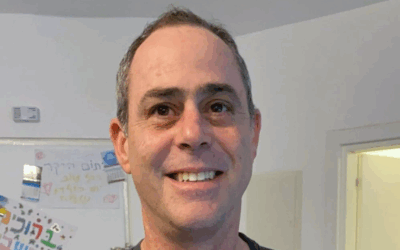
Speaking to Jewish News, Adam said that a lot of people had come to the Board, “and told us that they think that the one of the biggest problems they have is that it’s really difficult to know where to go to find certain bits of information about 7 October…there’s no central place where it’s all being kept.” He paid tribute to the incredible work done by some organisations, including the Hostages and Missing Families Forum and the October 7th Mapping Project, but said that “we wanted one resource that can be a starting point for people to really find all of the necessary information that they need or they’re looking for; one that is very much focused on the victims and the hostages and the families and also the heroes.”


The resource includes documents which map the massacre in full, a number of documentaries focused on the tragedy, interviews with released hostages and videos of hostage family members. It also includes videos of those who survived the Nova festival massacre, and a special section, as Adam mentions, on the heroes of 7 October; people who did everything they could to save others – often sacrificing their own lives in the process. Jake Marlowe, for example, was one of the British victims of 7 October – he was working as security at the Nova festival.
“Shlomi Ziv was a hostage and was rescued”, said Adam. “Jake and he were close, and he revealed that Jake risked his life to save people. He didn’t flee. He stayed behind to try to make sure that people got to safety.”

The resource also contains a toolbox for care, clarity, and confidence: “Standing Strong in the Face Of Antisemitism” – a collection of images and prompts to support people trying to make sense of their recent experiences around Israel.
The goal, says Adam, is to “remind people what happened on 7 October and not let it become abstract. When you hear 7 October being talked about in the news, it’s usually just a one-sentence remark, or an acknowledgement by an MP or a Minister about it, but the gravity of what happened and the scale of what happened doesn’t really sink in until you really engage with the stories.
“This is our way of contributing, to counter the misinformation and disinformation, and also just get the word out – so people who really aren’t aware have a chance to connect on some level, some human level that goes beyond politics and that goes beyond abstractions. We’re not just talking about numbers, we’re talking about lives.”
The hub – Adam praises the work of Board staff, in particular the organisation’s Campaigns Officer, Ariella Knoble-Gershon – also includes practical suggestions for ways to commemorate the tragedy – how to organise an event, for example, or resources for educators, providing guidance on how to talk about 7 October, or teach about it. The October 7th Mapping Project, which the hub links to, is described as a particularly useful resource.
“You can see exactly which community or kibbutz was attacked, and where, which victims were there”, says Adam. “You’ll see the house where my family lived and how close it was to the front gate, and how close to the Gaza border.
“I think also just gives you a sense of the scale – how far they [Hamas] actually got… getting close to outer Ashkelon. It was a massive attack that I don’t think anyone has really properly processed the scale of. We sometimes look at the news and you would think that it was a just a minor terrorist attack that’s being talked about. I don’t think people realise just what level of impact and how dangerous it could still have been if they got any further. They were very close to getting into the heart of some central cities, if they hadn’t been held back by the IDF.”
A key aim is also to preserve the information relating to the event – at a time when it is still fresh – and raw – in people’s minds. Adam described how projects to memorialise other terrible tragedies in Jewish history “usually started decades after in earnest…a lot of momentum was lost.” And he fears that even though it has not yet been 2 years since, that is happening here as well.
“Not only is the media sort of moved on from discussing 7 October properly and even humanising the victims, but I think the Jewish community as a whole is all wrapped up in what’s going on currently”, he says, citing the “various kind of fractious debates that people are having right now about Israel.
“I think we have to provide something that can unite us all. And I think that focusing on the hostages is one area that everybody in the Jewish community really agrees on. And so let’s start from there, and let’s build on that, and let’s see what we can do with it together as a community and as a whole people.”
Visit the 7 October Resource here.

Keep community journalism free.
Jewish News is free for everyone. No paywall. No barriers. Just trusted journalism for anyone who wants to stay connected to Jewish life in Britain.
If you value that, please support us.
From as little as £5 a month, you can help keep our journalism free and accessible to all.
Every day, we report on the issues that matter to our community. We celebrate achievements, support charities, challenge antisemitism and ensure Jewish voices are heard more widely.
From as little as £5 a month, you can help us continue to:
- Report on the stories shaping Jewish life in the UK and beyond
- Bring our community together through shared stories, events and campaigns
- Celebrate the people, culture and moments that define our community
- Support organisations doing vital work across Jewish Britain
You can make a one-off donation or become a regular supporter. Every contribution helps keep our journalism free, independent and accessible to all.
If everyone who values Jewish News gave a small amount, it would make a real difference to our future.