Prefer Jewish News on Google
Board president condemns ‘extremist settler violence’ and Israeli government ‘racists’
Phil Rosenberg was speaking at an event with the Palestinian–American Ahmed Fouad Alkhatib on the topic of how we can help to make peace possible
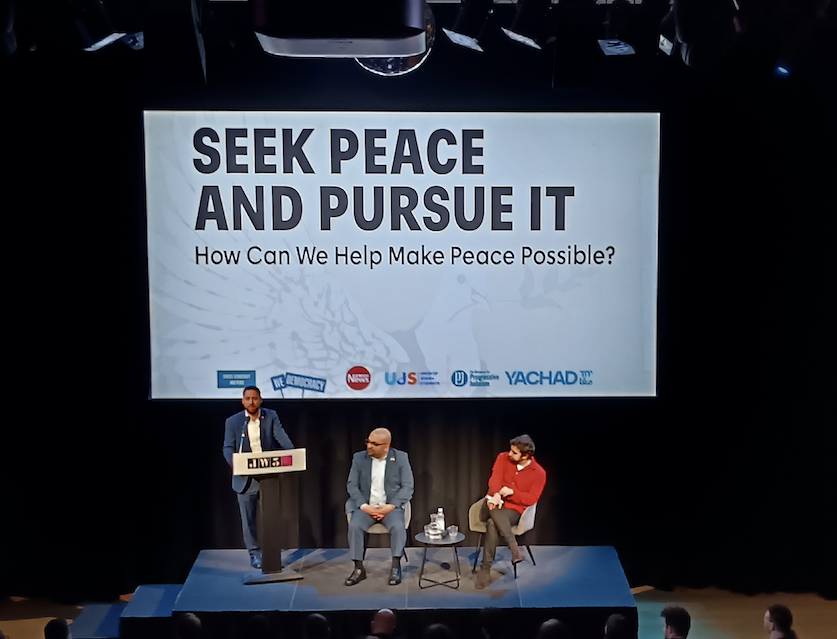
The President of the Board of Deputies told a London audience this week that British Jews wanted to see an Israeli government free of “racists and bigots” such as Itamar Ben-Gvir who were “a stain on the Zionist project”.
Phil Rosenberg said his personal hopes for a two-state solution existed because of, rather than in spite of, his Zionism, and he wanted to see how British Jews could “play our part”.
Loud applause broke out when he continued: “We also need to see things from Israel. We need an immediate end to the extremist settler violence we see in the West Bank.”
He also made it clear that for progress there needed to be change on the Palestinian side, starting with the return of the body of the final Israeli hostage. “Israelis are not wrong to want to see Hamas removed from power, disarmed,” he said. “Also Iran too, and Hezbollah and the Houthis. Israel is not wrong to want security. We also need to see a reformed Palestinian Authority ending the incitement and corruption, making it a government worthy of governing a new state and a true partner for peace with Israel.”
Uncomfortable truths such as those were a theme of the event he was addressing on Sunday evening, whose main speaker was Ahmed Fouad Alkhatib, the Palestinian–American activist and blogger whose voice since the 7 October attacks has stood out as informed, balanced and articulate. From his home in the US he keeps closely in touch with numerous groups of people in Gaza. Under the title How Can We Help Make Peace Possible, he gave a fluid and engaging description of the internal and external barriers.

Among the internal problems was segregation in Gazan society: the divide between what he termed locals and refugees.
Native Gazans, who make up 70 percent of people in the territory, live in abject horror, Alkhatib said, and spend most of their day on survival; the other 30 percent inhabit a parallel universe. “They’re going to cafes. They’re eating pretty well.” These people might get paid by Hamas, or might have stolen or extorted aid. Hamas, and what remained of it, were a big beneficiary of the class divide and there was an urgent need to redirect aid and commerce away from it, and to stem the resentment the inequality caused.
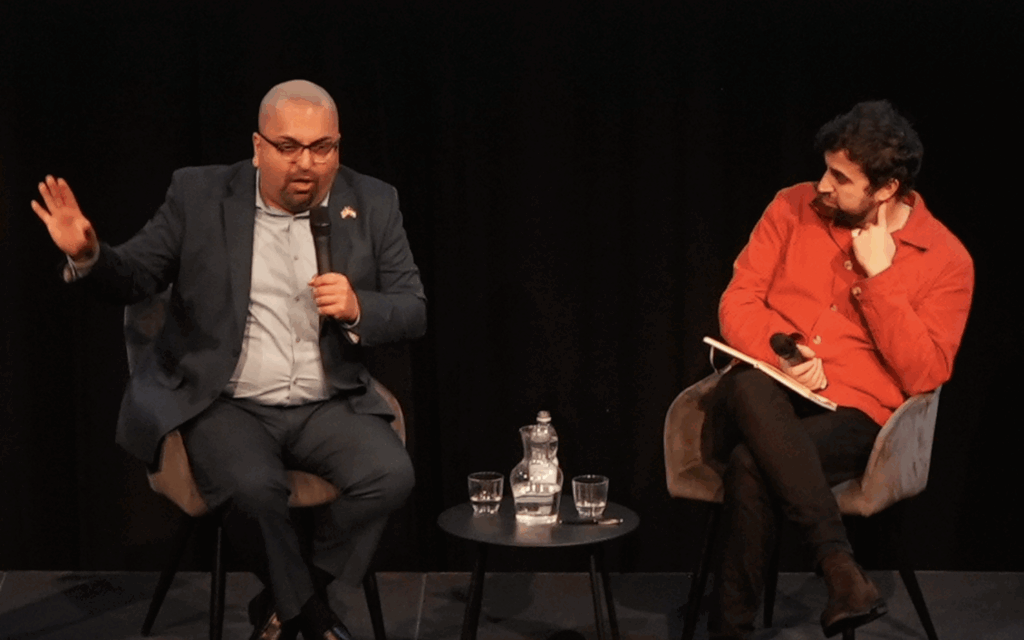
More positively, Alkhatib saw a rare window opening up, an opportunity to create a new, young generation of political leaders “who had to be under 40” and who would redefine Palestinian identity in Gaza.
Until now politics in the territories had been binary between Fatah and Hamas. “The PLO, as a representative body of the Palestinians, is moribund. So Gaza could be the starting ground for new political parties that are not defined by opposition to Israel, but defined by the nation-building agenda.”
Alkhatib did not have a solution for ridding the territory of Hamas, of which he is an outspoken critic, and said there was little appetite among other countries to disarm the group in the red zone that it controls. But hope could be found among the citizens: “The people of Gaza are saying, ‘Can we stop doing this resistance nonsense that Hamas has been forcing us into for the last 20 years? Can we not be perpetual [lab] rats on behalf of … political Islam?’ And they’re actually talking about peace and about progress.”
Among the external problems were what he called the Quote Community, the activists about whom the term “pro-Palestinian” required quotation marks to distinguish them from true supporters. Their main aim, particularly in the United States, was to co-opt the Palestinian cause with their own social cause, such as Black Lives Matter, abortion rights or the LGBT community.
The Quote Community was trying to simplify the problems in Israel and Palestine, which he said it was important to resist. “When you say, ‘Actually, it is complicated,’ that is so offensive that it triggers people,” Alkhatib said to audience laughter.” They’re like, ‘How dare you? No, it’s simple, white Jews are colonisers, and Jesus was Palestinian.’”
Alkhatib, founder and director of the Realign for Palestine project at the Atlantic Council think tank, is a pro-Palestinian without quote marks who for more than two years has spoken with moral clarity for the dignity of all those in the region. On Sunday he thanked his Jewish audience for its allyship, and was met with equal thanks.
The event was organised by groups including WeDemocracy, the Movement for Progressive Judaism and Yachad, and was partnered by Jewish News.

Keep community journalism free.
Jewish News is free for everyone. No paywall. No barriers. Just trusted journalism for anyone who wants to stay connected to Jewish life in Britain.
If you value that, please support us.
From as little as £5 a month, you can help keep our journalism free and accessible to all.
Every day, we report on the issues that matter to our community. We celebrate achievements, support charities, challenge antisemitism and ensure Jewish voices are heard more widely.
From as little as £5 a month, you can help us continue to:
- Report on the stories shaping Jewish life in the UK and beyond
- Bring our community together through shared stories, events and campaigns
- Celebrate the people, culture and moments that define our community
- Support organisations doing vital work across Jewish Britain
You can make a one-off donation or become a regular supporter. Every contribution helps keep our journalism free, independent and accessible to all.
If everyone who values Jewish News gave a small amount, it would make a real difference to our future.