Bringing World Jewish Relief’s work in Ukraine into virtual reality
An ambitious new project by WJR uses cutting-edge tech to bring supporters and beneficiaries of their work almost face-to-face

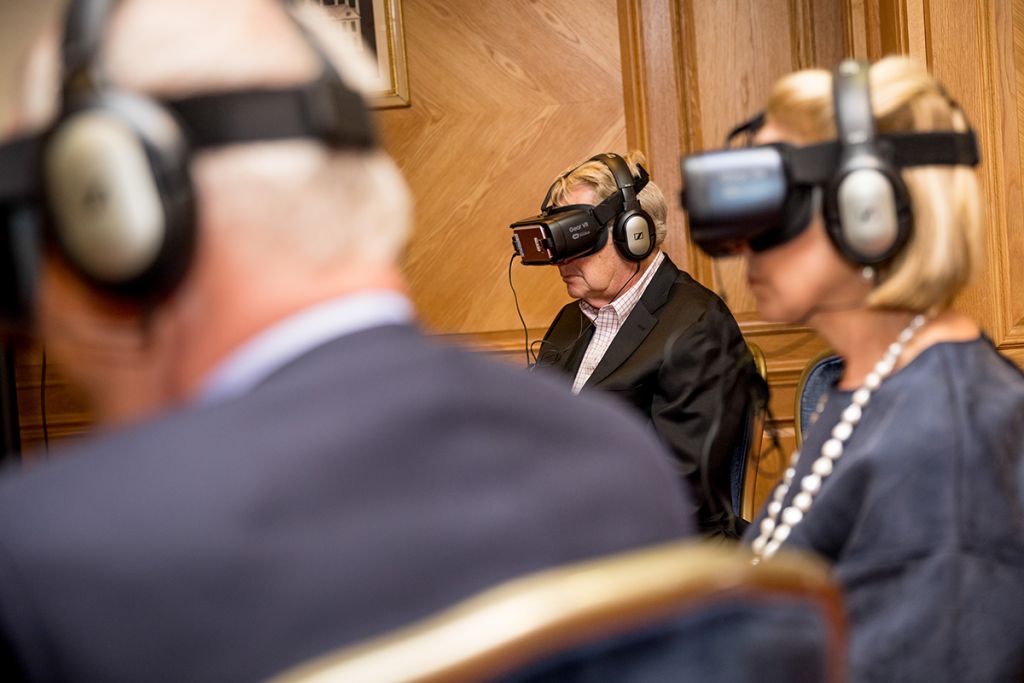
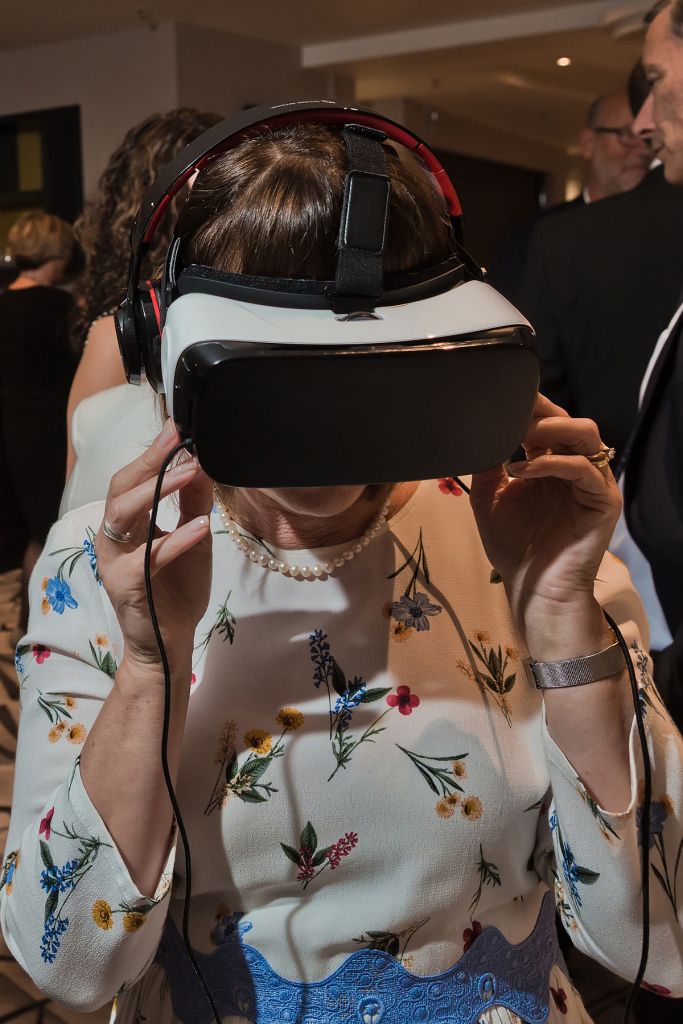
I’m standing up, wearing a headset, and looking for all the world like a Cyberman extra from Doctor Who.
But in one of the most ambitious projects yet undertaken by a Jewish charity, World Jewish Relief (WJR) has harnessed cutting-edge technology to bring supporters almost literally face-to-face with the people they support.
My Cyberman experience was in order to see WJR’s remarkable virtual reality (VR) film, a brief but innovative look at the tiny home of Sofia, who lives in Zaporozhye, in Ukraine.
As Rebecca Singer, WJR’s communications officer, explained: “We take missions to our projects all the time, but it’s not always possible to have everybody see people on the ground. So we decided to bring a little bit of Ukraine to the UK.”
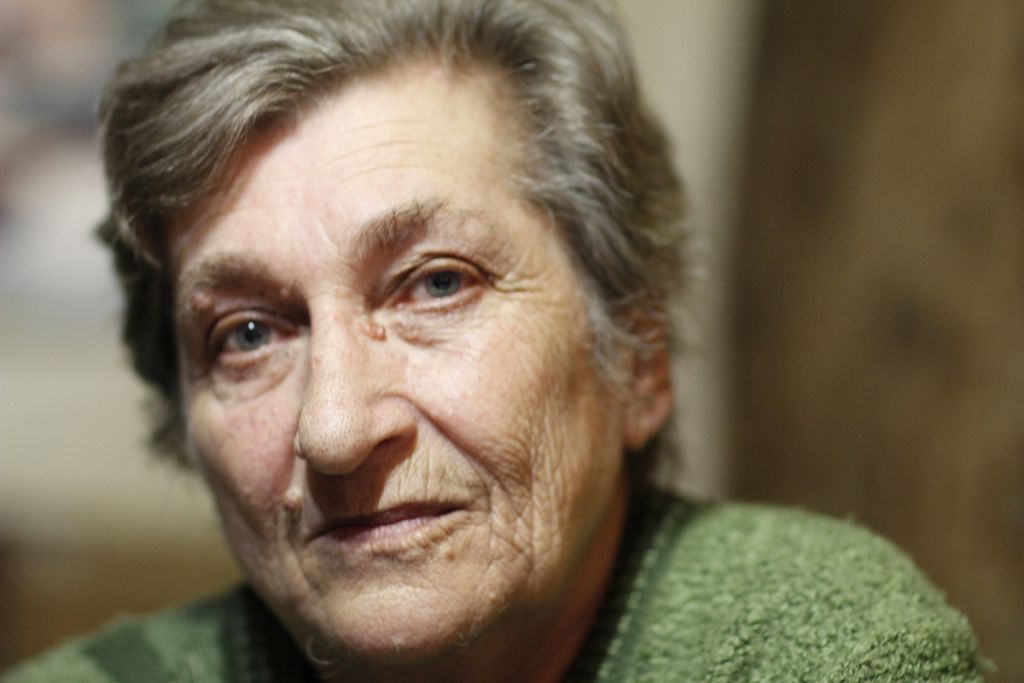
WJR chose Sofia for its innovative project. Earlier in the year, Sofia told Singer: “If not for WJR, I would have died like a dog.”


She is a Jewish widow in her 70s whose husband died seven or eight years ago. The couple’s only son died of cancer when he was four.
Now Sofia, who suffers from a number of chronic health conditions, which are particularly bad in the winter, lives alone, in a room and a half with few, if any, concessions to modern life.
Tanya Freedman, whose background is in documentary film-making, is WJR’s digital communications manager. She went to Ukraine to make the VR film.
It differs from a normal two-dimensional film because the headset allows the viewer to see Sofia’s home in 360 degrees, so it’s possible to look at Sofia or move around the confined space, looking up at the ceiling or down at the floor.
“Normally, VR films are shot outside in large open areas, so it’s very different to film in such close-quarter conditions,” Freedman explains.
“It’s very new technology and we are pioneers in using it — as well as breaking some conventions rather successfully.”
At one point Freedman lost half the footage and was compelled to reshoot by filming the space inside the home, and then slotting Sofia into the film – “a massive editing job!”
To date, the VR film has been available at WJR dinners in London
and Manchester. But Singer and Tanya say people are welcome to drop in to WJR’s offices to see for themselves what life is like for some
in Ukraine.
It’s a different way of showing supporters where their money goes – even if they do end up looking like Cybermen.

Keep community journalism free.
Jewish News is free for everyone. No paywall. No barriers. Just trusted journalism for anyone who wants to stay connected to Jewish life in Britain.
If you value that, please support us.
From as little as £5 a month, you can help keep our journalism free and accessible to all.
Every day, we report on the issues that matter to our community. We celebrate achievements, support charities, challenge antisemitism and ensure Jewish voices are heard more widely.
From as little as £5 a month, you can help us continue to:
- Report on the stories shaping Jewish life in the UK and beyond
- Bring our community together through shared stories, events and campaigns
- Celebrate the people, culture and moments that define our community
- Support organisations doing vital work across Jewish Britain
You can make a one-off donation or become a regular supporter. Every contribution helps keep our journalism free, independent and accessible to all.
If everyone who values Jewish News gave a small amount, it would make a real difference to our future.