Prefer Jewish News on Google
British Museum removes ‘Palestine’ from ancient history displays
Museum concedes term is anachronistic and politically charged after complaints over ancient Middle East labelling
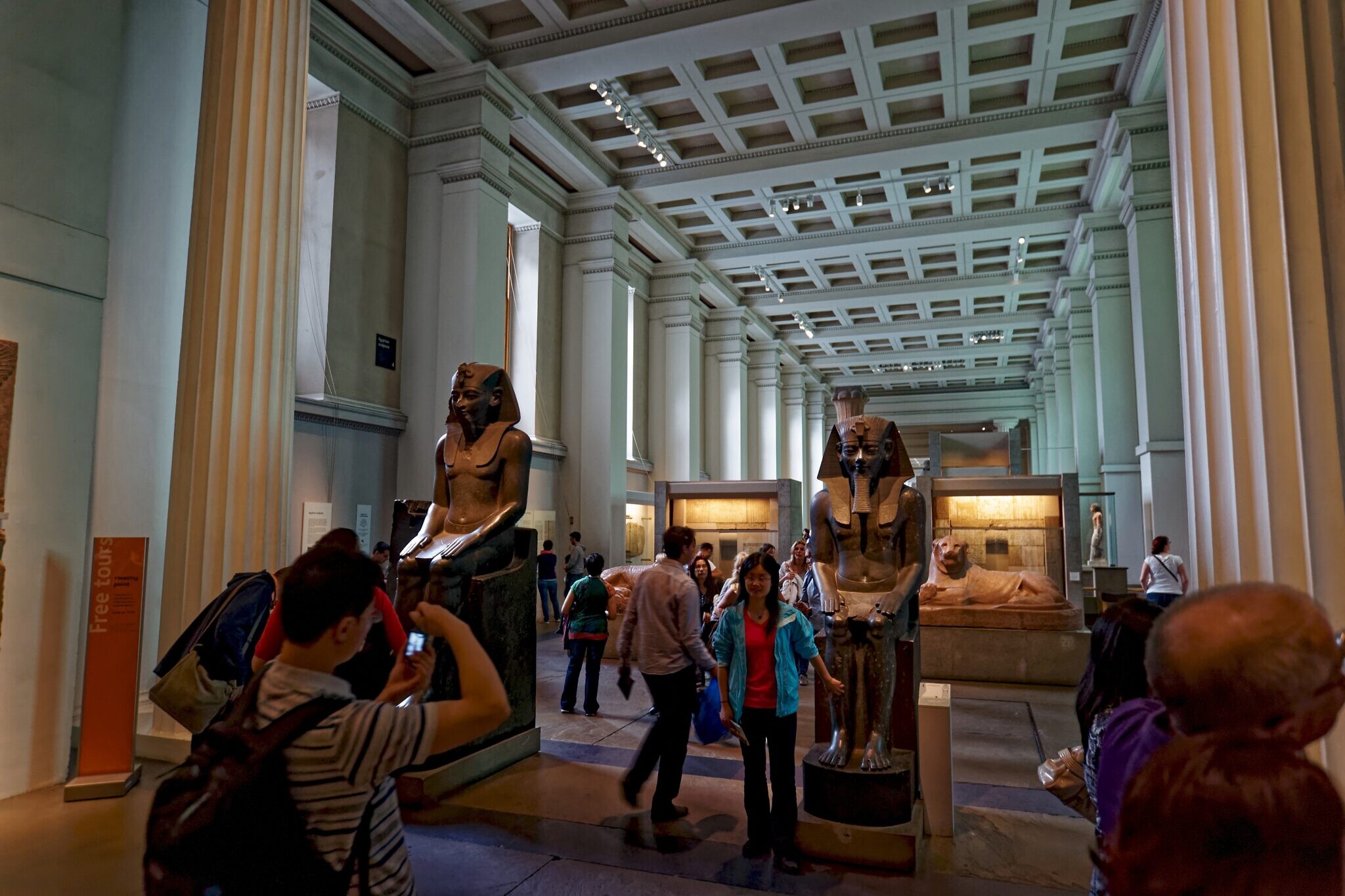
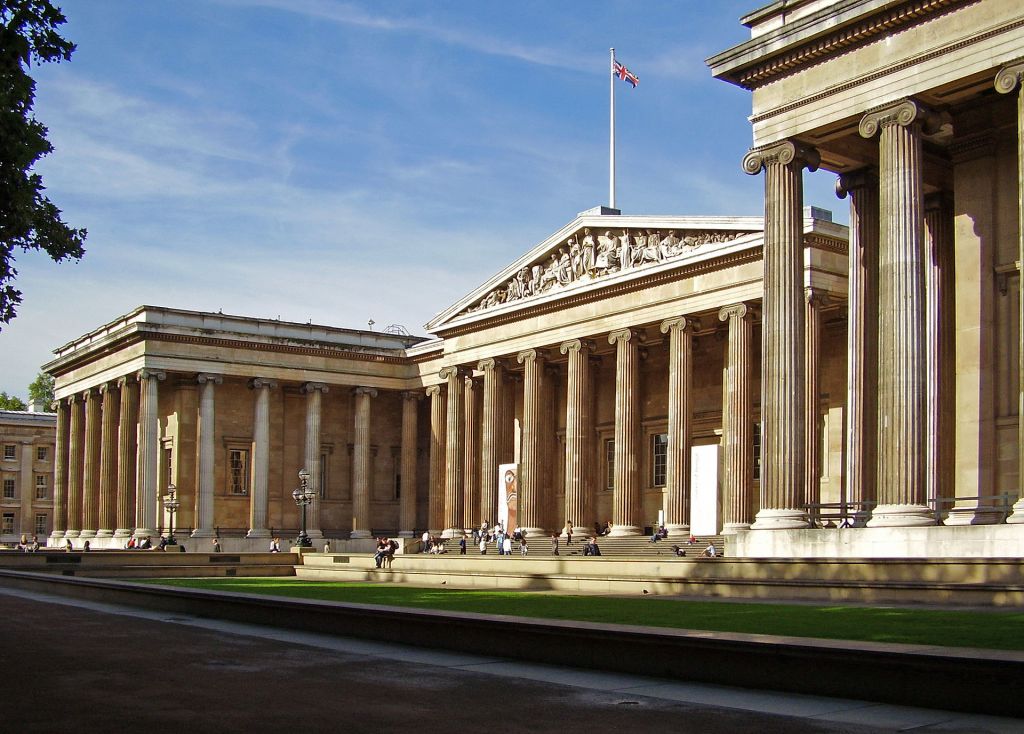
The British Museum has removed references to “Palestine” from parts of its ancient Middle East galleries, accepting that the term was used inaccurately and no longer carries historic neutrality.
The decision follows complaints about maps and information labels that described the eastern Mediterranean coastline as Palestine and ancient peoples as being of “Palestinian descent”, despite dating back thousands of years before the term existed.
Some displays relating to ancient Egypt and the Phoenicians have already been amended, with further changes planned as part of the museum’s long-term redisplay programme.
Concerns were raised by UK Lawyers for Israel, a voluntary association, which argued that using the modern, politicised term retroactively distorted history and obscured key periods of Jewish civilisation.
In a letter to the museum’s director, Nicholas Cullinan, the group said: “Applying a single name – Palestine – retrospectively to the entire region, across thousands of years, erases historical changes and creates a false impression of continuity.

“It also has the compounding effect of erasing the Kingdoms of Israel and of Judea, which emerged from around 1000 BC, and of re-framing the origins of the Israelites and Jewish people as erroneously stemming from Palestine. The chosen terminology in the items described above implies the existence of an ancient and continuous region called Palestine.”
Museum curators accepted that the term was not historically meaningful when applied to periods such as the second millennium BC, particularly given the modern political weight attached to the word.
One example highlighted was an Egyptian gallery panel describing the Hyksos – a people linked to the Nile Delta – as being of “Palestinian descent”. That wording has now been changed to “Canaanite descent”.
Maps depicting Egypt’s New Kingdom period were also criticised for referring to Egyptian “dominance in Palestine”, while the Phoenician civilisation was described as being based in Palestine. Those references are now being reviewed.
Historically, the southern Levant has been known by different names at different times. Ancient sources refer to Canaan from around 1500 BC, while Egyptian and Assyrian records from later centuries mention Israel and Judah. Greek writers, including Herodotus in the fifth century BC, were among the first to use the term Palestine, which later became the name of a Roman and Byzantine province.
The museum acknowledged that while Palestine became a broadly neutral geographic term in the 19th century, it now carries a specific and highly politicised meaning.
A British Museum spokesperson said: “For the Middle East galleries for maps showing ancient cultural regions, the term ‘Canaan’ is relevant for the southern Levant in the later second millennium BC.
“We use the UN terminology on maps that show modern boundaries, for example, Gaza, West Bank, Israel, Jordan, and refer to ‘Palestinian’ as a cultural or ethnographic identifier where appropriate.”
Further changes will be made on a case-by-case basis as part of the museum’s wider redevelopment plans.

Keep community journalism free.
Jewish News is free for everyone. No paywall. No barriers. Just trusted journalism for anyone who wants to stay connected to Jewish life in Britain.
If you value that, please support us.
From as little as £5 a month, you can help keep our journalism free and accessible to all.
Every day, we report on the issues that matter to our community. We celebrate achievements, support charities, challenge antisemitism and ensure Jewish voices are heard more widely.
From as little as £5 a month, you can help us continue to:
- Report on the stories shaping Jewish life in the UK and beyond
- Bring our community together through shared stories, events and campaigns
- Celebrate the people, culture and moments that define our community
- Support organisations doing vital work across Jewish Britain
You can make a one-off donation or become a regular supporter. Every contribution helps keep our journalism free, independent and accessible to all.
If everyone who values Jewish News gave a small amount, it would make a real difference to our future.