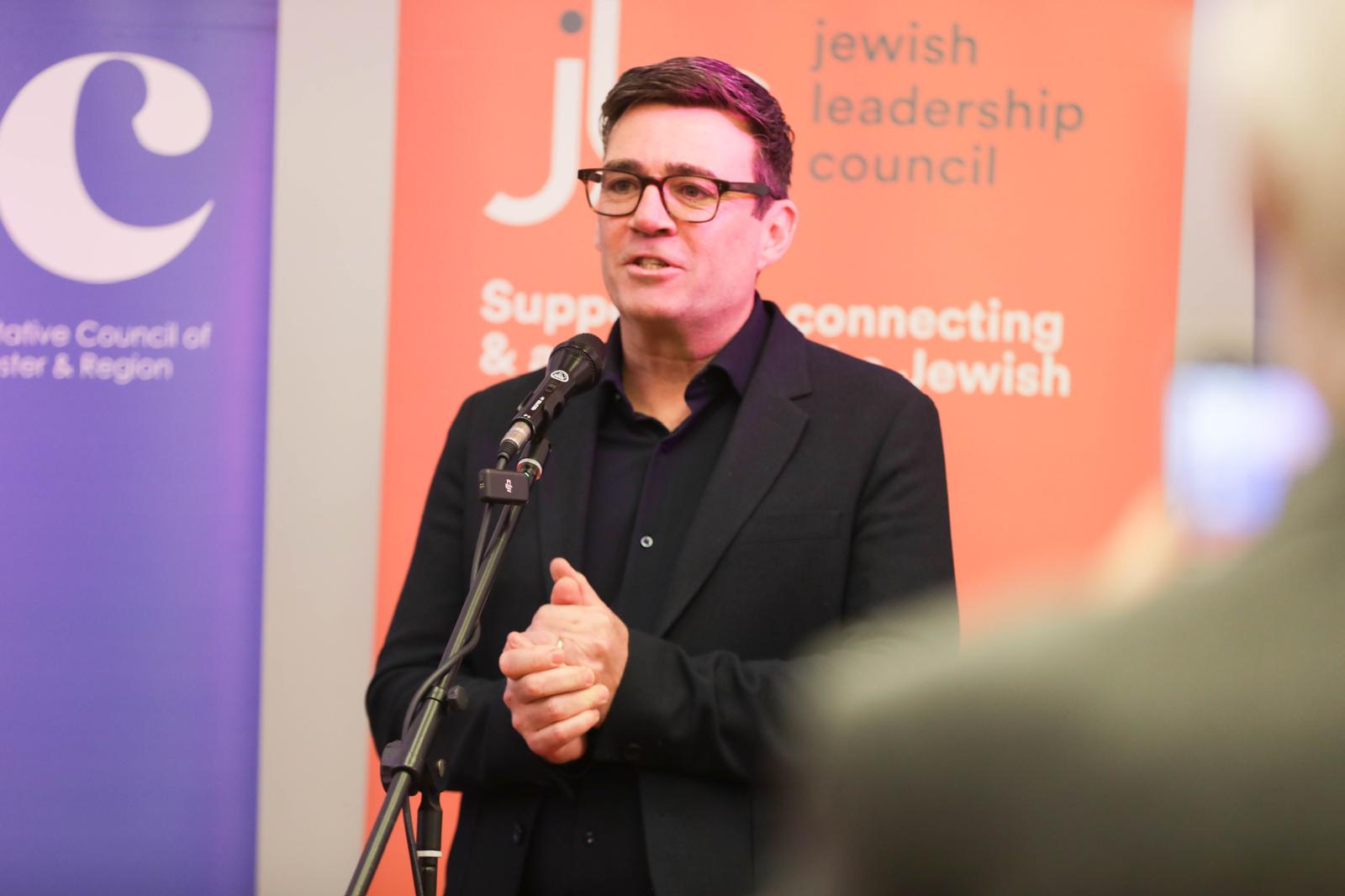
Andy Burnham addresses Manchester's Jewish community
Andy Burnham’s government is preparing to introduce measures banning imports of goods from Israeli settlements in the West Bank in the first weeks after parliament reconvenes in September, Jewish News has learned.
The move, expected to be announced during a narrow parliamentary window, comes amid heightened international focus on settlement policies and regional tensions.
Officials in the Department for Business and Trade and the Foreign Office, who have been working on the sanctions, are acutely aware that there is only a “small window of opportunity” to announce the controversial move.
Israeli elections are set for October, and the parliamentary calendar means MPs return on September 1, break again on September 17, and reconvene on October 12—a tight schedule for such a significant policy shift.
Sources told Jewish News there is recognition that some leading communal organisations in the UK are prepared to oppose the ban strongly.
At the same time, officials note there is significant opposition among many UK Jews to settlement policy and to the escalation of violence.
Burnham has also been briefed on the timing of the Jewish High Holy Days—including Rosh Hashanah, which begins on the evening of September 11—and the importance of avoiding contentious announcements regarding Israel during these significant dates.
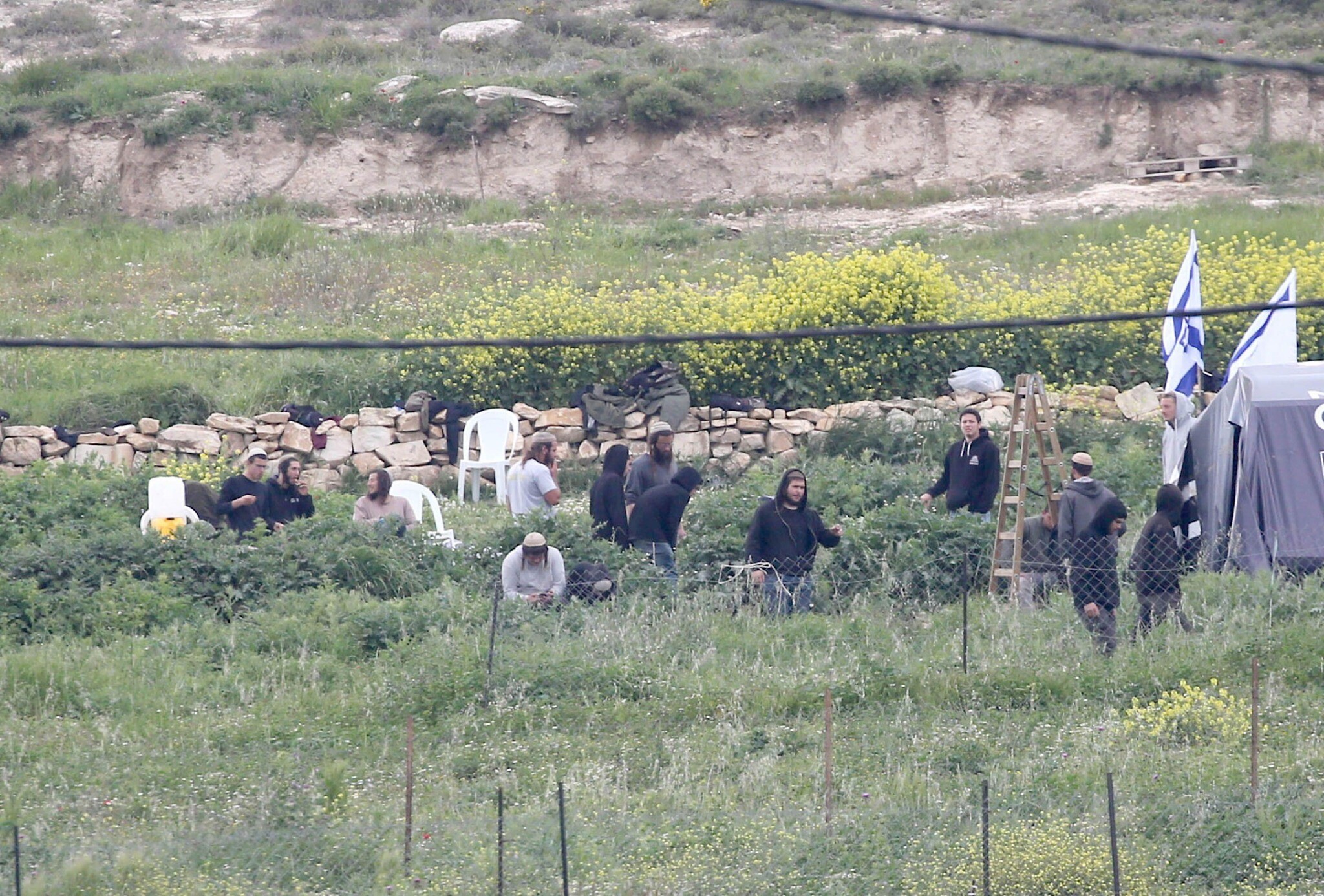
Nablus. 26th Mar, 2026. Jewish settlers are establishing a pastoral outpost at the site where Jewish settler Yehuda Shmuel Sherman was killed in Palestinian agricultural fields in the village of Beit Imrin, north of Nablus in the West Bank. Credit: SOPA Images Limited/Alamy Live News
Burnham has made no secret of his desire for his government to adopt a tougher stance towards Israel’s government than was seen under Keir Starmer’s leadership.
He laid the groundwork for the settlement import ban in an interview with the Guardian earlier this month.
Addressing settler violence and the continued expansion of West Bank settlements, Burnham stated that Benjamin Netanyahu’s government was undermining the possibility of a two-state solution.
“That’s why we need to do more, which includes considering further sanctions—not only on those involved in the violence in Gaza, but also on trade in goods from illegal settlements,” he said.
Jewish News understands Burnham is set to appoint a new Middle East minister following Hamish Falconer’s reassignment.
He remains aware that Ed Miliband’s appointment as Foreign Secretary has sparked concern in some parts of the community.
Diplomatic relations between Britain and Israel have been effectively paused after two years of Labour government.
Israel has been left fuming by MPs criticism of the Israel Defence Forces’ campaign in Gaza, former PM Starmer’s decision to sanction far-right ministers for misconduct in the West Bank, and recognition of a Palestinian state last year.
Netanyahu ordering strikes on senior Iranian regime leaders (Credit: @IsraeliPM)
Israel’s view of Starmer is in direct contrast to the one taken of him by many on the Labour left, and within the Greens, who claim he has been too soft on the Jewish state.
Burnham has signalled his intention to now take a tougher stance after suggesting Labour needed to apologise for its stance on the Gaza war.
The Netherlands this week became the latest EU country to announce a ban on imports of goods from Israeli settlements.
A decree approved last Tuesday will see the Netherlands ban the “import, purchase, and sale of goods originating from unlawful Israeli settlements in the Palestinian Territories” starting September 22.
Belgium introduced its own ban earlier this month, while Spain has officially prohibited products from Israeli settlements and is actively urging the European Union to adopt wider trade sanctions.
The UK government is now determined to act, arguing that banning settlement imports is the best way to preserve the prospect of a two-state solution.
The official UK policy has looked stated that Israeli settlements in the Occupied Palestinian Territories are entirely illegal under international law, constitute an obstacle to peace, and directly threaten a negotiated two-state solution.
With other Western allies, including Canada, believed to be working on its own measures, failing to act before swiftly would leave the UK isolated from a synchronised Western diplomatic front.
Israel will hold elections on 27 October 2026 to elect all 120 members of the 26th Knesset.
UK parliamentarians argue that waiting for a broad, post-election policy review, as promised by the Starmer government, would allow irreversible “facts on the ground” to be established.
Acting beforehand signals clear, statutory consequences to the Israeli electorate and political parties regarding the economic cost of settlement policies.
Israel’s elections will determine the coalition that succeeds the 37th government led by Prime Minister Benjamin Netanyahu.
Two new centrist challengers are set to compete with Likud for the largest party: Together, a joint list of Naftali Bennett’s new party and Yair Lapid’s Yesh Atid, and Yashar, founded by former IDF Chief of Staff Gadi Eisenkot. On the left, Labour and Meretz have merged to form The Democrats, led by Yair Golan.
Support Jewish News. Keep community journalism free.
Jewish News is free for everyone. No paywall. No barriers. Just trusted journalism for anyone who wants to stay connected to Jewish life in Britain.
If you value that, please support us.
From as little as £5 a month, you can help keep our journalism free and accessible to all.
Every day, we report on the issues that matter to our community. We celebrate achievements, support charities, challenge antisemitism and ensure Jewish voices are heard more widely.
From as little as £5 a month, you can help us continue to:
Report on the stories shaping Jewish life in the UK and beyond
Bring our community together through shared stories, events and campaigns
Celebrate the people, culture and moments that define our community
Support organisations doing vital work across Jewish Britain
You can make a one-off donation or become a regular supporter. Every contribution helps keep our journalism free, independent and accessible to all.
If everyone who values Jewish News gave a small amount, it would make a real difference to our future.
Every day, we report on the issues that matter to our community. We celebrate achievements, support charities, challenge antisemitism and ensure Jewish voices are heard more widely.
From as little as £5 a month, you can help us continue to:
Report on the stories shaping Jewish life in the UK and beyond
Bring our community together through shared stories, events and campaigns
Celebrate the people, culture and moments that define our community
Support organisations doing vital work across Jewish Britain
You can make a one-off donation or become a regular supporter. Every contribution helps keep our journalism free, independent and accessible to all.
If everyone who values Jewish News gave a small amount, it would make a real difference to our future.

 Prefer Jewish News on Google