Prefer Jewish News on Google
Carrying the legacy of my grandmother’s Holocaust survival
Tabitha Steemson writes about her grandmother, Agnes Kaposi
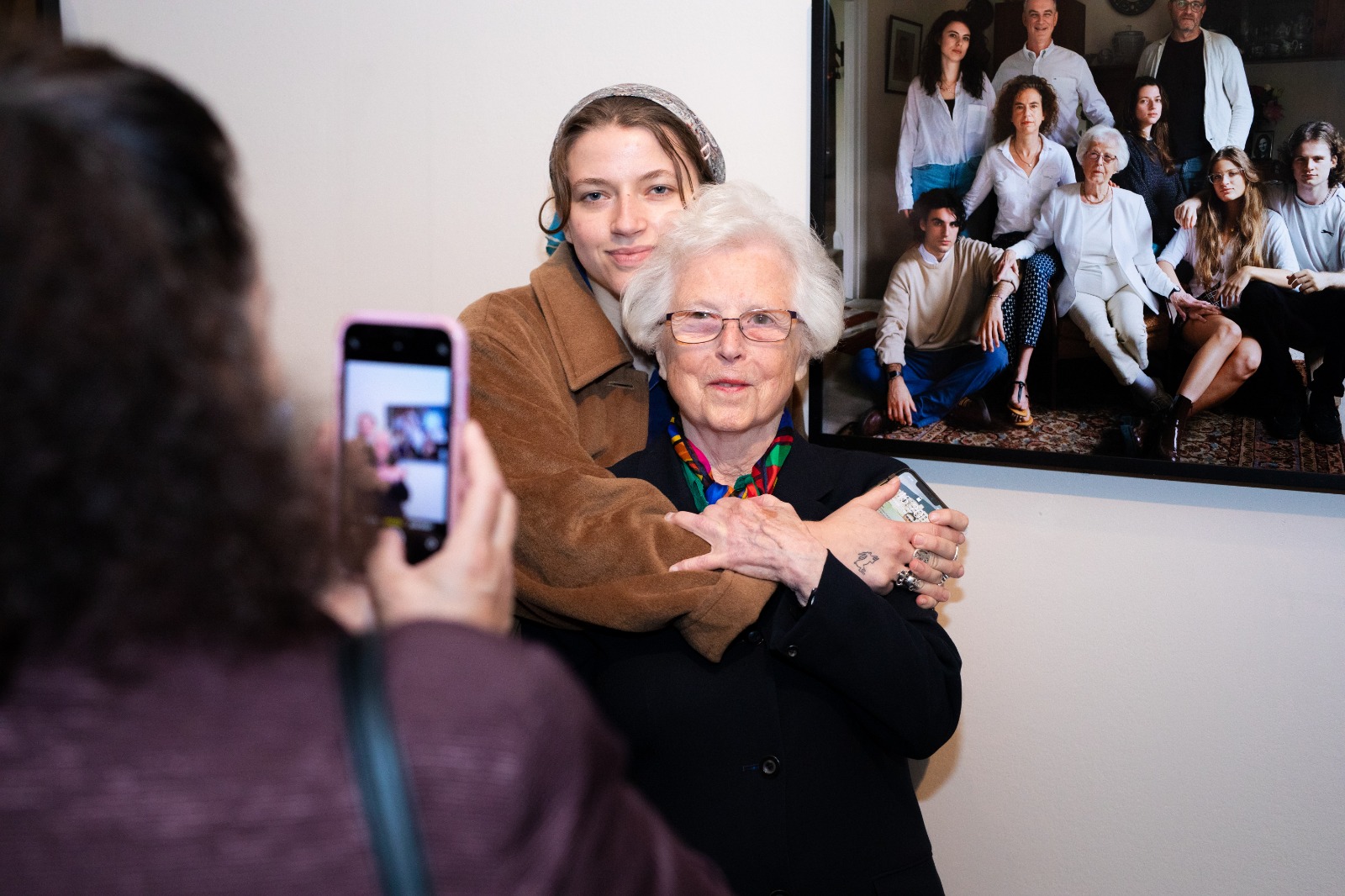
This is the busiest week of my grandmother’s year.
For the best part of a decade, finding time with her during the last week of January has been harder than convincing her that, when it’s over, I will come to see her.
With the theme of this year’s Holocaust Memorial Day being “Bridging Generations”, for the first time, the same thing has begun to happen to me. I can’t begin to claim playing catch-up, but as the months have gone on, evenings and afternoons have steadily filled.
My grandmother insists that the reason she’s in such high demand is because of what she is (a Holocaust survivor), not who she is (a matriarch, engineer, academic). I’ve fought back on this. Her story shaped the life that followed survival. It’s part of her, not merely a label.
That said, this year I’ve started to understand what she means.
I’m one of thousands of grandchildren of Holocaust survivors. My grandmother was born in Hungary in 1932. Her family were blacklisted for both their socialist beliefs and their Jewish heritage.
During the war, they survived a brief stint in the Debrecen Ghetto before deportation to a series of forced labour camps. They narrowly missed being transported to Auschwitz. Theirs was the only train in history to be diverted from the camp, saving them from the fate suffered by half a million Hungarian Jews.
My grandfather was born in Ujpest, a Budapest suburb. As the son of a decorated war hero, his family were protected for longer than most. When this ‘goodwill’ ran out, they were hidden by his father’s army junior from October 1944 until the city’s liberation.
A few months later, my grandmother’s family returned. They met in 1945, married in 1952, and fled to the UK after the uprising in 1956. Both engineers, they built careers and then a family here, things they felt unable to do in communist Hungary.
Because of their survival, I now have the privilege of living a regular life. We, descendants of Holocaust survivors, live in relative freedom, never having suffered the atrocities of our ancestors. What do I have to add?
It’s certainly not just telling my grandparents’ story. After all, many of the descendants alive today won’t know their family’s stories at all. Some never lived to recount them, and some never told them due to trauma or fear. Recordings of my grandfather telling his testimony sit in the Imperial War Museum, and my grandmother’s book recounts hers meticulously. These records will give you a far better account of what happened and how it felt than my brief account.
Organisations like the Holocaust Memorial Day Trust are helping ensure that their stories are taught to future generations. As descendants, our impact is not in retelling them, but in how they have shaped who we are – often in ways so ingrained we barely notice them at all.
When I crack an egg, I scrape the inside of the shell with my thumb to get the last bit of white out, not wasting a drop. There are dozens of rolls of toilet paper crammed into every corner of my tiny one-bedroom home, just in case I ever have to go without. I hate sudden changes of plan, don’t believe in guaranteed outcomes, but am surprisingly practical when something goes wrong.
More importantly, I grew up knowing that prejudice leads to atrocity – that the worst evil comes from hating people for something they did not choose – and believing that this could happen again.
We may keep their stories alive, but it’s their instincts that truly live on through us.
Still, it’s not always comfortable having a sense of duty to educate and share survivors’ testimonies, but the truth is, whether publicly or not, we can’t really help it.
Just as my grandmother’s life has been shaped by what happened to her, in a lesser way, mine has too. I am not a substitute voice, but evidence of my grandparents’ miraculous survival.
Legacy goes beyond testimony. In Jewish tradition, history is more than just a record; it’s a way to learn what to do next. Stories are questioned, debated and applied, forming the groundwork for responding to new challenges and answering new questions. The past doesn’t just exist behind us; it actively shapes who we are now.
What I can do with my grandparents’ legacies is not just repeat their stories, but use them as a guide in my own life. Those instincts I’ve inherited and the knowledge I’ve lived with are a guide. I can turn them into empathy, and use them to make the world slightly fairer, slightly (dare I say), better.
It is an honour to inherit their legacies, though not one they would have ever chosen to bestow. The very history that nearly ended their lives is now something I can carry openly, even proudly. That is a privilege I will never take for granted. I know, from them, how lucky that is, to be able to use their history to stop it repeating itself.

Keep community journalism free.
Jewish News is free for everyone. No paywall. No barriers. Just trusted journalism for anyone who wants to stay connected to Jewish life in Britain.
If you value that, please support us.
From as little as £5 a month, you can help keep our journalism free and accessible to all.
Every day, we report on the issues that matter to our community. We celebrate achievements, support charities, challenge antisemitism and ensure Jewish voices are heard more widely.
From as little as £5 a month, you can help us continue to:
- Report on the stories shaping Jewish life in the UK and beyond
- Bring our community together through shared stories, events and campaigns
- Celebrate the people, culture and moments that define our community
- Support organisations doing vital work across Jewish Britain
You can make a one-off donation or become a regular supporter. Every contribution helps keep our journalism free, independent and accessible to all.
If everyone who values Jewish News gave a small amount, it would make a real difference to our future.