Prefer Jewish News on Google
Darkness to life: carrying forward the legacy of the March of the Living
This article is the fourth in a series for UJS’ ‘7 Weeks, 7 Values’ Omer Campaign. This weeks’ value is Netzach, strength.
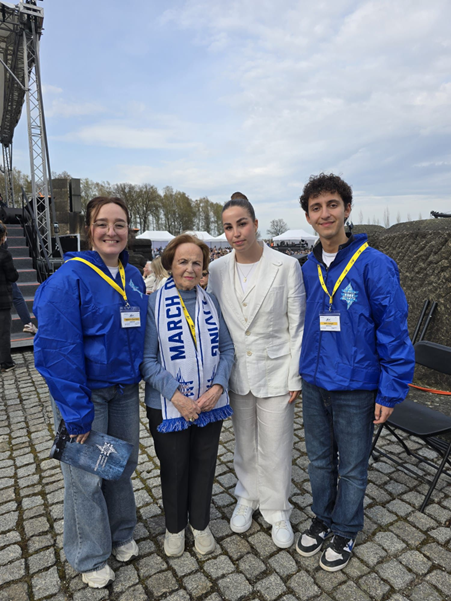
There is a difference between learning history and standing in the places where it happened. Before going on the March of the Living, I had heard survivor testimonies, studied the facts, and tried to understand the vast scale of the Holocaust. But nothing prepares you for the experience of seeing it. Walking through those sites, seeing the structures where people were murdered, fundamentally altered my understanding.
One moment that stands out is seeing the four tons of human hair preserved as evidence. Hair is a deeply personal aspect of an individual’s identity. Especially in our Jewish culture, it carries meaning and connection to your spirituality. To see it reduced to a pile, taken from people who were stripped of all they had, was a stark reminder of how dignity and humanity were deliberately erased.
Attendees on March of the Living spent two consecutive days at Auschwitz, and yet, those two days were distinctive in tone and dynamic. On the first day, I walked through the grounds of Auschwitz in silence, surrounded by an overwhelming heaviness as I took in the architecture and machinery of the Holocaust. There was a sense of mourning as we processed the enormous amounts of suffering that had occurred in that same place.
And then, the next day, the atmosphere shifted from darkness to light. As we walked through the site of such horrors, there was singing, there was dancing, there was life. Survivors walked alongside us. In a place where Jews were once dehumanised and murdered, we stood together, proudly and defiantly Jewish. Jews from across the world and denominations, marched side by side, united by a close bond: a bond of identity, memory, and resilience.
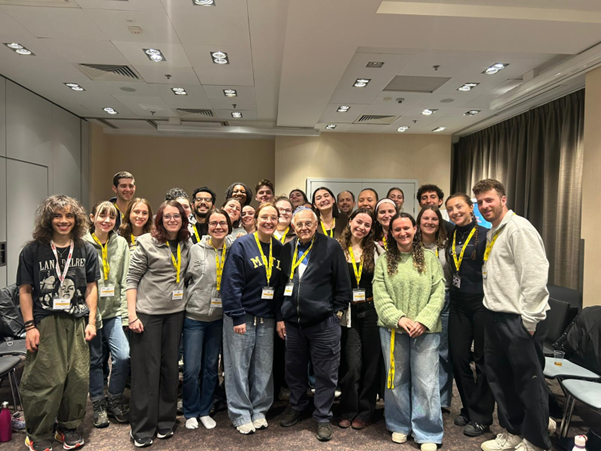
March of the Living taught me what it means to live for those whose lives were cruelly taken. It is not just about remembering; it is also about action. It is about being proud of who we are, even when it could not be more difficult. It is about speaking up, educating others, and refusing to let hatred go unchallenged. Meeting survivors reinforced this lesson.

Their willingness to share their stories is in itself an act of strength and resilience. On this, the 4th week of the Omer for which the Kabbalistic value is netzach, I am certain that our Jewish community has demonstrated immense strength and resilience. It is now our responsibility to continue that work- to ensure those stories are heard and never forgotten, to take on the strength of the generations that came before us and to give our ancient religion a vibrant life.
This sense of responsibility has taken on an even deeper meaning for me as a student midwife. Coming back from a week immersed in such darkness and grief, I return to a role that is centred entirely on life. Supporting women through birth, witnessing new beginnings, and hearing the first cries of a newborn, is the purest form of light.
March of the Living did not just teach me about our history. It showed me what it means to be Jewish, how we can build our own communities. To carry the torch is to remember, to speak, and to live proudly as Jews. And in both my identity and my future profession, that is exactly what I intend to do.
- Rebecca Saunders, JSoc president, Southbank University

Keep community journalism free.
Jewish News is free for everyone. No paywall. No barriers. Just trusted journalism for anyone who wants to stay connected to Jewish life in Britain.
If you value that, please support us.
From as little as £5 a month, you can help keep our journalism free and accessible to all.
Every day, we report on the issues that matter to our community. We celebrate achievements, support charities, challenge antisemitism and ensure Jewish voices are heard more widely.
From as little as £5 a month, you can help us continue to:
- Report on the stories shaping Jewish life in the UK and beyond
- Bring our community together through shared stories, events and campaigns
- Celebrate the people, culture and moments that define our community
- Support organisations doing vital work across Jewish Britain
You can make a one-off donation or become a regular supporter. Every contribution helps keep our journalism free, independent and accessible to all.
If everyone who values Jewish News gave a small amount, it would make a real difference to our future.