Prefer Jewish News on Google
Denying that Poles killed their Jewish neighbours, Polish activist declares victory over ‘the Jedwabne lie’
Relatives of a survivor of the 1941 pogrom say Wojciech Sumlinski has erected a “denial museum” on the graves of their family
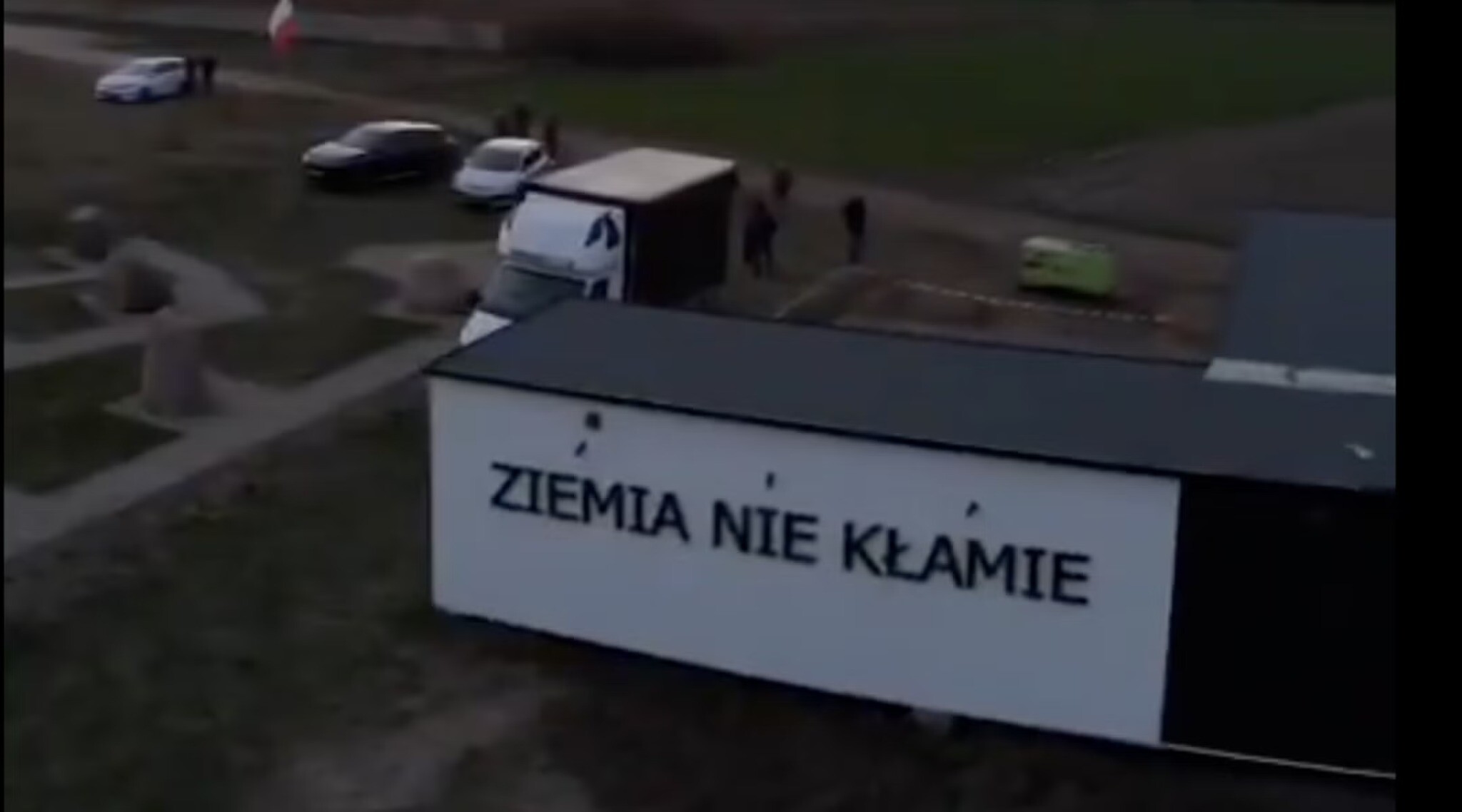
In the Polish town of Jedwabne, where historians agree that townspeople killed most of their Jewish neighbours during World War II, a brand-new “information centre” denies the crime.
The information centre is housed in two shipping containers that stand taller than anything else at the memorial site. On the side of one container, in Polish, are the words “The earth doesn’t lie” — a slogan promoted by those who believe that exhuming the site would exonerate the Poles of Jedwabne.
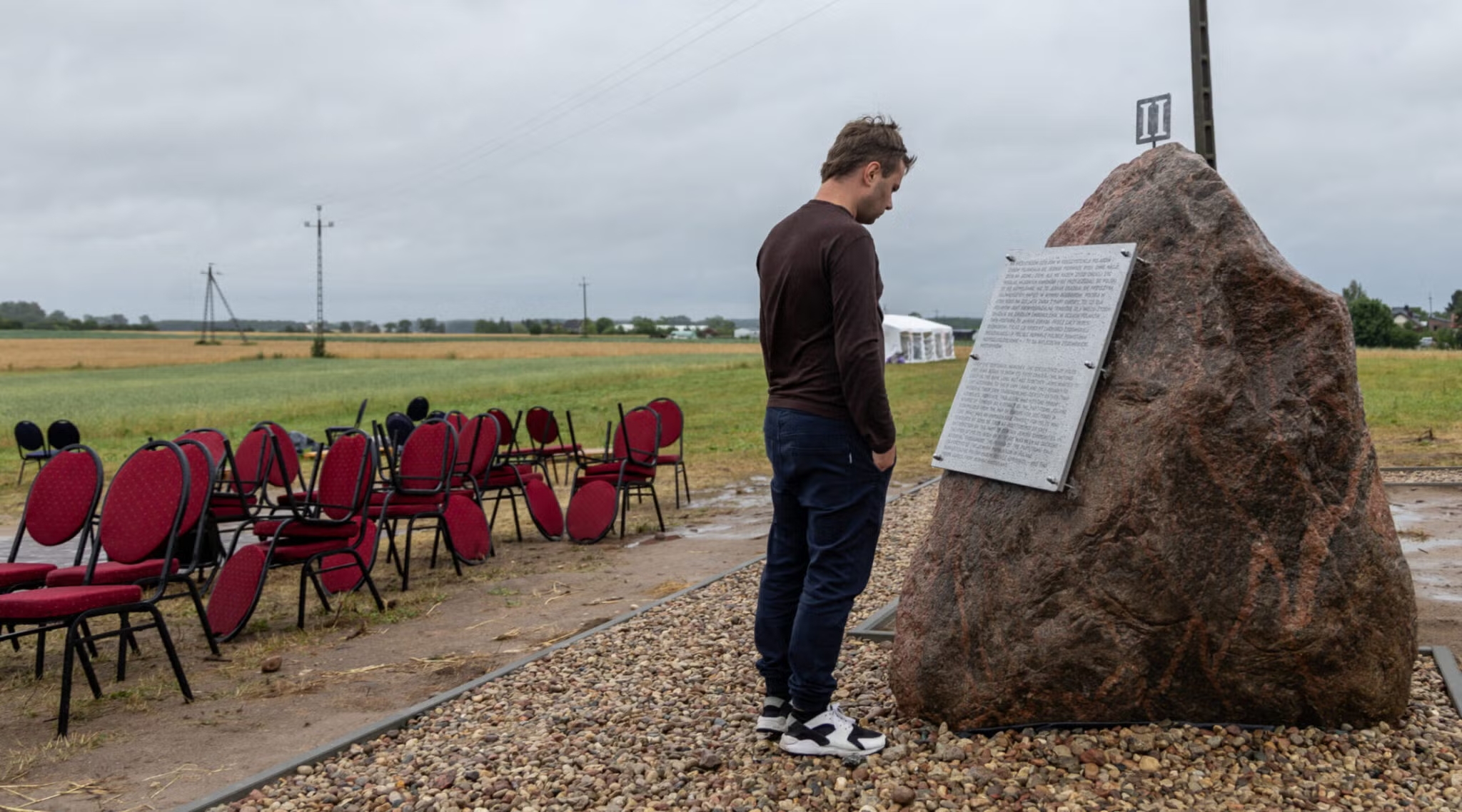
The containers were installed earlier this month and celebrated with a ribbon-cutting ceremony shared online by Wojciech Sumlinski, a right-wing Polish activist. Last year, he took credit for placing seven boulders near Jedwabne’s official memorial, bearing plaques that deny Polish responsibility and claim that Jews historically conspired against Poles.
“We call it a denial museum, because that’s what it is,” Abraham Waserstein, whose grandfather Szmul Wasersztein was one of the few survivors of the 1941 massacre, told the Jewish Telegraphic Agency about the new installation. “Putting these containers in Jedwabne [is] further desecrating the only remnants of Jewish community left there, our family’s legacy there.”
Waserstein, a law student at Duke University, said he and his family have reached out to local advocates with the goal of removing the new pavilions. But they may be fighting an uphill battle: The boulders that Sumlinski installed last year remain at the site and can be seen in the footage he posted of the new additions.

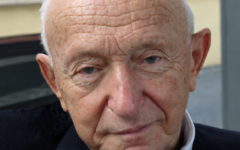
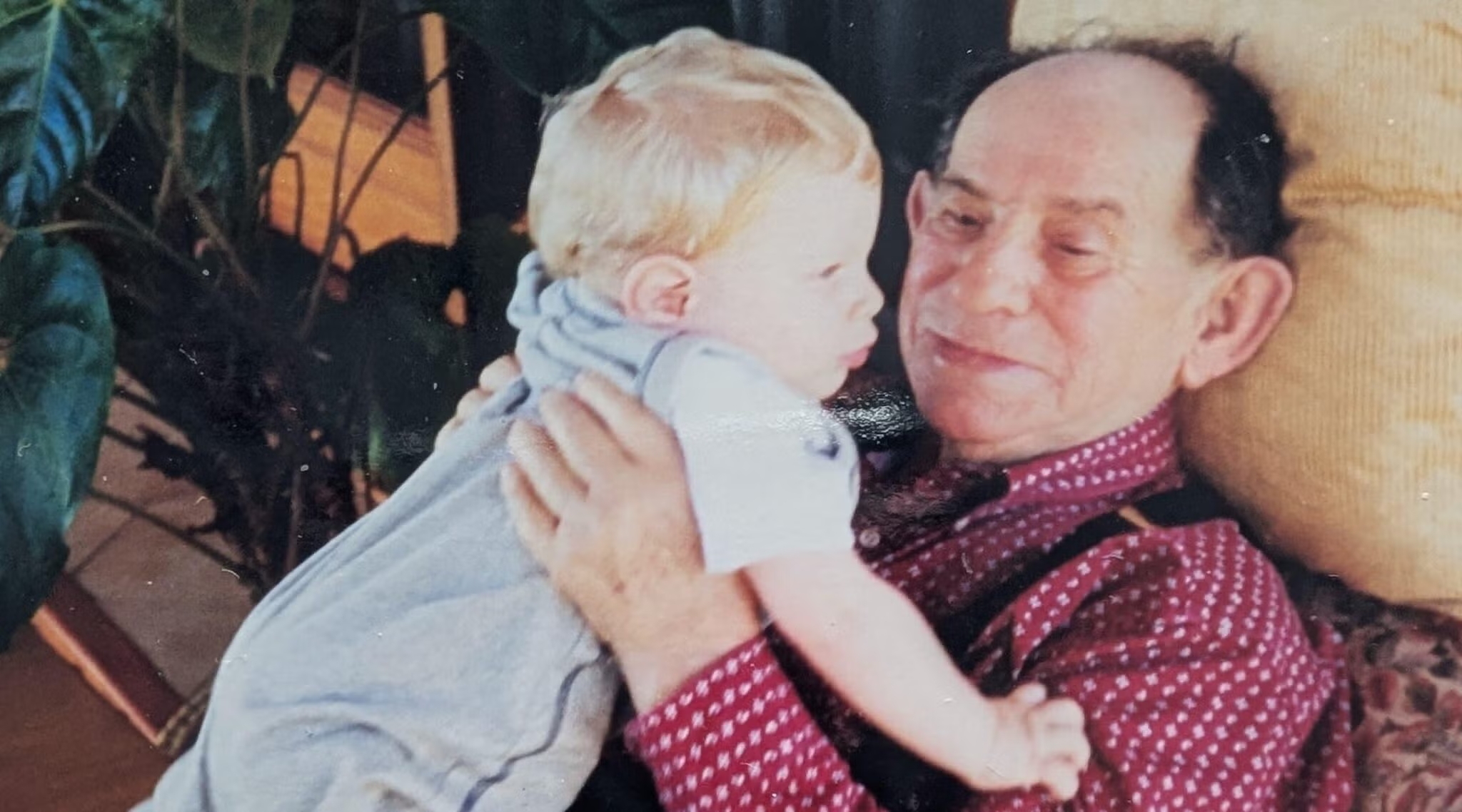
Szmul Wasersztein was among a handful of Jews who escaped on July 10, 1941, when Polish residents rounded up and killed hundreds of their Jewish neighbours, mostly by burning them alive in a barn.
Wasersztein’s deposition in 1945 was key to recording the Jedwabne massacre and led to the convictions of 12 Polish residents in 1949. His testimony also formed the heart of “Neighbors,” a 2000 book by historian Jan Tomasz Gross that sparked intense national debate. The crimes of Jedwabne, rupturing historical narratives that centered solely on the victimhood and heroism of Poles under the Nazis, became a symbol of Polish complicity in the Holocaust.
Former president Aleksander Kwasniewski officially apologised for the pogrom in 2001, and an official investigation by Poland’s Institute of National Remembrance confirmed the next year that the murder was carried out by Poles.
But Jedwabne has since become a flashpoint in Polish politics, with some far-right politicians claiming it was Germans who perpetrated the massacre and characterising research on Polish complicity as part of an effort to slander their nation. The school of those delegitimising research on Polish antisemitism or Poles who killed Jews includes the president Poles elected last year, Karol Nawrocki.
Sumlinski described Saturday’s ceremony as “the moment when groups friendly to Jewish circles, sowing the Jedwabne lie, ultimately lost the battle for Jedwabne.”
Some nationalist activists and politicians have called for exhumations of the site to prove the victims were shot by German officers rather than burned by Poles. (A partial exhumation in 2001 concluded that Polish townspeople were responsible, but further exhumation was halted because Jewish law forbids disturbing the dead.)
In addition to the exhibit that appears to call for exhumations, another shipping container installed this month demands “conditions for seeking and defending historical truth,” which it says are “in Poland’s national interest.”
Sumlinski repeatedly targeted Warsaw’s Polin Museum of the History of Polish Jews, one of the world’s leading Jewish museums, in a video in front of the installations.
He said that Jedwabne’s new “museum” represented “a place of resistance, perhaps one of our last lines of defense against what is being prepared for us, against the vision of Polin, against the strategy introduced by [Justice] Minister Żurek to support Jewish life and counter antisemitism.”
Annual commemorations of the 1941 pogrom are routinely disrupted in Jedwabne. Last July, Grzegorz Braun, a far-right member of the European Parliament, joined protesters in temporarily barricading Polish Chief Rabbi Michael Schudrich and other visitors from leaving the memorial by blocking their cars.
Anna Bikont, a Polish Jewish journalist for Gazeta Wyborcza who wrote about Jedwabne in her 2004 book “The Crime and the Silence,” said defiance against historical accounts about the town still mobilises its community of less than 2,000 people.
“You can’t win the elections in Jedwabne without saying that it was a lie, what Gross said,” said Bikont.
Bikont interviewed two brothers, Zygmunt and Jerzy Laudański, who took leading roles in the massacre. They served six and eight years in prison, respectively. Their sentences were cut short during a wave of amnesty in 1956 from leader Władysław Gomułka, following the death of Joseph Stalin.
“They told me that they didn’t do it,” said Bikont. “But at the same time, they told me I had to tell Adam Michnik, my chief at Gazeta Wyborcza, that if we started to write about what the Poles did with Jews, the Poles would start to write about what Jews did with Poles. And it would not be a good story for Jews, so better not to do it. So it was menacing.”
The brothers told Bikont that when they returned from prison, they were cheered in Jedwabne and had parties thrown in their honour.
Waserstein, while fighting against the installations denying his grandfather’s testimony, has also branched out to advocacy. He and his family members founded a nonprofit, Shoah Truths, together with Jewish community leaders to combat Holocaust denial through education, community engagement and legal advocacy support.
They are also working on the first English translation of Wasersztein’s memoir, “La denuncia: 10 de julio de 1941,” published posthumously in 2001. Wasersztein spent most of his life in Cuba and Costa Rica after the war.
And they filed a notice of criminal act in Poland last year over the boulders, arguing that the installations constituted desecration and incitement to violence. The investigation has been extended until July, which will mark the 85th anniversary of the pogrom.
“Of course we want to get the boulders taken down, of course we want to get the [denial] museum banned,” Waserstein said. “But at the end of the day, just like my grandfather filed his complaint in 1945 to set the record straight and say, ‘Here’s the truth,’ that’s what we wanted to do.”

Keep community journalism free.
Jewish News is free for everyone. No paywall. No barriers. Just trusted journalism for anyone who wants to stay connected to Jewish life in Britain.
If you value that, please support us.
From as little as £5 a month, you can help keep our journalism free and accessible to all.
Every day, we report on the issues that matter to our community. We celebrate achievements, support charities, challenge antisemitism and ensure Jewish voices are heard more widely.
From as little as £5 a month, you can help us continue to:
- Report on the stories shaping Jewish life in the UK and beyond
- Bring our community together through shared stories, events and campaigns
- Celebrate the people, culture and moments that define our community
- Support organisations doing vital work across Jewish Britain
You can make a one-off donation or become a regular supporter. Every contribution helps keep our journalism free, independent and accessible to all.
If everyone who values Jewish News gave a small amount, it would make a real difference to our future.