Prefer Jewish News on Google
Dispatches from Syria: echoes of departed Jewish life in Rojava
David Patrikarakos reports from the Kurdish-controlled region on the story of the Jewish community that once was
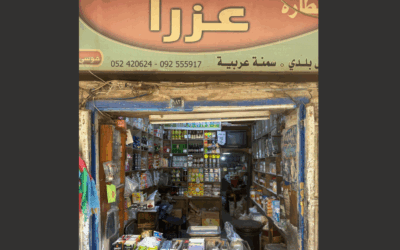
‘Ezra’. Written in Arabic lettering (that I can still just about read), the name of the great Jewish priest and scribe stretches across the front of a small general goods shop in Qamishli market – the souq that still dominates the centre of the major city of Rojava, the Kurdish-controlled region of Syria.
I’m in Rojava to understand whether the post-Assad Syrian state will hold or break down as its minorities splinter into internecine war. But though modern geopolitics are inescapable here in Syria, it is also a place where the pull of history is everywhere, especially if you are Jewish.
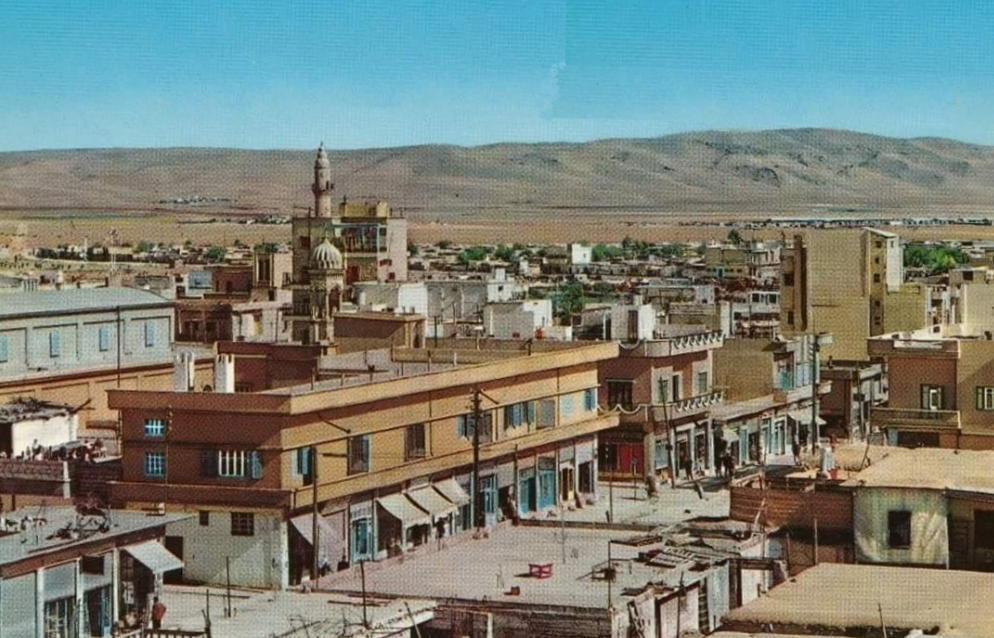
The Jewish story in Syria’s far northeast is modest but remarkable. It begins, as so many stories here do, with the collapse of empire. When the Ottoman frontiers were redrawn after the First World War, the French created new towns to anchor their colonial borders. One was Qamishli, founded opposite Nusaybin – an ancient Jewish and Christian centre that found itself suddenly across the new line in what is now Turkey. Families from Nusaybin crossed into Qamishli, among them a few hundred Jews with roots stretching back to biblical Mesopotamia. They brought with them Judeo-Aramaic speech and a trading instinct honed in the bazaars of Mardin and Mosul. The Jewish presence here was not some colonial import but part of the deep Semitic fabric of the region.
By the 1930s, around 250 Jewish families – perhaps 2,000 to 3,000 people – lived here. They opened textile shops, goldsmiths, and small import businesses. A synagogue was built; later, a Jewish school opened briefly in 1947. Relations with their neighbours – Kurdish farmers, Assyrian merchants, Armenian craftsmen – were largely pragmatic. Everyone needed everyone else.
Qamishli Souq became the stage for this daily coexistence. Jewish stalls were part of its rhythm: the smell of spices, the bleating of goats, the chime of Hebrew alongside Arabic and Kurdish. In nearby Hasakah, too, Jewish shopkeepers bartered in the markets and their synagogue stood beside Assyrian churches and Kurdish mosques.


But in 1948, everything changed. The birth of Israel, Arab defeats, and waves of anti-Jewish hostility turned centuries of coexistence brittle. Shopkeepers were pushed out, some sold cheaply, others handed keys to trusted neighbours before slipping away to Lebanon or Israel. By the 1960s perhaps 800 Jews remained in Qamishli. After the Six-Day War of 1967, most of the rest departed, smuggled across borders or flown out under quiet arrangements with Damascus. By the 1980s, the community was gone.
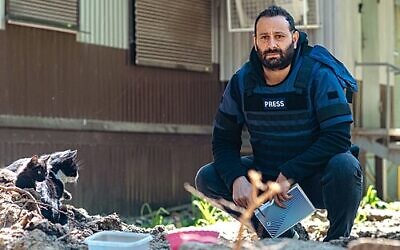
Today not a single Jew is known to live in Qamishli. Walk the souq and you hear only the calls of Kurdish and Arab vendors, but in the dust and noise there remains a faint echo of a lost people – not least in the memories of those like my friend and comrade Aziz Othman, a Qamishli native and my guide to the city and the intricacies of Rojavan politics. Aziz lights up when he remembers the city’s Jewish history. “Once this whole street would have been filled with Jewish businesses, David,” he says with a broad grin. He talks brightly about the contribution of the Jewish community to Qamishli life; about the “Jewish goldsmith” or the “Jewish cloth shop,” remembered for precise scales and honest accounts.
When you walk through the old quarter it is hard not to feel the layers of erasure. The same streets that once held a rabbi’s house and a Jewish bakery now host displaced Syrian families and YPG posters. Children play football beside crumbling doorways where mezuzahs once hung. Culturally, the Jews of Qamishli belonged to the wider Kurdistan Mizrahi world: a tapestry of communities in Iraq, Iran, and southeastern Turkey who spoke Judeo-Aramaic and maintained their own liturgical traditions. In Rojava’s markets they were not rabbis but traders, bridging divides in a region that has always been about exchange: wheat for cloth, livestock for salt, stories for survival.
Today, the Autonomous Administration of North and East Syria (AANES) – the Kurdish-led entity governing Rojava – presents itself as secular and pluralistic. It recognises three official languages (Kurdish, Arabic, Syriac) and frames minority protection as a cornerstone of its legitimacy. Kurdish leaders emphasise their pluralism constantly; unlike many in the region they are seen as broadly philo-Semitic, often speaking with pride about the Jews who once lived among them. Within this context, the remnants of Jewish heritage have become symbols of the Kurds’ tolerance. Yet that heritage also underscores the fragility of coexistence in the wider Middle East. Once Jews were an unremarkable part of everyday life. Now their absence is a warning written into the walls.
It is tempting to romanticise these ghosts, to imagine the synagogue reborn or the market chatter returning in Hebrew and Aramaic. But the truth is simpler, and sadder: the Jews of Rojava are gone, their diaspora now in Israel, Europe, and North America, carrying with them the songs and accents of a frontier that has itself dissolved into ideology. Still, the story matters. In a region where ethnicity so often determines whether you live or die, the memory of a vanished minority remains unsettling. The Kurds who now run Rojava see themselves as stewards of diversity, and they see the Jewish people as their longstanding friends and allies. In today’s Middle East, that is both a rarity and a blessing.

Keep community journalism free.
Jewish News is free for everyone. No paywall. No barriers. Just trusted journalism for anyone who wants to stay connected to Jewish life in Britain.
If you value that, please support us.
From as little as £5 a month, you can help keep our journalism free and accessible to all.
Every day, we report on the issues that matter to our community. We celebrate achievements, support charities, challenge antisemitism and ensure Jewish voices are heard more widely.
From as little as £5 a month, you can help us continue to:
- Report on the stories shaping Jewish life in the UK and beyond
- Bring our community together through shared stories, events and campaigns
- Celebrate the people, culture and moments that define our community
- Support organisations doing vital work across Jewish Britain
You can make a one-off donation or become a regular supporter. Every contribution helps keep our journalism free, independent and accessible to all.
If everyone who values Jewish News gave a small amount, it would make a real difference to our future.