Eli M Rosenbaum: Justice has no best-before date
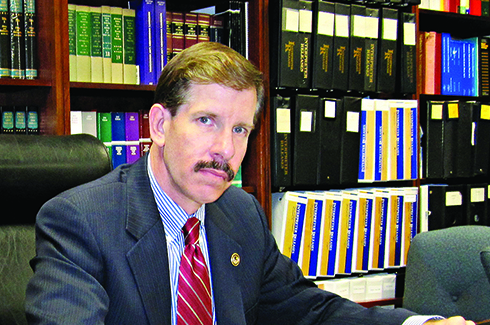
 By Eli M Rosenbaum
Director, Human Rights and Special Prosecutions, Section Criminal Division, United States Department of Justice
After The Second World War, the infamous injustice of Nazi inhumanity was compounded when, after an initial flurry of prosecutorial activity at Nuremberg and elsewhere in Europe, the Allies largely abandoned their pursuit of the perpetrators.
By 1952, US, British and Soviet prosecutions were essentially over.
Most Nazi criminals were able to evade justice, and most got away with their crimes without even having to flee continental Europe. Some of the perpetrators did flee – to North and South America, Australia, the UK, and elsewhere.
In 1979, the US government belatedly launched a serious effort to pursue those who had fled there.
Many, alas, had already died. But our Justice Department eventually succeeded in building a highly successful programme directed against Nazi criminals, and we managed to track down and win court cases against scores of perpetrators.
For more than three decades, my colleagues and I at the US Department of Justice, working with law enforcement colleagues in the US, Germany, UK, and other countries, have been deeply privileged to pursue justice on behalf of victims of the Holocaust and other ghastly Nazi crimes.
For example, we found Bohdan Koziy living in Florida, and we brought him to justice.
His victims included four-year-old Monica Singer.
He had dragged her to the courtyard behind the police station in Lisets, Ukraine, and he shot her at point-blank range.
Little Monica Singer did not live to see justice done.
We found Jakob Reimer living in a New York City suburb, and we brought him to justice.
When I questioned him, he confessed that he had led a platoon of SS personnel on a mission to, in his words, “exterminate a labour camp”.
We will never know the names of those who were massacred by Reimer and his men, but we know that they, too, did not live to see justice done.
We found Alexander Schweidler, a confessed former SS guard at the Mauthausen concentration camp, living in Florida.
Captured Nazi documents revealed that, on 28 April 1942, he shot to death two Allied prisoners of war at the Mauthausen camp.
In 1994, we deported him to the UK, where he had become a citizen after the war.
His victims did not live to see justice done.
And we found Johann Breyer living in Philadelphia, Pennsylvania.
During the war, he had been an SS guard at the Auschwitz-Birkenau death camp complex, by death toll the largest killing site in recorded human history.
More than a million of the men, women and children who were sent there did not live to see liberation – 70 years ago this month – or to see justice done.
Worldwide, trials of Nazi criminals have produced thousands of convictions, and some substantial punishments have been meted out – although only a fraction of the prosecutions that should have been mounted actually went forward, and many of the sentences imposed were disappointingly short ones. Notwithstanding the lateness of the date and the lack of political will in some countries to pursue perpetrators, it is still possible to secure a measure of justice in the Nazi cases.
Prosecutions and investigations continue. However, time is clearly running out, as both perpetrators and surviving witnesses are swiftly passing from the scene, in what Simon Wiesenthal long ago termed “the biological solution” to the problem of unpunished Nazi criminals. The Breyer case illustrates both the possibility and the urgency of pursuing justice at this late date.
The US Department of Justice won a landmark court victory in his case on 23 July, when a federal magistrate judge ruled that “Given Breyer’s role as an elite SS armed guard at a camp designed and operated almost exclusively as a killing centre for Jews,” probable cause of “Breyer’s complicity in the mass murders at Auschwitz” had been established.
Unfortunately, Breyer died in hospital the very day that the court decision was issued. It is enormously important that efforts to achieve justice be continued. Doing so is a moral debt that is owed to the victims.
Moreover, the passage of time has in no way lessened the gravity of the crimes, and the perpetrators ought not be rewarded for their success in evading detection or concealing their misdeeds. And perhaps most important of all, justice must be sought in order to send an unmistakable message of deterrence to would-be perpetrators, namely: if you dare to commit atrocities, you will be pursued, however far you run and however long it takes to apprehend you.
[polldaddy poll=8579966]

Keep community journalism free.
Jewish News is free for everyone. No paywall. No barriers. Just trusted journalism for anyone who wants to stay connected to Jewish life in Britain.
If you value that, please support us.
From as little as £5 a month, you can help keep our journalism free and accessible to all.
Every day, we report on the issues that matter to our community. We celebrate achievements, support charities, challenge antisemitism and ensure Jewish voices are heard more widely.
From as little as £5 a month, you can help us continue to:
- Report on the stories shaping Jewish life in the UK and beyond
- Bring our community together through shared stories, events and campaigns
- Celebrate the people, culture and moments that define our community
- Support organisations doing vital work across Jewish Britain
You can make a one-off donation or become a regular supporter. Every contribution helps keep our journalism free, independent and accessible to all.
If everyone who values Jewish News gave a small amount, it would make a real difference to our future.