
 Prefer Jewish News on Google
Eli Sharabi: ‘The promise that kept me alive’
The first Israeli hostage to write a memoir speaks to Jewish News ahead of the UK release of Hostage
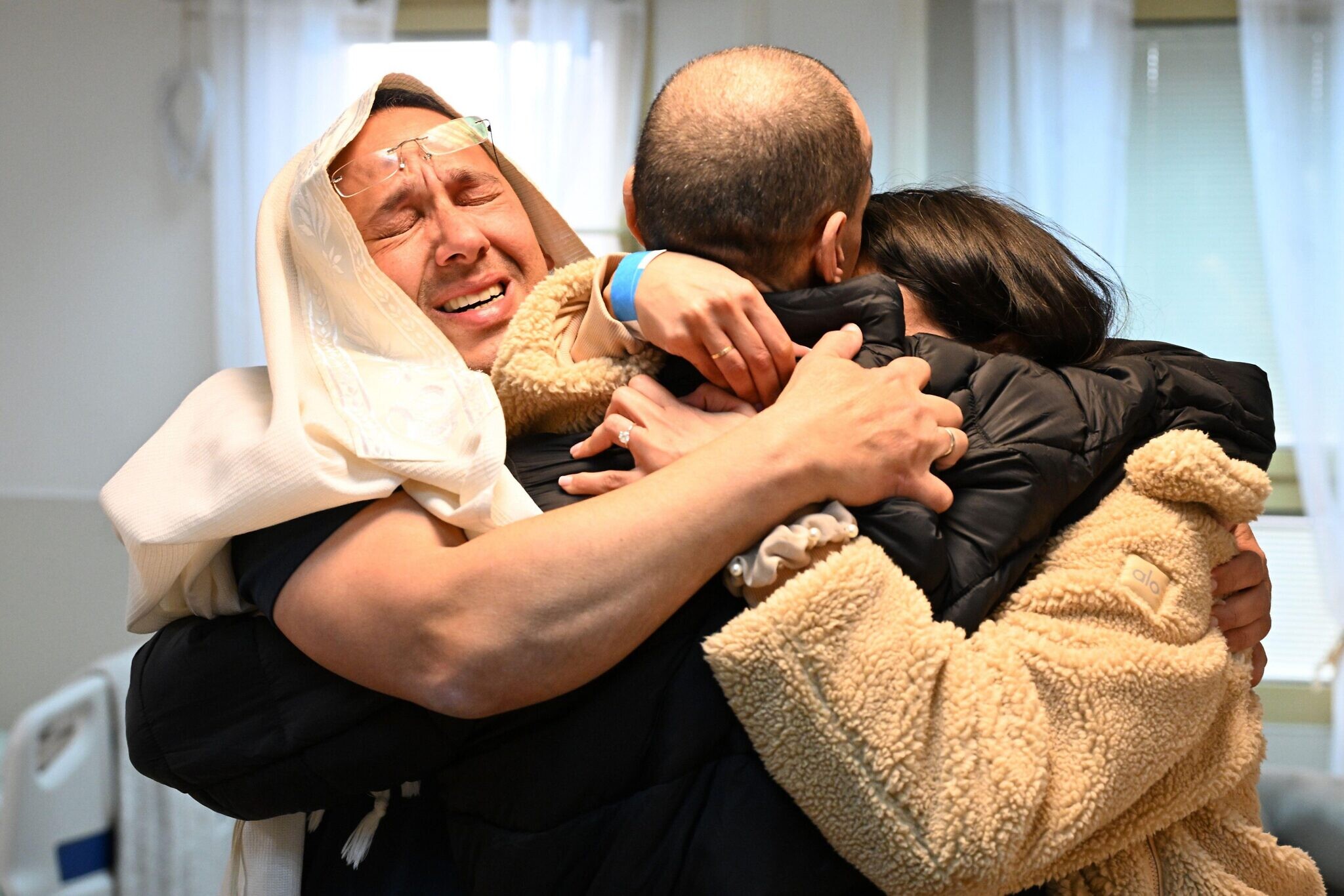
When Eli Sharabi began writing about the 491 days he spent chained underground in Gaza, he did not do it to heal himself. He did it, he says, because others urged him to bear witness – and because he wanted his family to be proud.
“In Israel, in the media, even when I spoke at the UN, people said to me, ‘You have to write it. It’s very, very important,’” he recalls. “I thought about it – and they were right. It was very therapeutic for me. It was like sitting with my therapist, talking about all these details. It wasn’t easy, but it was important.”
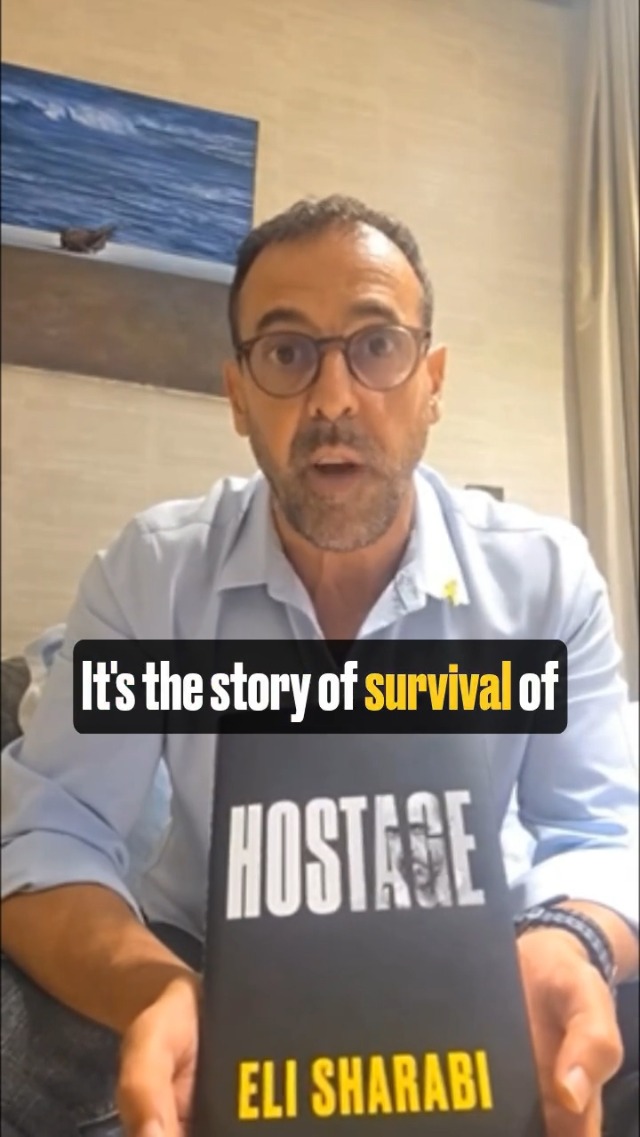
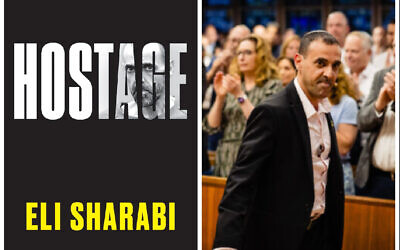
His memoir, Hostage, published in the UK on 9 October, is already the fastest-selling book in Israel’s history. It is the first first-hand account from a released Israeli hostage – a raw, deeply personal record of survival, faith, and the unbreakable instinct to live.
Sharabi was dragged barefoot from his home in Kibbutz Be’eri on 7 October 2023, as Hamas terrorists tore through his community. His British-born wife Lianne and teenage daughters Noiya and Yahel were killed that morning. He was taken into Gaza and disappeared into the tunnels beneath the Strip.
“I was chained ninety-nine per cent of the time,” he says. “We were humiliated, beaten, interrogated. In the tunnels, we had one meal a day – and when I say meal, it’s one and a half pieces of dry pita bread. Sometimes we waited thirty hours for food while our captors ate four or five times a day. The starvation was the worst thing. You don’t mind that they beat you or humiliate you – but begging for food, that kills you.”


He survived 491 days in captivity. What kept him alive, he says, was a promise.
“They dragged me from the house and I turned my head to my daughters. I shouted to them, I’ll get back’. That promise kept me alive. I didn’t care if I came back with legs or without legs. That’s what I promised, and that’s what I did.”
For more than sixteen months, Sharabi clung to that promise through darkness, hunger, and grief. The book recounts not only the physical suffering, but the quiet moments of faith and connection that helped him endure.
I know I cannot bring back Lianne or the girls, but I’m here. I’m alive. I’m a free man. It’s priceless to be a free man. Their memory will be with me every day until my last day
“Even in all this hell, you can find moments when you see the light,” he says. “You can find faith, and the power inside you to survive. That’s what the book is really about.”
The writing process, he says, was painful but necessary – a way to give shape to experiences that defy comprehension. Some passages brought him to tears.

“Of course, it was difficult to remember certain moments,” he admits. “When I wrote about them breaking my ribs, or when the social worker told me about Lianne, Noiya, and Yahel – that was very hard. But I wanted them to be proud of me, to know that I was doing something to remember them. That was the most important thing.”
After his release, he says, freedom itself felt unfamiliar – but extraordinary.

“Freedom makes you appreciate every basic thing in life,” he says. “You don’t need permission to go to the bathroom, to speak, to walk without a chain. You can open the fridge, choose fruit or vegetables, eat whenever you want. You never think about these things until you lose them. In the tunnels, you don’t miss your car or your bank account – you just miss your family. You just want to be with them one more minute.”
Sharabi says the memoir is not about victimhood, but resilience.
“I don’t consider myself a victim,” he says. “I want to show that even in all this darkness, I survived. I could see the light. I could feel faith. My faith was in God. I was very optimistic about my chances to survive all the way.”
His voice softens when asked about the message he hopes readers will take from Hostage.
“Appreciation,” he says. “Appreciation for your life, for your freedom. Each one of us has the strength to survive the worst thing ever. You just need to find your reason why. When you have your ‘why’, you can bear anything.”
He also hopes his story will help keep the plight of those still held in Gaza at the forefront of public consciousness.

“I don’t want anyone to forget what happened on 7 October,” he says. “Terror has no boundaries. When they invaded our home, they knew my wife and daughters had British passports. They didn’t care. If my book can raise awareness and give even a little strength to the other hostages’ families, I’ve done enough. For me, it’s to be their voice – because nobody can hear them.”
Sharabi speaks simply, without bitterness. What drives him now, he says, is the decision to keep living – and to honour his family through action, not despair.
“I can let grief bury me, or I can find a way to move on. I know I cannot bring back Lianne or the girls, but I’m here. I’m alive. I’m a free man. It’s priceless to be a free man. Their memory will be with me every day until my last day – but it will be alongside my life, not instead of my life. I’m choosing life every day.”
As Hostage prepares for its English-language release, Sharabi hopes readers around the world will find it accessible – not as literature, but as human truth.

“I told the publisher: use my simple words,” he says. “I want people to feel like they are there with me – in my house, in the tunnels. In Hebrew people told me they felt like they were there. If English readers feel the same, that will be the greatest success.”
The book is, he says, both a memorial and a message.
“This book is for the memory of my wife and daughters, and my brother who is still there,” he says. “I want people to know what Israel and the Jewish people suffered on 7 October. I just want the hostages back. That’s all.”
He pauses.
“I’m alive,” he says quietly. “And that’s my victory.”
• Hostage by Eli Sharabi (HarperCollins) is published in the UK on 9 October 2025. Pre-order here

Keep community journalism free.
Jewish News is free for everyone. No paywall. No barriers. Just trusted journalism for anyone who wants to stay connected to Jewish life in Britain.
If you value that, please support us.
From as little as £5 a month, you can help keep our journalism free and accessible to all.
Every day, we report on the issues that matter to our community. We celebrate achievements, support charities, challenge antisemitism and ensure Jewish voices are heard more widely.
From as little as £5 a month, you can help us continue to:
- Report on the stories shaping Jewish life in the UK and beyond
- Bring our community together through shared stories, events and campaigns
- Celebrate the people, culture and moments that define our community
- Support organisations doing vital work across Jewish Britain
You can make a one-off donation or become a regular supporter. Every contribution helps keep our journalism free, independent and accessible to all.
If everyone who values Jewish News gave a small amount, it would make a real difference to our future.





















