Prefer Jewish News on Google
Emergency response ‘Kohanim’ unit created for future Temple Mount attacks
Search and rescue group ZAKA recruits special team of volunteers to remove dead bodies from the holy site in Jerusalem
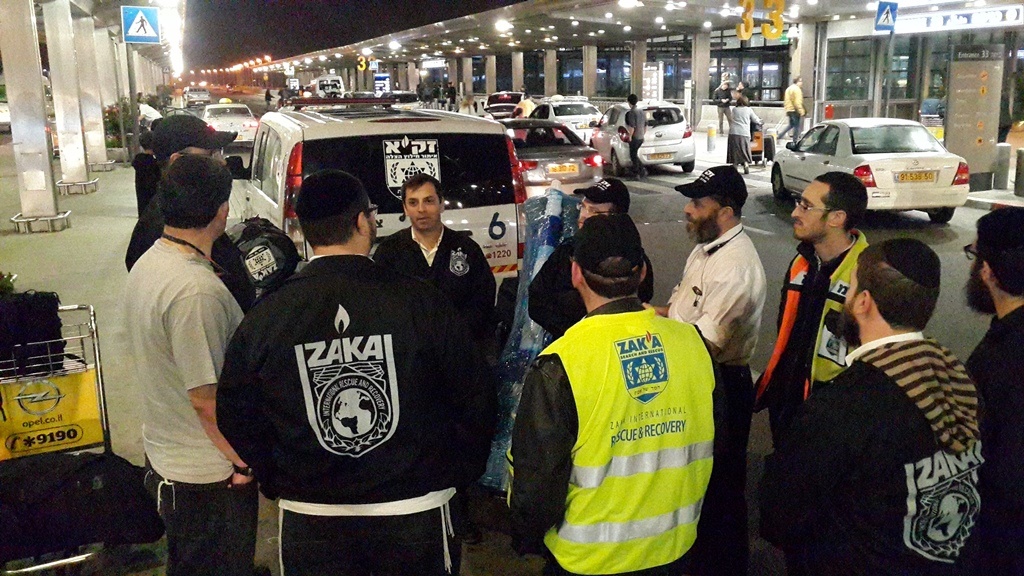
The ZAKA search and rescue organisation has established a Kohanim unit to respond to future attacks on the Temple Mount.
The unit announced on Sunday was formed by the Charedi organisation in the wake of the July 14 terror attack on the Temple Mount, in which three Arab-Israeli men attacked and killed two Druze Israel Police officers at the site holy to Jews and Muslims.
Many rabbis, including the Chief Rabbinate, forbid Jews to visit the Temple Mount since all people are considered ritually “impure” due to contact with dead bodies at hospitals, cemeteries and other places. Other rabbis allow someone who has immersed in a mikvah, or ritual bath, to visit the site.
Immediately after the July 14 attack, the ZAKA Rabbinical Council, headed by Rabbi Avigdor Nebenzahl, rabbi of the Old City of Jerusalem, determined that a single volunteer should immerse in a mikvah (ritual bath) and go to the Temple Mount to remove the dead bodies of the police and terrorists, after instruction on the areas of the site where Jews are forbidden to step.
The rabbinical council continued the discussion after the attack, according to ZAKA, and determined that “there is a religious obligation to remove every dead body from the Temple Mount whether the body is that of a Jew or non-Jew, or even a terrorist.”
The rabbis also determined that in an emergency, sending a Cohen (Kohan), who does not come in contact with dead bodies, was preferable to sending another Jewish volunteer, and if time permits sending a non-Cohen who has immersed in a mikvah is the most preferable.
Kohanim do not usually volunteer for ZAKA since they are prohibited from coming into contact with dead bodies. Despite this, ZAKA has recruited a team of volunteers made up of Kohanim living close to Jerusalem’s Old City for the special unit.
“These are weighty questions about the most severe prohibitions in Jewish law, with their violation carrying a punishment of karet (being cut off from the Jewish people). Therefore, it was very important to ZAKA to receive clear directions for the volunteers in accordance with Jewish law. I have much admiration for the ZAKA rabbis who were not afraid to address these difficult issues, when not many rabbis are willing to deal with them,” ZAKA Chairman Yehuda Meshi-Zahav said in a statement.

Keep community journalism free.
Jewish News is free for everyone. No paywall. No barriers. Just trusted journalism for anyone who wants to stay connected to Jewish life in Britain.
If you value that, please support us.
From as little as £5 a month, you can help keep our journalism free and accessible to all.
Every day, we report on the issues that matter to our community. We celebrate achievements, support charities, challenge antisemitism and ensure Jewish voices are heard more widely.
From as little as £5 a month, you can help us continue to:
- Report on the stories shaping Jewish life in the UK and beyond
- Bring our community together through shared stories, events and campaigns
- Celebrate the people, culture and moments that define our community
- Support organisations doing vital work across Jewish Britain
You can make a one-off donation or become a regular supporter. Every contribution helps keep our journalism free, independent and accessible to all.
If everyone who values Jewish News gave a small amount, it would make a real difference to our future.