EU brands Hezbollah military wing ‘terrorist’ organisation
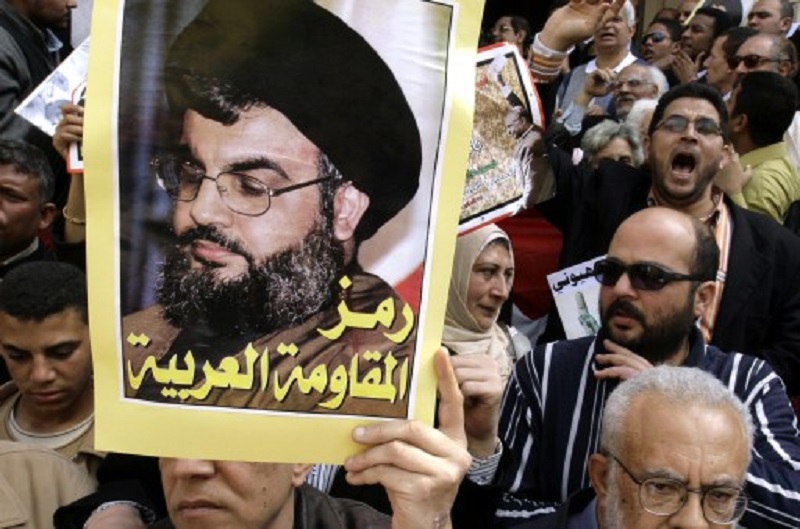
EU foreign ministers have voted to brand the military wing of Lebanese militant group Hezbollah as a “terrorist organisation” after months of campaigning from pro-Israel groups, writes Stephen Oryszczuk.
All 28 of the EU’s member states backed the decision, meaning that it will now be illegal for Hezbollah sympathisers in Europe to send the group money or for European diplomats to meet its militant staff.
The EU now joins the UK, Australia, Bahrain, the Gulf Cooperation Council, Canada, France, Israel, the Netherlands and the United States in banning the military wing, but for many the vote did not go far enough.
“We now call on the EU to follow the example of France, the Netherlands, Israel, Canada and the United States to take the next logical step and proscribe Hizballah’s political wing as well,” read a statement from the Board of Deputies.
German Foreign Minister Guido Westerwelle had been actively pushing member states from the required unanimity on this issue, alongside British Foreign Secretary William Hague. Referring to the terrorist attack on Israeli tourists in Bulgaria last year, Westerwelle said the EU “had to answer this”.
The Burgas attack, which reports subsequently blamed on Hezbollah operatives, was also in the minds of others. Lithuanian Foreign Minister Linas Antanas Linkevicius, who chaired Monday’s meeting, said: ”What was done by the military wing in the region and elsewhere I would say, there should be some reaction.”
Additionally, Britain also cited a four-year jail sentence handed down by a Cypriot court in March this year to a Hezbollah member accused of plotting to attack Israeli interests on the island.
But despite the majority view, not everyone agreed with the EU move to list Hezbollah’s military wing as a terrorist organisation.
Sami Ramadani, senior lecturer at London Metropolitan University, said: “Attempts to brand Hezbollah as a terrorist organisation are not only futile, but fly in the face of the facts of this movement and its history… It is a genuine resistance movements, born as a reaction to occupation, and like all successful resistance movements, it draws its strength from the backing of the overwhelming majority of the occupied people.”
Some member states had been wary of blacklisting part of Lebanon’s most dominant political party, saying it could further destabilise the situation in Israel’s neighbour. However, Hague dismissed such fears unequivocally.

Keep community journalism free.
Jewish News is free for everyone. No paywall. No barriers. Just trusted journalism for anyone who wants to stay connected to Jewish life in Britain.
If you value that, please support us.
From as little as £5 a month, you can help keep our journalism free and accessible to all.
Every day, we report on the issues that matter to our community. We celebrate achievements, support charities, challenge antisemitism and ensure Jewish voices are heard more widely.
From as little as £5 a month, you can help us continue to:
- Report on the stories shaping Jewish life in the UK and beyond
- Bring our community together through shared stories, events and campaigns
- Celebrate the people, culture and moments that define our community
- Support organisations doing vital work across Jewish Britain
You can make a one-off donation or become a regular supporter. Every contribution helps keep our journalism free, independent and accessible to all.
If everyone who values Jewish News gave a small amount, it would make a real difference to our future.