Prefer Jewish News on Google
Five years in Britain: reflections from an extraordinary posting
As she reaches the end of her tenure, the Chargé d’Affairs of Israel to the United Kingdom looks back on her time in the UK
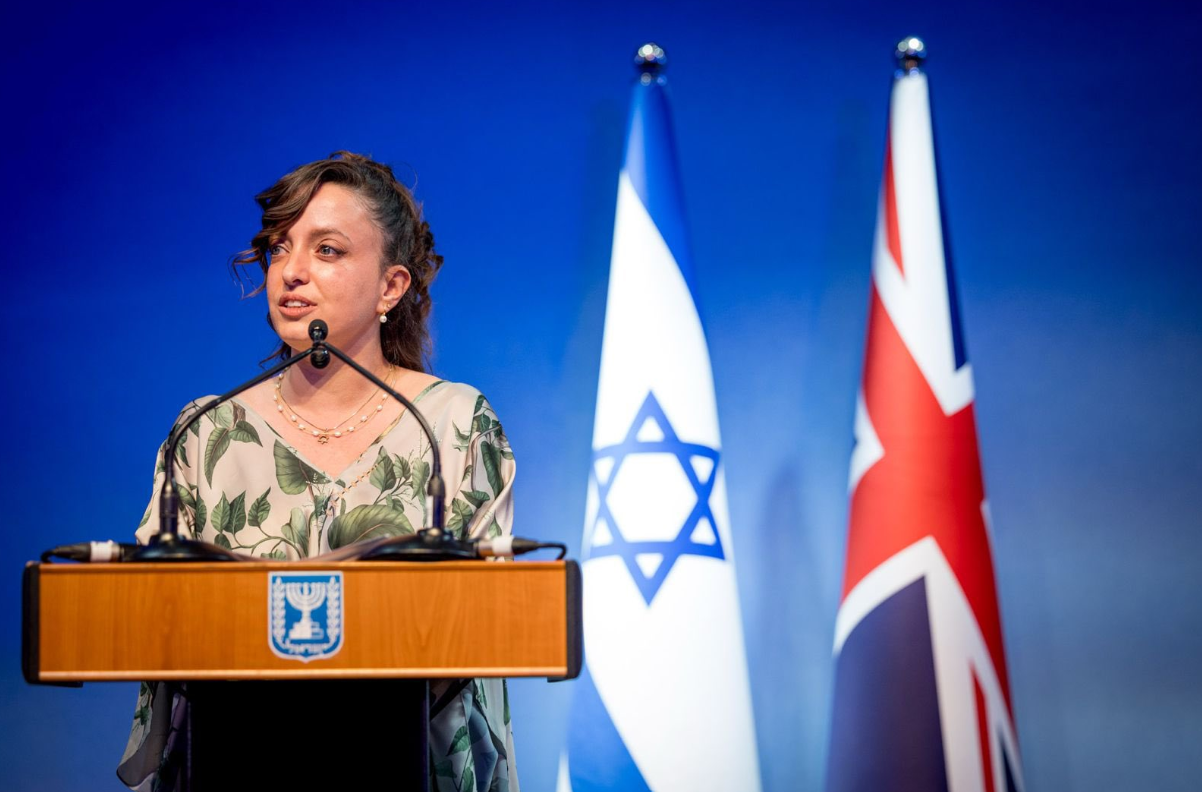
In a few days’ time, I will conclude five years of service in the United Kingdom on behalf of the State of Israel, including as an Acting Ambassador for the last year. It is a moment for reflection, both personally and professionally.
When my family and I arrived in London in the summer of 2021, we thought we were beginning another diplomatic assignment. Looking back, these five years became something rather more significant. Our daughters arrived barely able to speak English; they leave as confident young Londoners in many respects. Britain shaped an important chapter of our family life, just as it shaped my professional one. For that, and for the friendships and generosity we encountered along the way, we will always be grateful.
Professionally, I arrived during the Covid-19 pandemic, when diplomacy had largely moved online and one of my greatest challenges was learning how to build trust through computer screens rather than across meeting tables. Yet despite those circumstances, relations between Israel and the United Kingdom were flourishing. As Political Counsellor, I had the privilege of helping negotiate the Bilateral Roadmap to 2030, elevating our relationship to a Strategic Partnership. Ministerial visits resumed, cooperation expanded and there was genuine optimism about the future. It looked like a Golden Era of our relations.
At the time, I believed Covid would define my posting. How wrong I was.
The optimism of those early years gradually gave way to an entirely different mission: defending Israel’s legitimacy, its right to protect its citizens and, at times, its very right to exist. Diplomats often believe they are responsible for every rise and fall in bilateral relations. But history is often larger than diplomacy. There are moments when events overtake every carefully prepared strategy, leaving diplomats, like everyone else, to respond rather than shape events.
Such was the reality after 7 October 2023.
The Hamas massacre fundamentally changed the course of my posting. For Israelis, it was not simply another round of violence but a national trauma. Families were murdered in their homes, young people massacred at a music festival and children, women and men were taken hostage into Gaza. It was the deadliest day for the Jewish people since the Holocaust, shattering long-held assumptions about security.
Professionally, it transformed my role. Diplomacy had always been about patiently building relationships. After 7 October, I learned that it can also involve managing their deterioration while preserving the foundations needed to rebuild them in the future. Defending Israel became a daily responsibility under circumstances none of us had imagined. Those experiences changed me, not only as a diplomat but as a person.
The attacks also exposed something deeply troubling within Britain. Israel became increasingly politicised, turning from a matter of foreign policy into an issue of domestic political contest.
The alarming rise in antisemitism after 7 October did not emerge from nowhere. Hamas did not create antisemitism; it emboldened those who had long concealed it. This is a lesson Britain cannot afford to ignore.
Every government has a duty to protect all its citizens. No British Jew should feel compelled to hide a Star of David, avoid speaking Hebrew in public or question whether their child is safe at school or university because they are Jewish.
Universities deserve particular attention. They should be places of intellectual curiosity and free inquiry. Yet too many Jewish and Israeli students have encountered intimidation and hostility. Legitimate criticism of Israeli governments is part of democratic debate. The glorification of terrorism, the intimidation of Jewish students and the normalisation of antisemitism are not. Academic freedom cannot become freedom to harass, and political activism cannot become an excuse to legitimise Hamas.
The State of Israel stands with the Jewish community of the United Kingdom. For many, these difficult years have felt like a return to the antisemitism of old, the very hatred in response to which the State of Israel was established. We stand beside you in unwavering solidarity.
And as it comes to our bilateral relations – Israel and the United Kingdom have experienced difficult moments in the past two years. The disagreements have been profound, and we strongly condemned decisions and rhetoric that appeared to lack the moral clarity required when confronting terrorism and defending democratic societies. These included the recognition of a Palestinian state and the suspension of arms export licenses while a fellow democracy was fighting on seven different fronts.
Latest rhetoric by the new leadership towards Israel indicates a harsher stance. Such decisions must not be driven by domestic political appeasement, but by close attention to the realities on the ground, the practical consequences of each decision, and the deeply troubling environment in which new waves of antisemitism have been allowed to rise once again in Britain.
Ultimately, relations between nations are greater than any particular political moment. They are built over decades through shared interests, common values and countless human relationships.
Whatever uncertainties the years ahead may bring, I remain convinced of one enduring truth: Israel and the United Kingdom are stronger when they stand together. And that is thanks to some remarkable courage – of individuals across the British political spectrum, public life, civil society and academia who continue to speak in support of Israel, even when doing so carries personal or political cost.
I wish for this remarkable country to flourish despite the challenges ahead, and my hope is that the next chapter of our bilateral relationship will once again be defined by advancing the innovation, security, prosperity and friendship that have long united our two nations. Until then you will have the resolute, dedicated team at the Embassy, who will continue to fight the good fight and hold the values of our beloved one and only Jewish state.

Keep community journalism free.
Jewish News is free for everyone. No paywall. No barriers. Just trusted journalism for anyone who wants to stay connected to Jewish life in Britain.
If you value that, please support us.
From as little as £5 a month, you can help keep our journalism free and accessible to all.
Every day, we report on the issues that matter to our community. We celebrate achievements, support charities, challenge antisemitism and ensure Jewish voices are heard more widely.
From as little as £5 a month, you can help us continue to:
- Report on the stories shaping Jewish life in the UK and beyond
- Bring our community together through shared stories, events and campaigns
- Celebrate the people, culture and moments that define our community
- Support organisations doing vital work across Jewish Britain
You can make a one-off donation or become a regular supporter. Every contribution helps keep our journalism free, independent and accessible to all.
If everyone who values Jewish News gave a small amount, it would make a real difference to our future.