Prefer Jewish News on Google

Football’s oldest problem remains the world’s oldest hatred
If we want football to remain the world's game, we cannot allow the world's oldest hatred to find a home in its stadiums, on its terraces or across its online communities
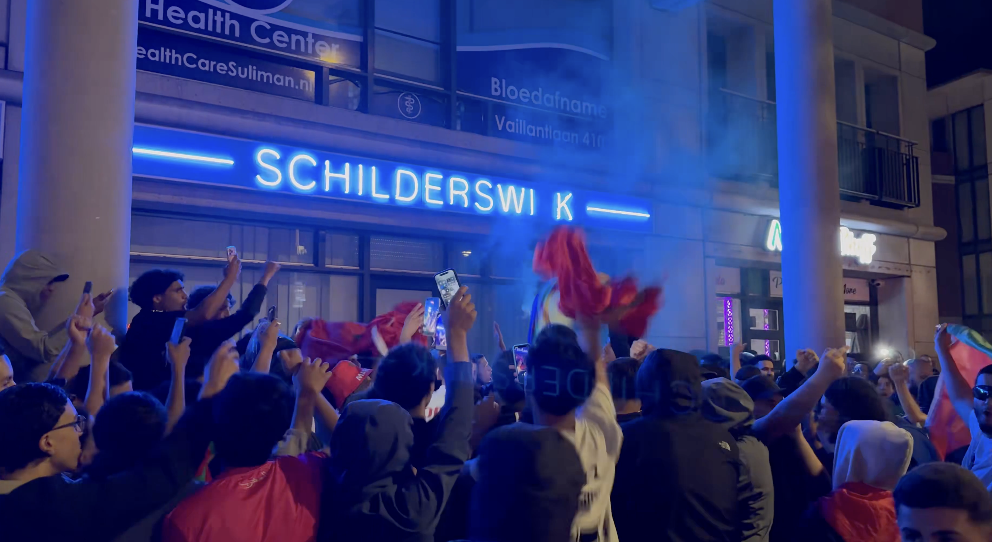
After Morocco’s defeat to France in the World Cup, some devastated supporters went looking for someone to blame. Their answer was depressingly familiar: the Jews.
The episode offers a near textbook example of how antisemitism continues to manifest itself in the 21st century. Whatever the grievance, whatever the disappointment, Jews become the convenient scapegoat.
In this case, conspiracy theories spread online alleging that one of the referees was Jewish and had therefore engineered Morocco’s defeat. To make the claim appear credible, someone even edited the referee’s Wikipedia page to falsely state that he was Jewish. He isn’t.
The fabrication itself is revealing. It relies on one of antisemitism’s oldest and most persistent myths: that Jews conceal their true identity while secretly exercising influence behind the scenes. The notion that Jews are hiding in plain sight, masquerading as something else while manipulating events, has fuelled centuries of prejudice. It simply found a new platform in the age of social media.
Then there were the chants.
“Hamas, Hamas, Jews to the gas.”
Few slogans encapsulate modern antisemitism so starkly. It is not simply a call for violence against Jews. It invokes both Hamas, a terrorist organisation whose charter has long been rooted in antisemitic ideology, and the Nazis, whose industrialised murder of six million Jews remains history’s darkest chapter.
This is a particularly grotesque form of Holocaust distortion. Rather than denying the Holocaust, it celebrates it, while simultaneously calling for its repetition. It transforms genocide into a football chant.
Even if the referee had been Jewish—which, again, he was not—the accusations would still expose another defining characteristic of antisemitism: collective responsibility. The idea that one Jew’s alleged actions justify hostility towards all Jews has underpinned anti-Jewish persecution for centuries. It remains alive today.
There is one final element worth recognising. Antisemitism frequently revolves around claims that powerful institutions are secretly controlled by Jews, whether governments, banks, the media or international organisations. In this instance, the same conspiracy thinking was simply transferred onto football itself. FIFA became the latest institution supposedly acting at Jewish behest.
The specifics change. The underlying prejudice does not.
Football has an extraordinary ability to unite people across cultures, religions and nationalities. It also has an unfortunate history of providing a stage for hatred when passions run high. Defeat is painful. Fans will always question refereeing decisions and governing bodies. That is part of sport.
Blaming Jews, however, is not.
If we want football to remain the world’s game, we cannot allow the world’s oldest hatred to find a home in its stadiums, on its terraces or across its online communities. Antisemitism is never just “banter”, never simply the product of sporting frustration and never confined to the moment. Left unchallenged, it reinforces ancient prejudices in modern forms.
The match may end after 90 minutes. The consequences of antisemitism last far longer.
Alex Maws MBE is Head of Education & Heritage at AJR

Keep community journalism free.
Jewish News is free for everyone. No paywall. No barriers. Just trusted journalism for anyone who wants to stay connected to Jewish life in Britain.
If you value that, please support us.
From as little as £5 a month, you can help keep our journalism free and accessible to all.
Every day, we report on the issues that matter to our community. We celebrate achievements, support charities, challenge antisemitism and ensure Jewish voices are heard more widely.
From as little as £5 a month, you can help us continue to:
- Report on the stories shaping Jewish life in the UK and beyond
- Bring our community together through shared stories, events and campaigns
- Celebrate the people, culture and moments that define our community
- Support organisations doing vital work across Jewish Britain
You can make a one-off donation or become a regular supporter. Every contribution helps keep our journalism free, independent and accessible to all.
If everyone who values Jewish News gave a small amount, it would make a real difference to our future.