Prefer Jewish News on Google
Former hostage Keith Siegel tells Limmud: ‘I’m alive but not truly free’
Keith and Aviva Siegel recount captivity, urging action as one deceased hostage remains
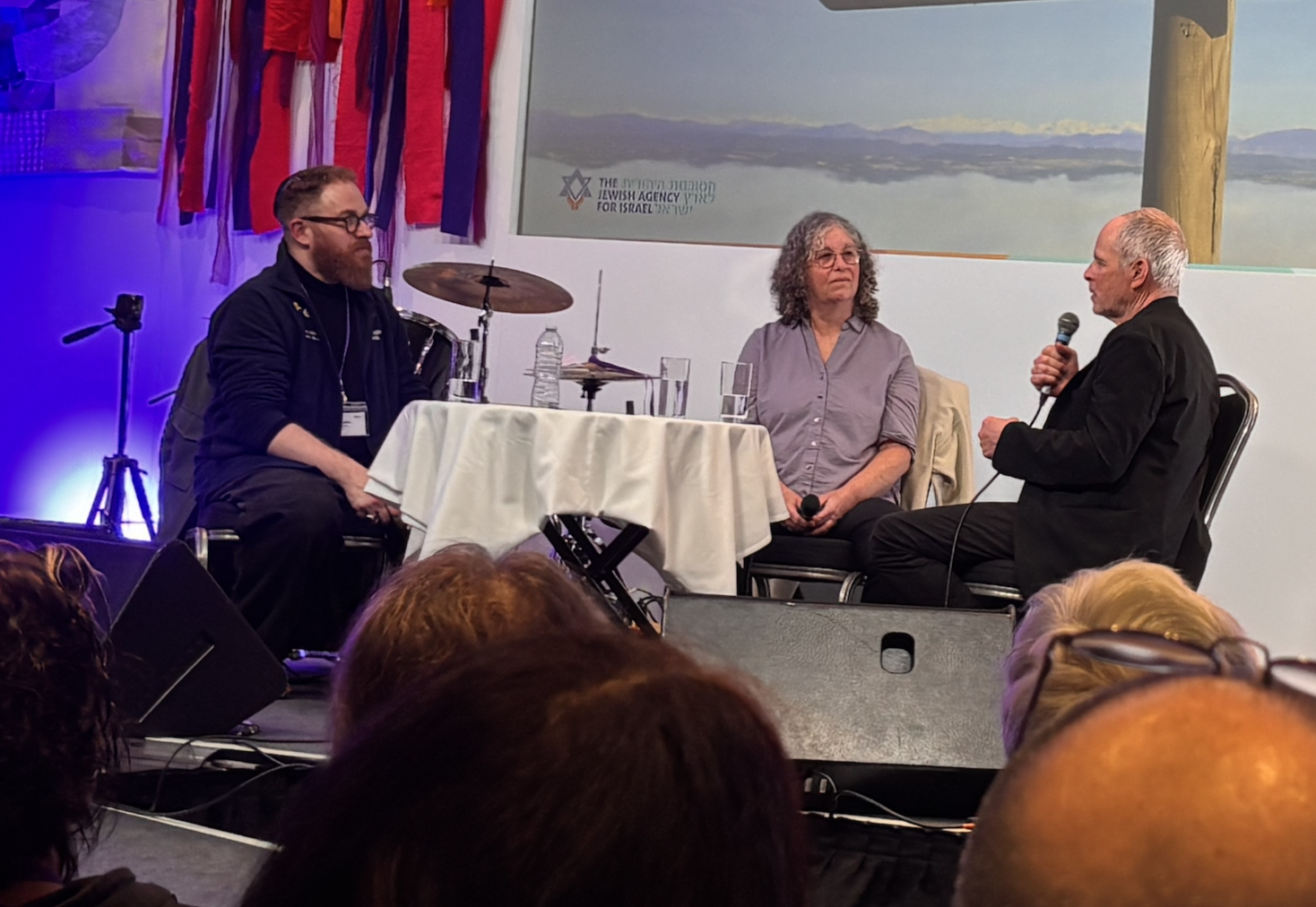
Former hostage Keith Siegel told a packed Limmud Festival session that part of his “happiness and freedom has been taken away”, as he renewed calls to bring every remaining hostage home.
Speaking alongside his wife Aviva at 484 days in Gaza: In Conversation with Keith and Aviva Siegel, Siegel said his overriding mission since returning home has been to end the suffering of those still held captive.
“I’m here, and I’m alive,” he told the audience. “But part of my happiness and freedom has been taken away. My greatest priority is to bring all the hostages home.”
Keith and Aviva were abducted from their home in Kibbutz Kfar Aza during the Hamas-led attacks of 7 October, 2023. Aviva was released after 51 days in captivity, while Keith was held for 484 days before being freed in February 2025.
In one of the most emotional sessions of the festival, the couple described not only the trauma of their kidnapping but also their lives before 7 October, and the personal strategies they used to survive captivity.


Aviva spoke about years of living under rocket fire near the Gaza border, describing how residents learned to identify the sound and direction of incoming launches. On the morning of 7 October, she said, repeated sirens drove them into their safe room. “It felt like the end of the world,” she said.

She described how armed terrorists later entered their home and forced them outside. During the abduction, she said, Keith fell and broke his ribs as they were pushed towards a waiting vehicle.
Siegel described being driven across the border, transferred between cars and taken underground into a tunnel accessed from inside a residential building. He told the audience that they were held alongside other abductees, some injured and bleeding, guarded by armed men who appeared calm and celebratory.
After Aviva’s release, Siegel said he endured long periods alone, including confinement in a school building and later in small, dark rooms. He described regular verbal abuse, spitting and physical violence, as well as the psychological toll of prolonged uncertainty. “Not knowing when or if I would ever come home was one of the hardest things to deal with,” he said.
Siegel said four things helped him survive: his family; a renewed Jewish identity and faith; gratitude; and mindfulness. He described closing his eyes and picturing loved ones’ faces, silently telling them he was alive. “Our connection as a people gave me strength,” he said, explaining that prayers and blessings he had not recited since childhood returned to him in captivity.
Aviva described living in constant fear underground, saying she barely slept during her 51 days in Gaza. To calm herself, she slowly counted numbers, recited children’s songs and mentally revisited her kindergarten classroom, naming each child seated around a table. At night, she said, she held the hands of fellow captives so she would not feel alone.
She recalled Keith offering her a simple phrase to repeat when bombardments shook nearby buildings: “It’s far – you’re not the target.”
Describing the day of his release, Siegel said he was aware that his family were watching him on camera as he was handed over. “I wanted them to see that I was okay,” he said. Taken to an army base, he was given clean clothes and allowed to shower properly for the first time in 484 days. “I scrubbed myself three times,” he said, explaining that he wanted to be clean before embracing his family.
Neither Keith nor Aviva expected to become public figures, but Siegel said speaking publicly now feels unavoidable. Since his release, he has remained in close contact with families of hostages he met in Gaza and continues to campaign for those still held. “I must do whatever I can to help get them back home,” he said.
Closing the session, Aviva urged the audience not to turn away. “We have to keep hope,” she said. “That’s what gives us strength. That togetherness matters to us as Jews.”

Keep community journalism free.
Jewish News is free for everyone. No paywall. No barriers. Just trusted journalism for anyone who wants to stay connected to Jewish life in Britain.
If you value that, please support us.
From as little as £5 a month, you can help keep our journalism free and accessible to all.
Every day, we report on the issues that matter to our community. We celebrate achievements, support charities, challenge antisemitism and ensure Jewish voices are heard more widely.
From as little as £5 a month, you can help us continue to:
- Report on the stories shaping Jewish life in the UK and beyond
- Bring our community together through shared stories, events and campaigns
- Celebrate the people, culture and moments that define our community
- Support organisations doing vital work across Jewish Britain
You can make a one-off donation or become a regular supporter. Every contribution helps keep our journalism free, independent and accessible to all.
If everyone who values Jewish News gave a small amount, it would make a real difference to our future.