
 Prefer Jewish News on Google
Sir Mick Davis to communal leaders: Silence on attacks on Israel’s democracy is complicity
Former JLC chair delivered an impassioned address at London Initiative's latest event at JW3
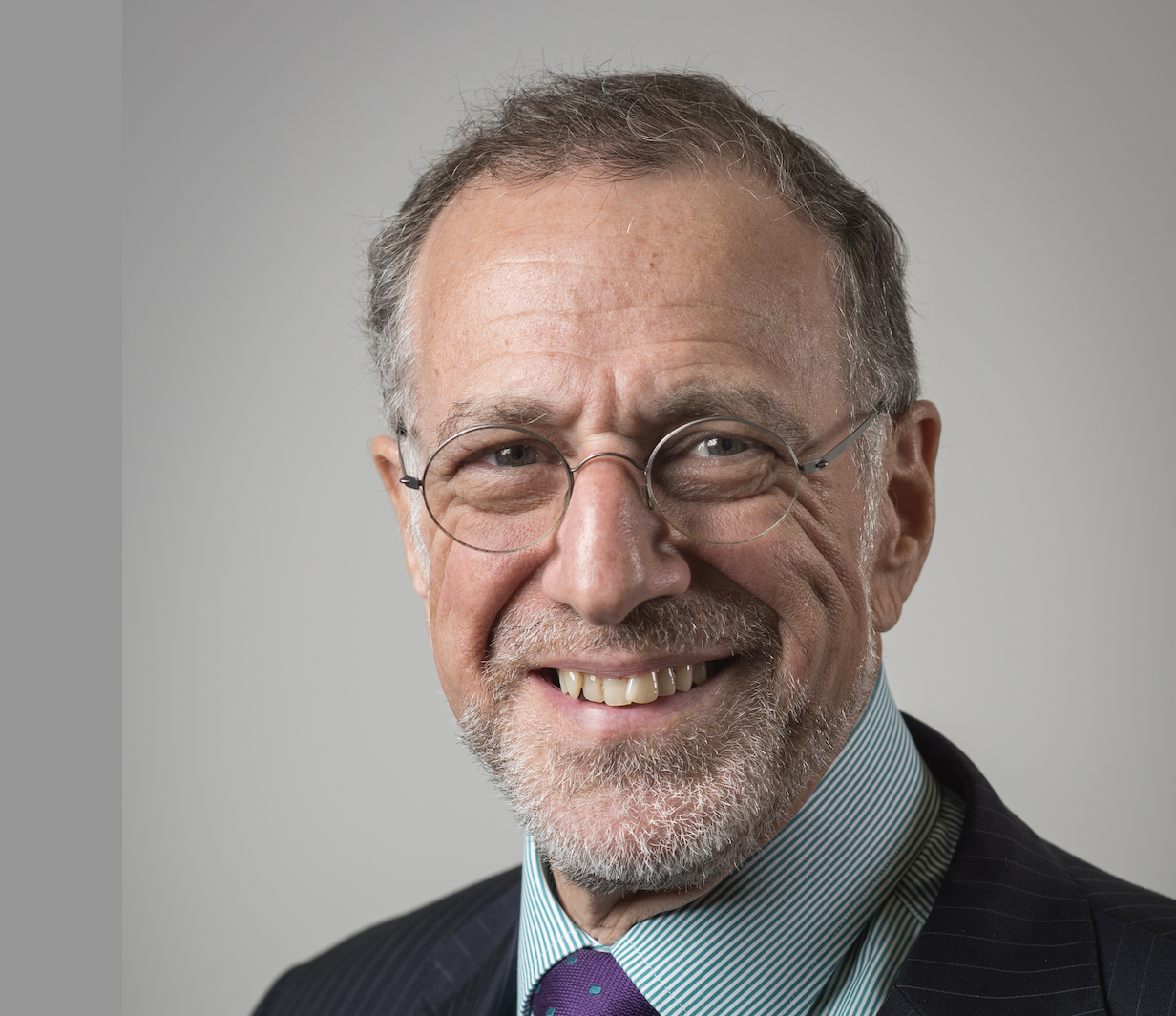
A former chair of the Jewish Leadership Council has implored Jewish leaders to speak out against Israeli government attacks on liberal democracy, declaring: “Your silence is not neutrality, it is complicity”.
Sir Mick Davis gave the concluding speech at a panel discussion held under the auspices of the London Initiative, an organisation he co-founded last year with British-Israeli educator Mike Prashker.
The event, taking place at JW3 and chaired by its chief executive Raymond Simonson, drew a packed audience from the UK, Europe and America.
On the panel were Samah Salaime, director of communications for the Arab-Israeli peace village, Neve Shalom; Dr Ivor Chipkin, a South African academic who is executive director of the New South Institute; Esther Sperber, executive director of Smol Emuni, an American liberal Zionist organisation, many of whose members come from the Orthodox world; and Tomer Lotan, today head of policy for a new Israeli body called Bonim Mehadash, dedicated to addressing reforms in Israeli society. He is the former director- general of the Ministry of Internal Security.
Each of the panellists addressed the way the Gaza war had affected both diaspora and Israeli society. Dr Chipkin drew a dispiriting picture of the situation for the small South African Jewish community, now numbering less than 50,000 people. It was becoming more religious and more Zionist, he said, “but it is a Zionism which is not self-critical.” Many Jewish leaders had become “deeply associated with an authoritarian Israel” — and for him, trying to defend a liberal democratic Israel was feeling “very, very lonely in South Africa”.
But he said that while the political leadership of the country, galvanised by the Boycott Israel movement which originated in South Africa after the Durban conference of 2001, was strongly anti-Israel, “black South Africans [generally] are largely indifferent to Jews”.
Both Mike Prashker and Sir Mick Davis reassured Dr Chipkin and other panellists that those supporting a return to liberal values were “the majority and not the minority”, and spoke of the vital part that world Jewry had to play in convincing Israelis that such a partnership could be renewed.
Lotan, who directed Israeli strategy during the Covid pandemic, reminded his audience that “it is only three years since we had a good government in Israel, not that long ago.” He described the present government as “a disaster for Israel” and warned that “a pile of trouble waits for us”. Nevertheless, he believed that many of the more headline-grabbing policies emanating from the Netanyahu government were “symbolic” and would rarely be translated into reality; and he also revealed that staff at his think-tank were preparing hands-on solutions for the challenges which would be faced by the next government.
Esther Sperber said that from small beginnings in New York, her organisation (Smol Emuni, meaning “faithful from the Left”) had received meaningful support from many American Jews, including those in the strictly Orthodox community. She warned that Charedi society, both in Israel and outside was “not monolithic”, and said that she drew confidence from the support of like-minded people interested in promoting progressive liberal values.
But it was Sir Mick Davis’ at times anguished address which evoked huge applause from the JW3 audience. He said: “I have felt bemused when people I respect deny the complexity of moral life or refuse to see truth because it brings discomfort to their preferred narrative.
“There is urgent rebuilding to be done – for civilians — Israeli and Palestinian — who have endured terror and devastation. For the families of the fallen. And for the fraying trust between Israel and many of its longstanding friends.
“I do not know about you, but I am tired. But fatigue is a privilege, and courage is a choice. We can carry on shuffling to the edge of the cliff in silence. Or we can speak plainly, act bravely, and demand a better path for our people”.
Sir Mick spoke bitterly of “an unprincipled extremist minority” in Israel’s government who were “gaslighting an entire nation into its maximalist agenda”.
He noted that “the seeds of isolation were planted years ago by enemies of Israel and the Jewish people, and are now sprouting uncontrollably. Antipathy to the Israeli government’s direction of travel is now mainstream”.
Isolation, said Sir Mick, “is not just an Israeli challenge but a challenge for world Jewry. It makes Jews vulnerable within their countries. Recent JPR polling of British Jews reveals that 74 percent now describe Israel’s situation as ‘bad’ or ‘very bad’. In the United States, one-third of ‘strong liberal’ Jews now believe US support for Israel’s government is excessive”.
Noting the huge spikes in worldwide antisemitism, he said: “This antisemitic tsunami must be pushed back. But so too must the current assault on our values by the government of Israel, because that too will be fatal to the Jewish future”.
Addressing communal leaders, Sir Mick declared: “You were not elected or appointed to manage decline but to lead. When 51 percent of British Jews say Israel’s conduct clashes with their Jewish values, and younger American Jews are questioning their relationship with Israel — this is not a PR problem. This is a values crisis. And a values crisis calls for moral leadership”.
He urged immediate and urgent action by world Jewry and its allies to thwart repeated attacks on liberal democracy.

Keep community journalism free.
Jewish News is free for everyone. No paywall. No barriers. Just trusted journalism for anyone who wants to stay connected to Jewish life in Britain.
If you value that, please support us.
From as little as £5 a month, you can help keep our journalism free and accessible to all.
Every day, we report on the issues that matter to our community. We celebrate achievements, support charities, challenge antisemitism and ensure Jewish voices are heard more widely.
From as little as £5 a month, you can help us continue to:
- Report on the stories shaping Jewish life in the UK and beyond
- Bring our community together through shared stories, events and campaigns
- Celebrate the people, culture and moments that define our community
- Support organisations doing vital work across Jewish Britain
You can make a one-off donation or become a regular supporter. Every contribution helps keep our journalism free, independent and accessible to all.
If everyone who values Jewish News gave a small amount, it would make a real difference to our future.





















