Prefer Jewish News on Google
From Baku to Jerusalem: A Mountain Jew visits Israel during Mizrahi Heritage Month
You probably haven’t heard of my people. We’re the Mizrahis no one talks about
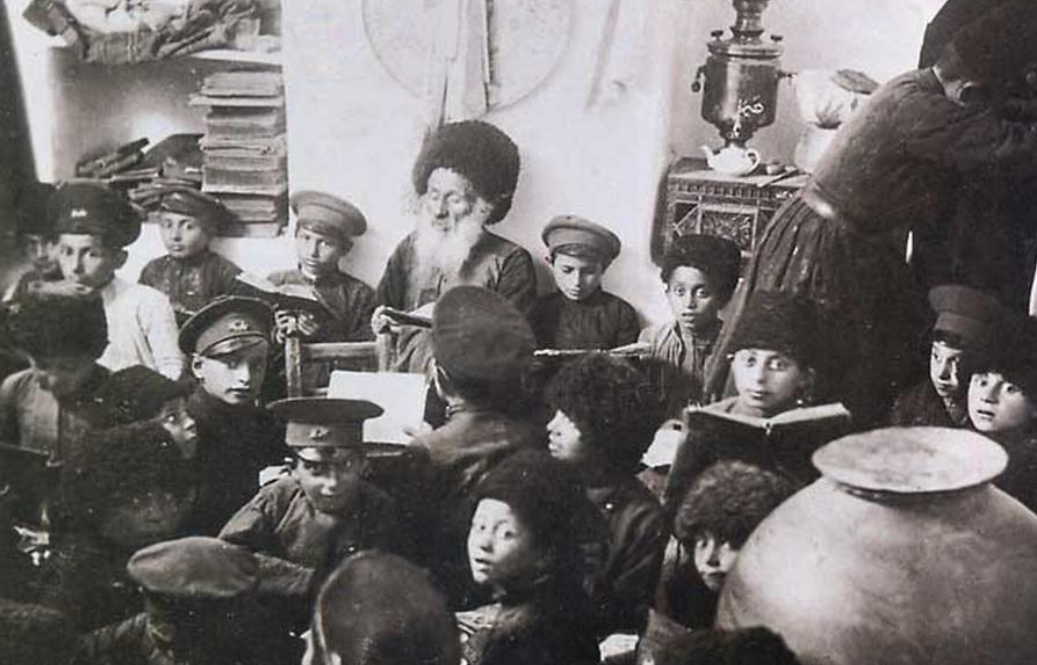
I was born in 1988 and raised in Baku, Azerbaijan. I’m a mother of four. My husband, Elshad Shamayev, is a Justice of the Supreme Court of the Republic of Azerbaijan. My father, Simkha, was born and raised in Quba, Krasnaya Sloboda, which is renowned as the “Little Jerusalem” of the Caucasus. This is where our story began, with my family’s roots running deep.
Like many Mountain Jews, I speak Juhuri. In our home we kept tradition, celebrated the holidays, and passed on what our parents and grandparents gave us. Our children attend a Sunday Jewish school, and my husband and I take part in synagogue life and in the activities run by Chabad in Baku. Chabad in Baku partnered with Momentum to help bring us on this journey. It was through our community that I first learned about the trip, and I am deeply grateful for the opportunity to take part in a women’s program like this.
When people say “Mizrahi,” they often picture the Middle East and North Africa. The Jews of the Caucasus don’t always make it into the frame. That absence matters. Our community is small, but our story is long: tight-knit families, sturdy customs, and a stubborn devotion to keeping Jewish life warm and alive.
There’s another part you might not expect. Azerbaijan is a Muslim-majority country, and our traditional Jewish family feels safe there. We are respected. We are part of the fabric of our city. Meanwhile, friends in Western countries describe something very different – spaces that call themselves “progressive” where hostility toward Israel spills onto them. These two realities can exist at the same time. They don’t fit neat slogans, but they are both true.
This month, thanks to Momentum and Israel’s Ministry of Diaspora Affairs and Combating Antisemitism, I saw Israel for the first time. We had been waiting almost three years due to the tragic events of 7 October. We waited so patiently for this trip to finally take place and I feel blessed to finally be here. I came with a new Russian-speaking women’s cohort, around 200 women, together with the Azeri community from Moscow and women from nine other Russian-speaking former Soviet Union countries. The journey that brought us together focuses on learning, connection, and responsibility. I’m grateful for it, an experience that has truly had a lasting impact.
What struck me first was simple: being here among women who share my languages and rhythms, whether that is Juhuri or Russian, and the familiar pace of diaspora life from Baku to Moscow, so we didn’t have to translate ourselves. We could talk plainly about raising children with a strong Jewish identity, about how to answer questions about Israel with clarity and kindness, and about keeping tradition warm in a modern city where life moves fast.
Before we travelled, we met in advance and started to build trust. We handled practical things and also spoke about values and what we hoped to bring home. In a loud, polarized world, that preparation made a difference. It kept the experience from being a one-time “high” and turned it into a foundation for growth.
In Israel, something settled inside me. Seeing the land I had heard about my whole life made my responsibility feel immediate and joyful, not abstract. My father’s Quba, Krasnaya Sloboda, stopped being only a story from my childhood and became a thread I can place in my children’s hands with confidence.
What happens after we return matters just as much. We plan to keep meeting and establish a steady rhythm that helps us show up as mothers, neighbors, and Jews. When women keep small promises to each other- at home, in schools, in the community, and no matter where in the diaspora, this belonging becomes visible.
I also carry gratitude for the bridges this journey built. In our cohort were women from Russian speaking countries. It did not matter if we were religious or secular, despite arriving as strangers, we left more connected. That connection matters when you’re trying to strengthen a small community, explain Israel to a child, or support a friend who feels alone. It’s one thing to talk about “the Jewish people” in theory. it’s another to feel that people in other cities actually stand with you.
Momentum, the women’s program that made this possible, did something rare: it linked Russian-speaking Jewish women across borders and brought us to Israel together. I’m grateful for that. But the real test is what we do with it at home – how we build on it in Baku and in the wider Azeri Jewish circles we’re part of.
If Mizrahi Heritage Month means anything, it should mean widening the lens. Include Mountain Jews from the Caucasus in the story. Hear Juhuri alongside Arabic, Persian, and Turkish. Accept that Jewish life can feel secure in places many outsiders assume are dangerous, and fragile in places that call themselves enlightened. Don’t force us into someone else’s map. See us as we are.
I’m going back to Baku with a steadier sense of who I am and where I belong. I’m bringing home warmth from the women I met, strength from our prayers, and practical ideas for the ordinary weeks ahead. My hope is simple: that our children will know their Mountain Jewish heritage is not a side story and that the bridges we built here will help carry that story forward.

Keep community journalism free.
Jewish News is free for everyone. No paywall. No barriers. Just trusted journalism for anyone who wants to stay connected to Jewish life in Britain.
If you value that, please support us.
From as little as £5 a month, you can help keep our journalism free and accessible to all.
Every day, we report on the issues that matter to our community. We celebrate achievements, support charities, challenge antisemitism and ensure Jewish voices are heard more widely.
From as little as £5 a month, you can help us continue to:
- Report on the stories shaping Jewish life in the UK and beyond
- Bring our community together through shared stories, events and campaigns
- Celebrate the people, culture and moments that define our community
- Support organisations doing vital work across Jewish Britain
You can make a one-off donation or become a regular supporter. Every contribution helps keep our journalism free, independent and accessible to all.
If everyone who values Jewish News gave a small amount, it would make a real difference to our future.