Prefer Jewish News on Google
From chancellor to tech entrepreneur: Sebastian Kurz’s billion-dollar pivot with Israeli co-founder
Austria’s youngest ever leader Kurz tells Candice Krieger about his role in Israeli unicorn Dream Security, which protects governments from cyber attacks
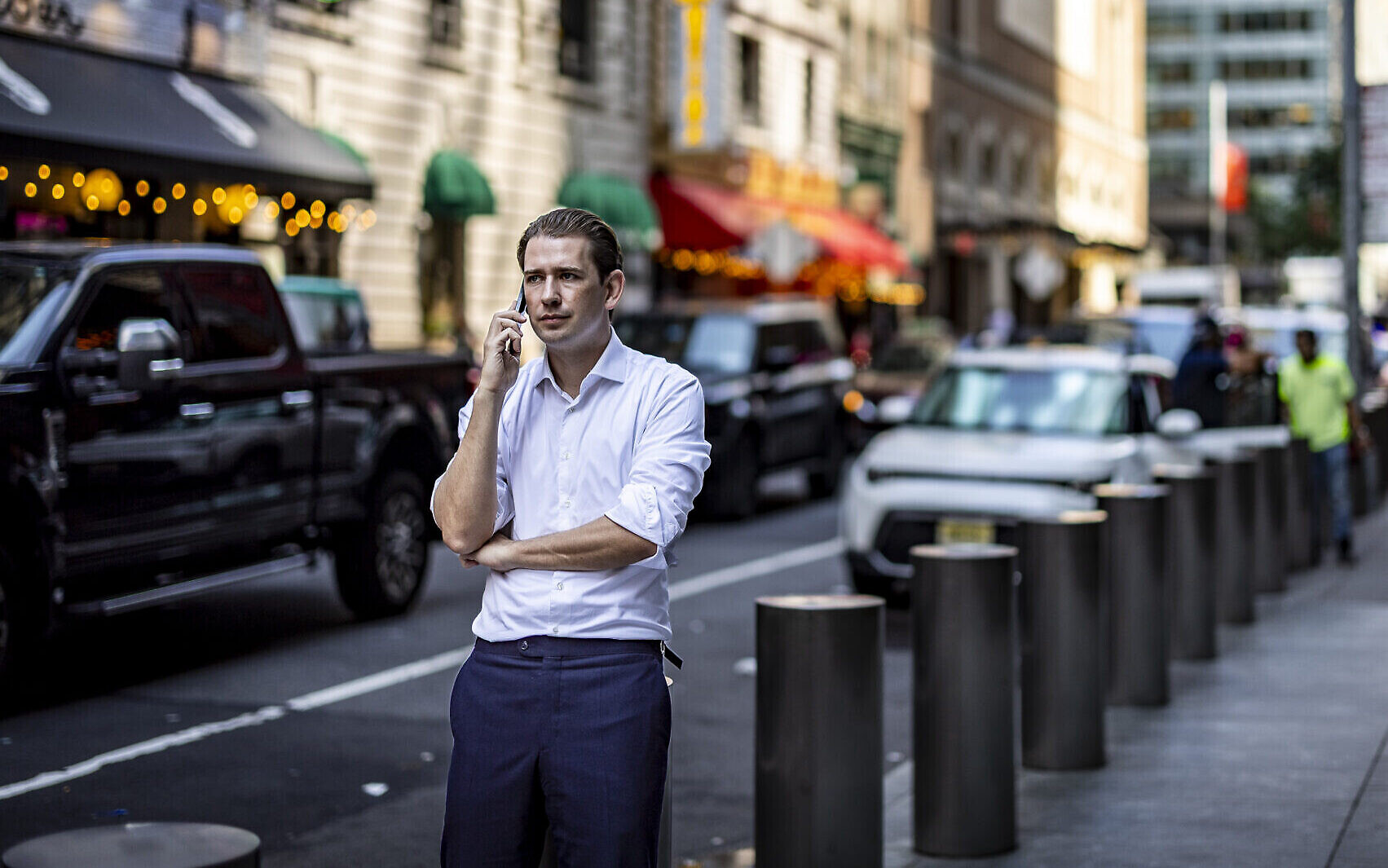
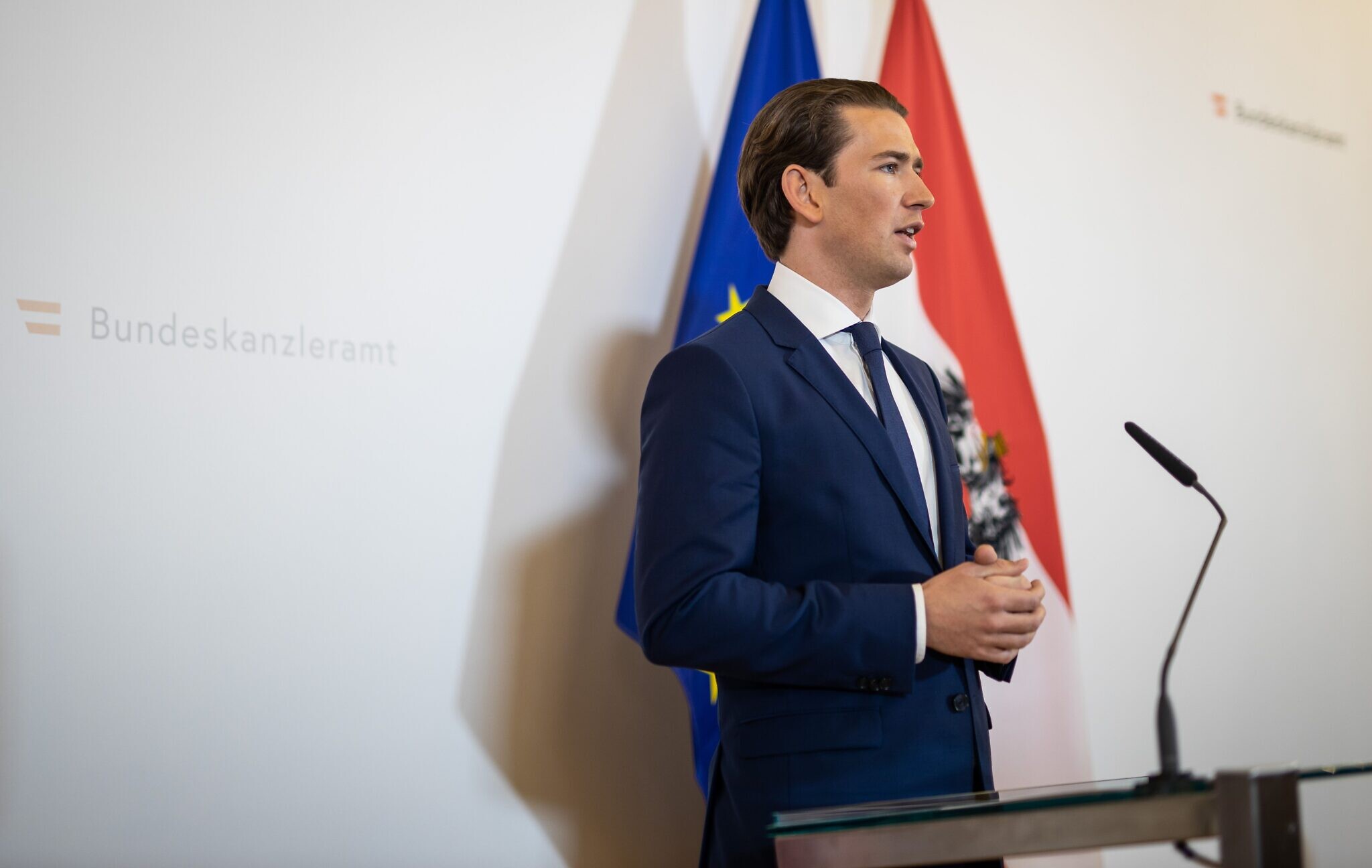
When Sebastian Kurz stepped down as Austria’s chancellor in 2021, it marked the close of a remarkable chapter in European politics.
At just 31, Kurz had become the youngest chancellor in Austria’s history — and the youngest head of government in the world at the time — after rising rapidly through Austria’s People’s Party, becoming foreign minister – Europe’s youngest ever – and serving two terms in office. During those years, he helped shape debates on migration, Europe’s future, and relations with the Middle East, earning him an unusually high international profile for a leader of a small country.
Now, several years later, Kurz is back in the spotlight for an entirely different reason: cybersecurity. And perhaps unexpectedly, Israeli cybersecurity.
Dream Security, the company he co-founded with Israeli cyber tech trailblazer Shalev Hulio helps protect government systems and critical infrastructure worldwide. In February, it became Israel’s first unicorn of 2025 with a $1.1 billion valuation and recently joined the World Economic Forum’s Innovator Communities, which unites leading startups worldwide, providing a platform to collaborate with global leaders, influence policy, and drive innovation on major challenges.
So how does a former youngest head of government in the world pivot from politics to business and get to become the co-founder of one of Israel’s most successful startups?
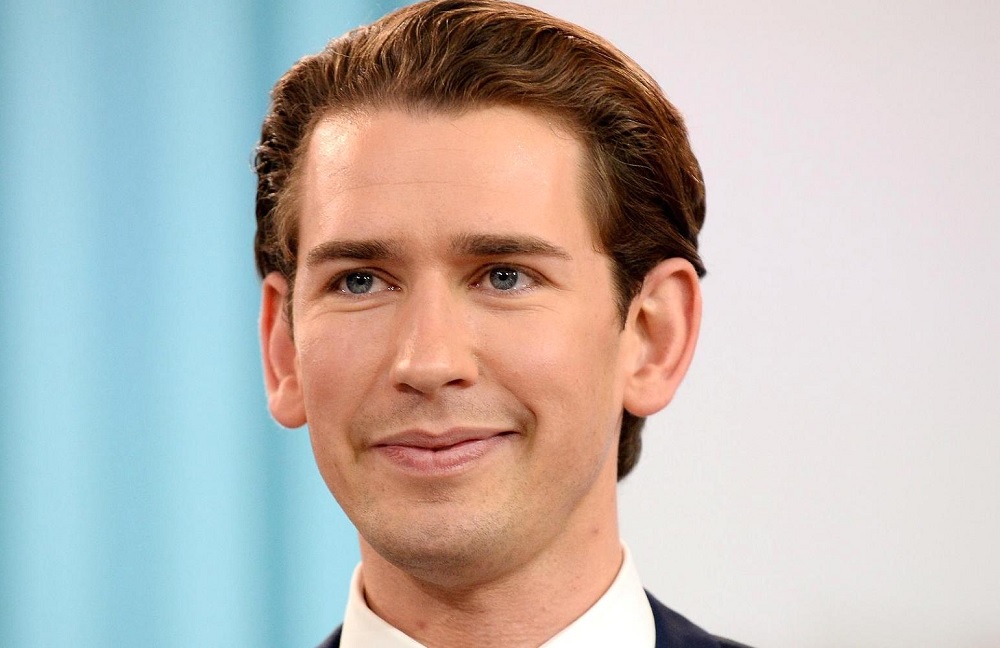
“When I left politics, I didn’t know what to do,” Kurz says. “So, I did what many former politicians do, I started an advisory company.”
He worked with eminent American entrepreneur Peter Thiel, the founder of PayPal, Palantir Technologies and Founders Fund. “I realised how big the change driven by AI really was becoming and knew that I wanted to build something— something more entrepreneurial than just advisory. Something that made a difference.”
This ambition set him on a global search for business partners — and, by chance, into a serendipitous car journey in 2022 with Shalev Hulio. Shalev was the founder of NSO group, known for developing surveillance technology, including the Pegasus spyware.
“The person who was meant to be picking me up from Ben Gurion airport couldn’t make it so Shalev came instead,” explains Sebastian. “We immediately had a click moment.
“I could see he was a genius and by the end of the trip, I thanked him for the ride — and told him I wanted to start something together.”
Over the next couple of days, Sebastian and Shalev figured out that they wanted to combine AI with cyber expertise and critical infrastructure skills and the idea Dream Security was born.
Founded the following year and now more widely known as Dream, the company, headquartered in Tel Aviv, protects governments and critical infrastructure against the kinds of attacks that Kurz, as a former head of state, had seen first-hand.
“I saw how problematic the cyber threat already was,” says Kurz. “For countries like Austria, the risk of a missile strike is very low—but the risk of a cyberattack is real. It happens every week.”
For most European capitals, says Kurz, the bigger threat isn’t missiles but malware.
In practice, that means hackers — often backed by hostile states — attempting to infiltrate or shut down essential services like hospitals, power grids or transport networks, with the aim of causing chaos or even endangering lives. Dream’s mission is to stop those attacks before they can cause real-world damage.
The company reported orders of $130 million over the past year. While Kurz can’t disclose specific client information, they include government authorities and critical infrastructure in Europe, Asia and the Middle East.
In just three years, Dream has raised $155 million, including from US-based venture capital company Group 11, which, founded by Israeli-American financier Dovi Frances, remains the largest investor in the company. In February, Dream reached unicorn status – with a value of $1.1 billion – becoming Israel’s first unicorn of 2025.
But despite the accolades, the blue-eyed co-founder is clear-eyed about what really matters.
“For me, it’s not about being a unicorn,” he says. “It’s about contributing to make the world a safer place.”
For the nature of cyber threats are evolving. “The October 7 attacks were a turning point – not only for Israel but for how the world understands security.
“October 7 showed us that anyone is at risk,” Kurz says. “Even countries that feel secure can be hit in ways they didn’t expect. We are seeing cyberattacks become central even in traditional wars— October 7 in Israel and look at Ukraine. It’s not just bombs that cause chaos anymore. Imagine if a country’s banks stopped working, or if someone poisoned the water supply. These are real, daily threats. And with technology becoming more sophisticated, it will only grow.”
The company’s ascent earned it a coveted invitation to join the World Economic Forum in July, where Kurz, through his days in politics, is no stranger.
“I’ve been visiting Davos for ten years, but being there now as a founder is special,” he says. “It’s a great place to connect with governments and other players in our industry — especially for a young company.”
Dream will participate in international discussions on the future of digital security and protection of critical infrastructure.
Born in Vienna in 1986, Kurz, now 39, became Austria’s – and Europe’s – youngest foreign minister in 2013 at the age of 27. He entered politics by joining the Young People’s Party (JVP) in 2003 and rose through the ranks there over the following years. After a stint as foreign minister, he served as Chancellor from December 2017 to May 2019, and then again from January 2020 until his resignation in October 2021.
During his term, Kurz had visited Israel several times and was familiar with the country’s innovation culture.
“I was always impressed by the idea of the ‘startup nation’ — so many great companies are built in Israel,” he says. “In government, I always tried to meet the Israeli tech community to learn a bit for Austria and the European ecosystem. But it’s impossible to copy — it’s unique — and it’s a privilege to now be part of it and work with so many talented people.”
Shalev, for his part, brought formidable technical experience from NSO — a company whose surveillance tools, though controversial, were among the most advanced in the world. Together, they aimed to channel those capabilities toward defending rather than exploiting vulnerabilities.

For Kurz, moving from the halls of government to the frontlines of cybersecurity wasn’t a total reinvention. He sees a clear nexus between politics and business — the same principles, applied in a new context.
“In politics, people matter — and it’s the same in business,” he says. “The most important thing is to work with the best team. In government, especially because I was so young, I tried to gather the most talented people around me. That’s exactly what we do now at Dream.”
Dream employs over 200 people across the globe with offices in Tel Aviv, Abu Dhabi and Vienna.
Kurz himself lives in Austria with his wife and two young children but spends a lot of time travelling, particularly to the Middle East, Abi Dhabi and Tel Aviv, where he goes every month.
He remains deeply invested in the Abraham Accords, the 2020 normalisation agreements between Israel and several Arab states.
“I’m very optimistic,” he says. “Of course what happened on October 7 and then with Iran was a setback — one of the main reasons for those attacks was to stop all the progress happening on the Abraham Accords. It’s slowed things down, but I’m optimistic there will be next steps. “Gulf countries and Israel working together more closely will make the region more secure — and be an enormous boost economically.”
While he acknowledges that the cyber threat landscape is growing darker – “state-sponsored hackers are on the rise, and they now have tools that were unimaginable a decade ago” – he maintains that “Artificial intelligence is our only real chance to keep pace with the ever-increasing number of attackers.
“At Dream, we combine world-class intelligence and cyber expertise with the capabilities of AI. We’re giving our users something close to a superpower.”
As defence budgets across the globe swell in response to geopolitical instability, Kurz believes cybersecurity will claim a larger share. “Cyber won’t be the biggest piece of defence spending but it will be an increasing part of it. October 7, the war in Ukraine—these moments have shown the world that security is not a given.”
For now, Kurz is focused on expanding Dream’s platform, strengthening its AI capabilities, and helping clients—governments, infrastructure operators, and corporations—stay ahead of what’s coming.
“I was always optimistic that we’d build a strong company,” he says. “But things have gone much faster than I thought. Shalev is a genius. We’ve been able to hire incredible talent. It’s working.”
And at its core, that success rests on something that began, fittingly, with an unexpected meeting and an entrepreneurial instinct.
“Thanks for the tour,” Kurz had said. “Now let’s build something.”

Keep community journalism free.
Jewish News is free for everyone. No paywall. No barriers. Just trusted journalism for anyone who wants to stay connected to Jewish life in Britain.
If you value that, please support us.
From as little as £5 a month, you can help keep our journalism free and accessible to all.
Every day, we report on the issues that matter to our community. We celebrate achievements, support charities, challenge antisemitism and ensure Jewish voices are heard more widely.
From as little as £5 a month, you can help us continue to:
- Report on the stories shaping Jewish life in the UK and beyond
- Bring our community together through shared stories, events and campaigns
- Celebrate the people, culture and moments that define our community
- Support organisations doing vital work across Jewish Britain
You can make a one-off donation or become a regular supporter. Every contribution helps keep our journalism free, independent and accessible to all.
If everyone who values Jewish News gave a small amount, it would make a real difference to our future.