Prefer Jewish News on Google
‘Globalise the Intifada’? The Words Have Reached Our Streets
When calls are made to 'globalise' a form of violence, it was only ever a matter of time before that call found its way into cities like London
There are moments in the life of a community when words, once distant and abstract, suddenly take on a terrible concreteness. Phrases that once echoed in marches and on campuses, dismissed by some as rhetoric, reveal themselves as something far more serious. “Globalise the intifada” was never merely a slogan. It was, as history has taught us time and again, a declaration of intent.
And now, it seems, that intent has reached our own streets.
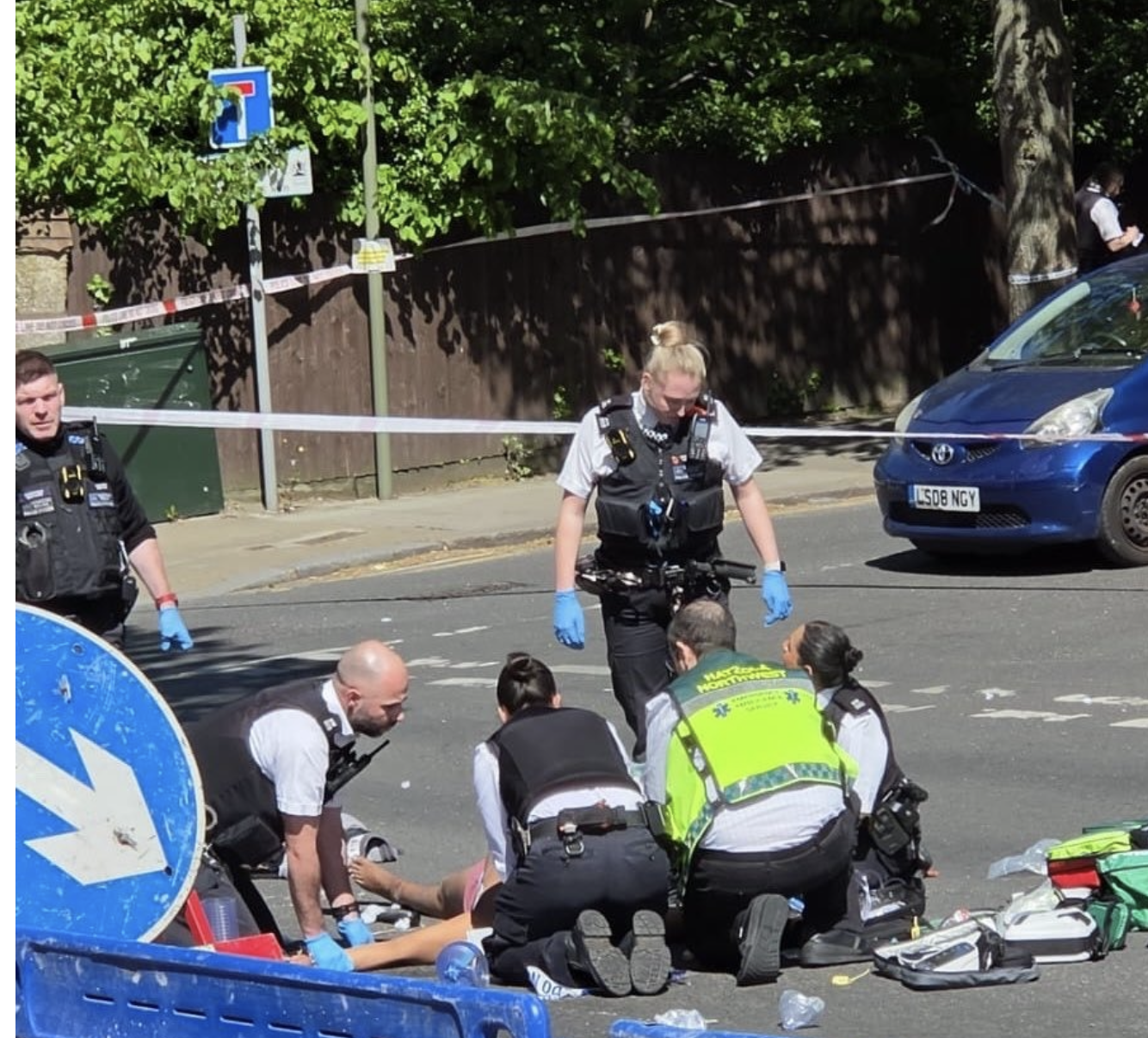
In Golders Green, at the time of writing, details are still emerging. But what we do know is stark and deeply troubling: two Jews have reportedly been stabbed, not for anything they did, but for who they are. For being visibly, unmistakably Jewish.
We should not pretend to be shocked. Saddened, yes. Anguished, certainly. But surprised? No.
The uncomfortable truth is that this moment has been building. In an age defined by the speed of communication and the amplification power of technology, ideas travel faster than ever before. Hatred, once localised, now spreads globally in seconds. When calls are made to “globalise” a form of violence, it was only ever a matter of time before that call found its way into cities like London.
Jewish history carries a painful but vital lesson: when threats are made against us, we must take them seriously. Not because we are alarmist, but because we are realists. Time and again, those who have spoken of violence have, tragically, followed through. To ignore such words is not wisdom; it is wishful thinking.
Yet we are not powerless.
If there is one principle that must guide us now, it is this: security cannot be merely reactive. It must be proactive. We cannot afford to wait for incidents to occur and then respond. We must anticipate, prepare, and prevent.
This means several things.
First, we owe a profound debt of gratitude to those who already stand on the front lines. The work of Community Security Trust and Shomrim is nothing short of extraordinary. Day and night, often quietly and without recognition, they safeguard our shul’s, our schools, our streets. The police and security services, too, deserve recognition for their ongoing efforts in protecting the public.
But gratitude alone is not enough.
We must ensure that these organisations are properly resourced. That requires meaningful government support for both CST and Shomrim. It also requires the community itself to step forward with renewed commitment, recognising that security is not an optional extra, but a fundamental necessity.
Second, we must think differently about what security looks like. Around the world, particularly in Israel, there is an understanding that vigilance is part of daily life. Visible security at entrances, trained personnel, layered systems of protection – these are not signs of fear, but of responsibility. Even in places we may not have yet like the incident in always supermarket showed us. If we are serious about sustaining Jewish life in this country, we must be prepared to adopt similar measures where appropriate.
This is not about criticism of existing structures. It is about recognising that the environment has changed, and that our response must evolve accordingly.
Finally, there is a deeper, more difficult truth to confront.
For many years, Jews in Britain have lived through what might be called “golden years” – a period of relative security, acceptance, and flourishing. That era has not vanished overnight, but it has undeniably shifted. The rise in hostility, often tolerated or insufficiently challenged in public discourse, has consequences. Governments, institutions, and society at large must reckon with the climate that has allowed such rhetoric to take root.
We cannot eradicate hatred entirely. That has never been within human power. But we can shape how we respond to it.
The choice before us is not, as some might frame it, between staying and leaving. It is between passivity and responsibility. Whether we remain here, as generations have before us, or consider other paths, one thing is clear: Jewish life demands courage, clarity, and preparedness.
To live as Jews openly and proudly has never been without challenge. But it has always been sustained by a refusal to surrender to fear, combined with a commitment to act wisely and decisively.
If the words “globalise the intifada” have now reached our streets, then our response must be equally clear: we will protect our community, we will strengthen our institutions, and we will not wait for the next headline before taking action.
Because the lesson of history is not only that threats must be taken seriously.
It is that responsibility must be taken seriously too.
Rabbi Benji Morgan IS CEO of Olami UK.

Keep community journalism free.
Jewish News is free for everyone. No paywall. No barriers. Just trusted journalism for anyone who wants to stay connected to Jewish life in Britain.
If you value that, please support us.
From as little as £5 a month, you can help keep our journalism free and accessible to all.
Every day, we report on the issues that matter to our community. We celebrate achievements, support charities, challenge antisemitism and ensure Jewish voices are heard more widely.
From as little as £5 a month, you can help us continue to:
- Report on the stories shaping Jewish life in the UK and beyond
- Bring our community together through shared stories, events and campaigns
- Celebrate the people, culture and moments that define our community
- Support organisations doing vital work across Jewish Britain
You can make a one-off donation or become a regular supporter. Every contribution helps keep our journalism free, independent and accessible to all.
If everyone who values Jewish News gave a small amount, it would make a real difference to our future.