Prefer Jewish News on Google
Half of Iran’s missile launchers destroyed in first 24 hours
Joint US-Israel assault dismantled 200 launchers, crippled explosives production and halted manufacture of 1,500 ballistic missiles, military official tells Jewish News
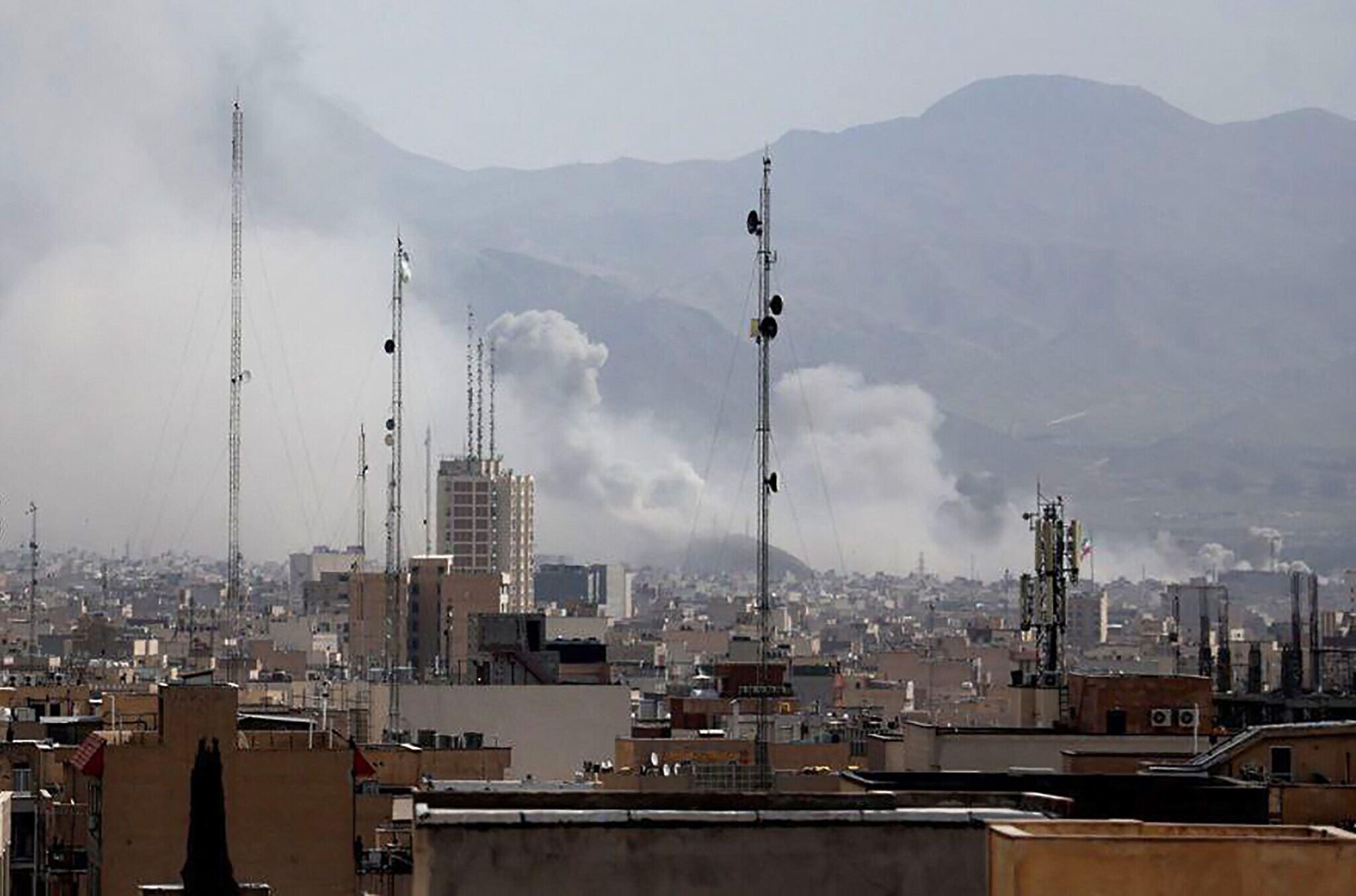
The staggering scale of the opening assault on Iran has begun to emerge, and it is far more extensive than even seasoned observers expected.
Within the first 24 hours of the conflict, hundreds of missiles belonging to the Iranian regime were destroyed and production of at least 1,500 additional ballistic missiles prevented, according to military assessments shared with Jewish News on Sunday afternoon.
Around 200 ballistic missile launchers have been dismantled, with dozens more rendered inoperable. Officials say that amounts to roughly half of the regime’s operational ballistic launcher fleet at the time of the strike.
One senior military official, speaking on condition of anonymity, told Jewish News the objective was not symbolic retaliation but structural paralysis. “This was designed to hit the regime’s ability to threaten Israel and the region at its root. Launchers, production lines, explosive cores. Not a headline strike, but a systemic one.”
The operation was launched jointly by the United States and Israel in the early hours of Saturday morning after months of escalating confrontation and intelligence assessments indicating Iran’s missile output was accelerating.



Around 200 ballistic missile launchers have been dismantled, with dozens more rendered inoperable. Officials say that amounts to roughly half of the regime’s operational ballistic launcher fleet at the time of the strike
Washington provided strategic support and coordinated strikes, while the IDF carried out precision attacks against core industrial and military sites. The action followed repeated warnings from both governments that Tehran’s expanding ballistic missile programme and its support for regional proxies had crossed red lines.
Among the most significant targets hit has been the office of Iran’s Supreme Leader Ayatollah Ali Khamenei, who was killed in the strike on Saturday morning and Iran’s central explosives production site. That facility manufactured the explosive material used in ballistic missile warheads as well as rockets, UAVs and cruise missiles. Its dismantling is expected to create a major bottleneck across multiple weapons systems.
Four key mixing facilities used in the production of ballistic missile engines were also struck. “Without those components, engine manufacture is severely constrained,” the military source said. “This damage will set back propulsion development by years, not months.”
The strikes extended beyond missiles alone. The IDF targeted factories producing advanced anti-tank systems destined for Hezbollah and other Iranian-backed groups. Research infrastructures described as “unique and irreplaceable” were also hit.

Keep community journalism free.
Jewish News is free for everyone. No paywall. No barriers. Just trusted journalism for anyone who wants to stay connected to Jewish life in Britain.
If you value that, please support us.
From as little as £5 a month, you can help keep our journalism free and accessible to all.
Every day, we report on the issues that matter to our community. We celebrate achievements, support charities, challenge antisemitism and ensure Jewish voices are heard more widely.
From as little as £5 a month, you can help us continue to:
- Report on the stories shaping Jewish life in the UK and beyond
- Bring our community together through shared stories, events and campaigns
- Celebrate the people, culture and moments that define our community
- Support organisations doing vital work across Jewish Britain
You can make a one-off donation or become a regular supporter. Every contribution helps keep our journalism free, independent and accessible to all.
If everyone who values Jewish News gave a small amount, it would make a real difference to our future.