Prefer Jewish News on Google

Hamas and its two million hostages
Exiled and bereaved by war, Ahmed Fouad Alkhatib tells the story of the Gaza that vanished after the 7 October terror attack
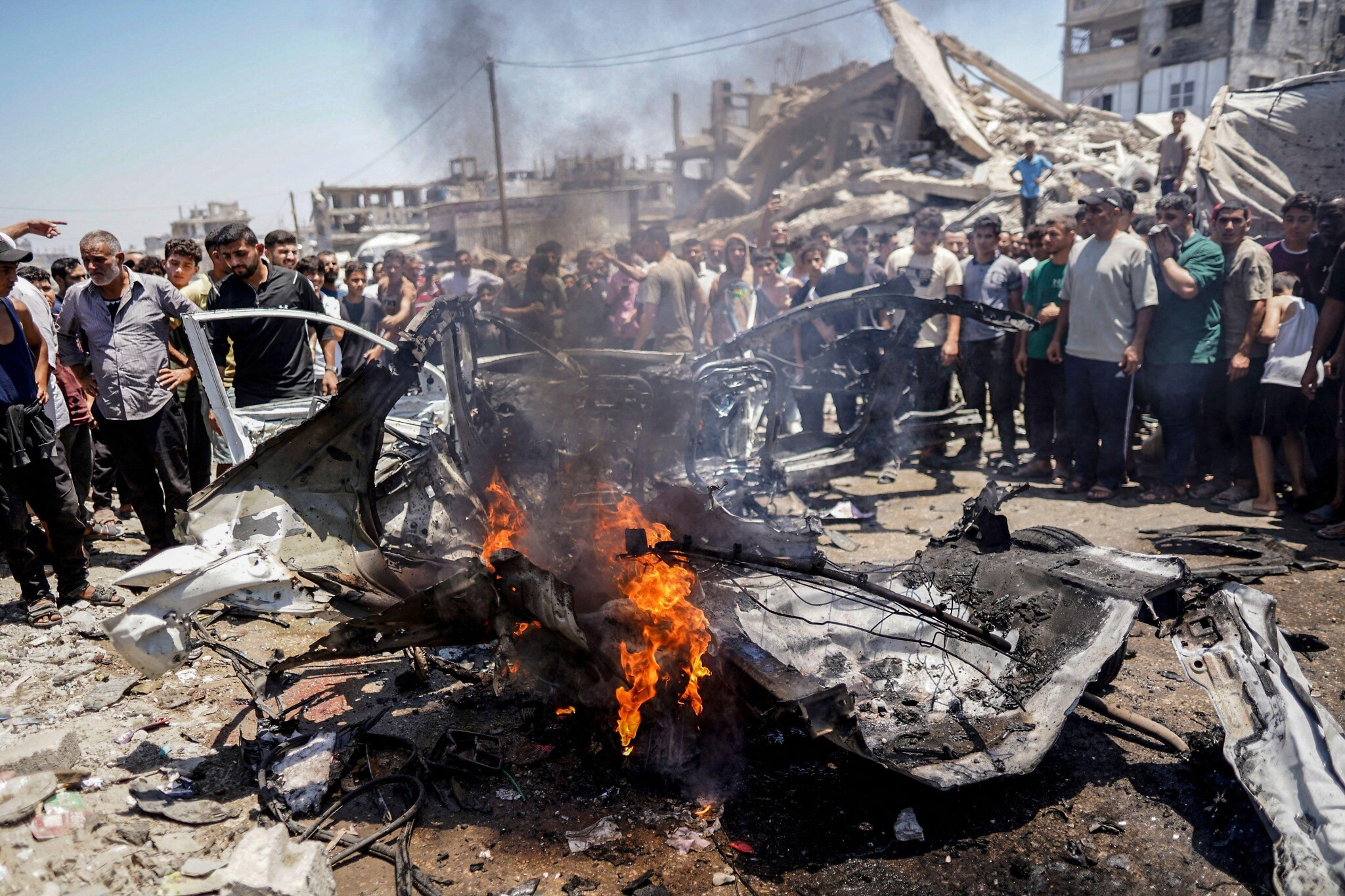
The attack on October 7, 2023 by Hamas on Israeli communities in the areas known as the Gaza envelope turned my life upside down and changed it forever, not to mention the lives of 2.3 million Palestinian residents of the Gaza Strip.
The homes in which I grew up, surrounded by citrus, fig, guava and olive trees, where I fed my grandmother’s chickens and ducks, where I flew homemade bamboo and paper kites, and where my cousins and I played PC video games that improved our English, were destroyed by Israeli airstrikes. The Gaza that I knew as a child was gone; and yet, it was already gone, long before October 7.
Hamas has been in control of the coastal enclave for almost two decades. Roughly two–thirds of Gaza’s residents are under the age of thirty, and few would have any real memory of life before Hamas. I remember. I was born in 1990 and am old enough to have experienced a glimpse of hope for my people.
Hamas squandered that hope. During its reign, which continues, it destroyed the potential for the Palestinian people to pursue self–determination and self–fulfilment, to develop and, critically, to turn Gaza into a compelling case for Palestinian statehood.
I left the Gaza Strip in 2005 as a fifteen-year-old high school student on a United States cultural exchange programme designed to build bridges between the Arab and Muslim worlds and the American public after the 9/11 attacks. I was supposed to return a year later after finishing eleventh grade while living with an American host family.



However, six months after I arrived, Hamas won the Palestinian elections. Soon afterwards, while I was in Egypt preparing to cross back in, the group abducted Gilad Shalit, an Israeli soldier on the Israeli side of the border with Gaza, triggering a mini war and intensifying a blockade against the Strip that prevented me from returning home.
A year later, a nervous seventeen-year-old, I interviewed for political asylum in the United States. It was 14 June 2007, the day that Hamas seized control of the Gaza Strip and violently ejected the Palestinian Authority. The Hamas takeover launched multiple cycles of violence, which ultimately led to the horrendous massacre on October 7 and the ensuing war that annihilated Gaza.
I became the first Palestinian from Gaza to receive US asylum as a consequence of Hamas’s control of the Strip. This represented a tragic milestone, but seeking asylum regularly became the recourse of Palestinians forced to flee their homeland in Gaza and the Islamist menace that has championed violence and terror under the guise of resistance and fighting Israel and Zionism. Sadly, my entire immediate family remained behind in Gaza. I have not been able to visit the Strip since Hamas took over and I received asylum, though I stood at its border on the Egyptian side in 2012 and flew over it in 2025, when I joined an airdrop of food led by Jordan and the United Arab Emirates and saw my home for the first time in twenty years.
I became the first Palestinian from Gaza to receive US asylum as a consequence of Hamas’s control of the Strip
Throughout my time in the United States, I have been active in the cause of Palestine. I have engaged in Jewish/Israeli–Palestinian dialogue and in “pro–Palestine” activist groups and in humanitarian projects. After October 7, I became known for two reasons. First, I lost dozens of family members during the destruction of my two childhood homes: the house I grew up in with my family on one floor plus my father’s on the four floors above ours in the family building, and my mother’s family home, which was like a second home; both of these were central to my upbringing in Gaza. To this day, the Israeli military has not explained why the airstrikes occurred.
Second, I have been ferociously anti-Hamas, and so I have firmly opposed vocal elements of the Western-based pro-Palestine camp that often justifies violence, promotes hate and refuses to endorse any rational discourse or pragmatic solution that could actually help the people of Gaza. These advocates claim to speak for me, my family and my people, but they know nothing about us, our history, our differences, our interests and our hopes.
I have chosen to engage in work that advocates for reconciliation, tolerance and common ground as the only way forward for Palestinians and Israelis. My approach has drawn support but also suspicion, hate and threats of violence. A Palestinian who challenges the “conventional wisdom” and speaks out against Hamas, who renounces its narrative of armed resistance and promotes views that other Palestinians hold but are afraid to voice, is perceived as a heretic. But the truth is that my experience, and that of most Palestinians, does not fit the simplistic, black–and–white understanding of the Israel and Palestine conflict held by many of those who speak on our behalf.
Since October 7 it has been horrifying to see Hamas apologists, presenting themselves as pro-Palestine, celebrate the group as a legitimate entity that supposedly represents the Palestinian people’s best interests and is somehow an organic expression of resistance on behalf of Palestinian grievances. Since its inception, Hamas has been deeply detrimental to Palestinian interests. Indeed, the group carefully timed the attacks of October 7 against the backdrop of its unpopularity in the Gaza Strip – mere months after yet another round of protests opposed to its rule. The attack was also part of a geopolitical chess game in which Hamas’s chief backer, supplier and instigator – the Islamic Republic of Iran – was seeking to block the normalisation of Israel’s relations with Arab and Muslim countries like Saudi Arabia. Hamas’s eighteen years of repressive governance in Gaza had hit a dead end. The terror group was able to be neither a successful government nor an effective force of armed resistance; the October 7 attack was a form of suicidal nihilism that the group hoped to use to shake up the status quo, ultimately choosing to sacrifice Gaza and its people in the process.
Since October 7 it has been horrifying to see Hamas apologists, presenting themselves as pro-Palestine, celebrate the group as a legitimate entity
It was not because the Palestinian people were out of options that Hamas carried out the attack. It was in its own interests, and in those of its master in the Middle East, to stage a dramatic and bloody act to inflame the region. The so-called pro-Palestine movement did not recognise this, which is disturbing and demonstrative of the hopeless ignorance of many of the Palestinian people’s supposed allies.
Hamas is a moral stain on the Palestinian cause; those who genuinely support our national aspirations should have found it entirely unproblematic to condemn the group’s murders and rapes, its firing of rockets at civilians, and its Islamist ideology.

I was furious that a once-in-a-generation opportunity to drum up support for the Palestinian people was squandered on sloganeering and hollow activism. I heard nothing constructive, no desire or attempt to produce pragmatic policies and results for the Palestinian people. Instead of doubling down on the two-state solution and acknowledging that the Palestinian people do not want the annihilation of Israel, but rather seek dignity, freedom and independence, activists in the Western world became drunk on the worst possible combination of extremism, oversimplification and maximalism. This toxic mix has been harmful to the lives and liberty of Palestinians and to the cause of the Palestinian people.
When I spoke out against these trends, I was attacked viciously. I realised that many in the so–called pro–Palestine movement are deeply anti–Palestinian, for they are only interested in platforming and embracing views and experiences that conform to their beliefs. That a Gazan like myself – who lost family members in the war, who is largely deaf in his left ear following an Israeli bombing in 2001 and who has been on the front lines of providing humanitarian support for Palestinians in Gaza – could be dismissed for sharing the “wrong views” was an alarming sign of the degradation of this Western–based activism.
Furthermore, large segments of the Arab and Palestinian communities in the diaspora became their own worst enemies, enforcing conformity and promulgating extreme positions. They remained silent lest they be called traitors, sell-outs or Zionists. Speaking out against Hamas was somehow viewed as supporting Israel’s war on Gaza, endorsing the horrors experienced by Palestinian civilians or adopting Netanyahu’s and Israeli talking points, or as a betrayal of the Palestinian right to resist Israeli injustices. This simplistic reductionism was picked up by Hamas, which immediately registered the support for its actions in diaspora communities, particularly in the West and in the US, where political leverage matters most. The failure to call out Hamas weakened genuine pro–Palestine advocacy, which by default became associated with celebrations of October 7, finding excuses for Hamas’s heinous acts of terror, refusal to humanise Israeli victims of the attack (including hostages) and the abandonment of political aims that are actually achievable. Instead, a form of mass psychosis took hold of activists, academics, journalists, advocates, politicians and average individuals, all blinded to Hamas’s criminality against both Gazans and Israelis.
Undeterred, I have decided to proceed with sharing my truth. I saw and experienced Hamas’s rise to power in Gaza and witnessed its tactics, strategies and manipulation of an entire people. For nearly two decades, a fascist Islamist terror organisation has been holding over two million Palestinians as hostages to its suicidal, nihilistic project.
I saw and experienced Hamas’s rise to power in Gaza and witnessed its tactics, strategies and manipulation of an entire people
Launching the most brutal single-day attack against the Jewish people since the Holocaust, and knowing the kind of devastating and deadly retaliation that this was going to elicit, was a deliberate, reckless endangerment of the Palestinian people: a betrayal.
The decision to launch the October 7 attack destroyed Palestinian lives and aspirations, but it was not the first such terrible choice.
It was a choice to reject the Oslo peace process and the 2000 Camp David proposal; it was a choice to squander the opportunity opened in 2005 by Israel’s withdrawal of settlements on a vanity resistance project that went nowhere for two decades; it was a choice after the 2006 elections to Islamise Palestinian society and waste opportunities to establish new civic and democratic life; it was a choice to antagonise moderates in Israel with suicide bombings, turning many of them against the peace process and helping the rise of the Israeli far right.
It was a choice to align the Palestinian people of Gaza with the likes of Hezbollah, Qatar, the Islamic Republic of Iran, the Muslim Brotherhood – failed ideologies and regional projects – just as previous generations of Palestinians aligned themselves with Saddam Hussein, the Soviet Union and Gamal Abdel–Nasser’s pan–Arabism; it was a choice to keep Israeli hostages in Gaza for two years rather than surrendering them earlier to avert large–scale death and destruction and to save what could be saved of Gaza’s people and infrastructure.
I do not speak and have never claimed to speak on behalf of Palestinians or Gazans. No one can make this claim, for there is no single voice or entity that can capture or represent the diversity of Palestinian communities across the Middle East and the world. My account and my analysis are steeped in lived experience, connection to the land and extensive relationships with Palestinians in the Gaza Strip.
Still, the cautionary lessons and observations that I discuss will be acknowledged by many in the Gaza Strip, and by Palestinians elsewhere, who often keep quiet.
I share my story in the spirit of seeking justice for my people. This story details Hamas’s horrendous impact on the Palestinian people’s legitimate right to freedom and independence. I experienced the tragedy of seeing my native homeland descend into chaos and disarray, a collapse that occurred in large part because of a group of Jihadi fascists who destroyed the Palestinian national project. This is why I focus on speaking out against Hamas.
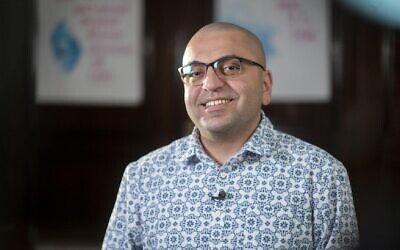
• This is an edited extract from Ahmed Fouad Alkhatib’s Jewish Quarterly essay, Hamas and its two million hostages. He is a Gazan writer and advocate, founder of Realign for Palestine and a senior fellow at the Atlantic Council in Washington, DC.

Keep community journalism free.
Jewish News is free for everyone. No paywall. No barriers. Just trusted journalism for anyone who wants to stay connected to Jewish life in Britain.
If you value that, please support us.
From as little as £5 a month, you can help keep our journalism free and accessible to all.
Every day, we report on the issues that matter to our community. We celebrate achievements, support charities, challenge antisemitism and ensure Jewish voices are heard more widely.
From as little as £5 a month, you can help us continue to:
- Report on the stories shaping Jewish life in the UK and beyond
- Bring our community together through shared stories, events and campaigns
- Celebrate the people, culture and moments that define our community
- Support organisations doing vital work across Jewish Britain
You can make a one-off donation or become a regular supporter. Every contribution helps keep our journalism free, independent and accessible to all.
If everyone who values Jewish News gave a small amount, it would make a real difference to our future.