Prefer Jewish News on Google
Holocaust Memorial Day is not only a moment of reflection but a call to action
81 years after the liberation of Auschwitz-Birkenau, British Jews are reminded day after day that hatred towards our community is not confined to the history books
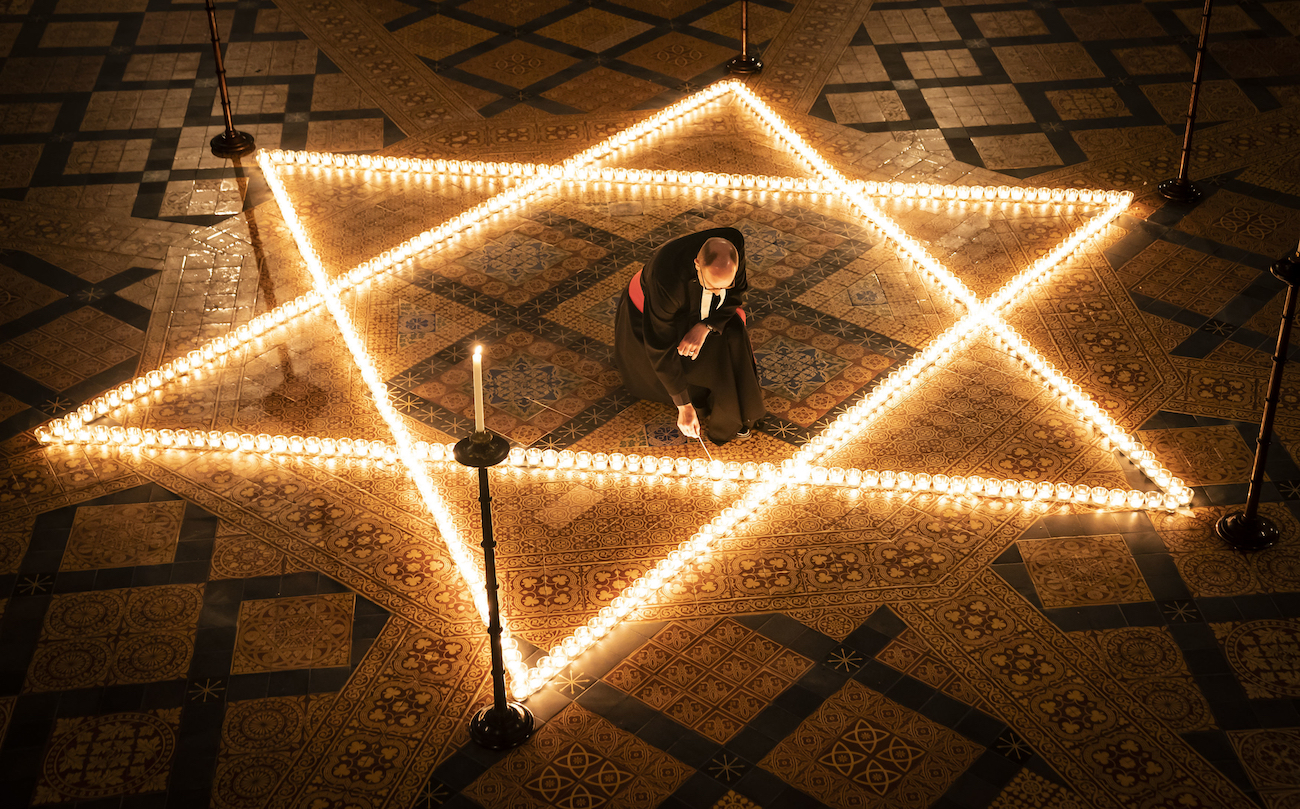
Earlier this month, I visited the Museum of Culture and Identity of Lithuanian Jews in Vilnius. The museum tells the rich history of Litvak Jews dating back to the 13th Century. As I passed through the museum, I felt a deep pain as I saw exhibits showcasing Jewish religious life: candle sticks, wine cups, prayer books, prayer shawls, and menorahs. Items which remain an everyday part of Jewish life here in the UK but in this display sit unused, behind glass. The reason for this can be found at the Holocaust museum around the corner. By the end of the Holocaust, over 90% of Lithuanian Jews had been murdered by the Nazis and their collaborators.
Jewish life in the UK is not a museum exhibition; we are a living part of British society. However, 81 years after the liberation of Auschwitz-Birkenau, British Jews are reminded day after day that hatred towards our community is not confined to the history books.
Barely a week goes by without a new high-profile incident. This month alone, at a time when the country should be reflecting on the lessons of the Holocaust, we have instead witnessed a Jewish Member of Parliament barred from visiting a school in his own constituency; a disgraceful ‘protest’ targeting a Jewish owned restaurant in Notting Hill with shouts of “baby killers”, “shame on you” and violent calls to “globalise the intifada”; and even more evidence of wrongdoing by West Midlands Police in their decision to ban Israeli football fans from Birmingham.
These are not isolated incidents. They form part of a pattern that makes this year’s Holocaust Memorial Day feel worryingly relevant; a pattern of double standards and capitulation that has emboldened antisemites in Britain to become more brazen, more extreme and more violent than ever before.
These incidents carry painful echoes for Jews. They call to mind the exclusion, harassment and targeting of Jewish people and business in Nazi Germany. This is not paranoia; we know all too well where this sort of intimidation and violent speech leads, and we know that our community is under attack.


The Islamist terrorist attack against Heaton Park Synagogue on Yom Kippur did not happen in a vacuum. It was the culmination of these record-high levels of antisemitism, catalysed by Hamas’s murderous attack on southern Israel on 7 October two years ago and the tragic war that followed. While many conflicts blight the globe, none provoke this level of obsession or vilification. Israeli feelings of grief and concerns for their security are uniquely illegitimate, and the demonisation of Israelis has become a vehicle for hatred of Jews everywhere.
Two Jews were murdered on our holiest day of the year here in the UK, and we have witnessed deadly attacks against Jews in the United States and Australia. It is now undeniable that the calls to violence that fill our streets, our campuses and our social media accounts are not theoretical, nor is violence against Jews contained to the Middle East. Our schools, synagogues and communal buildings feel the weight of this threat every day.
That is why Holocaust education has never been more important. And yet, as Holocaust survivors grow older, survivor testimony has sadly become less easily available. This year’s commemoration comes with a profound sense of loss as we mourn treasured survivors Harry Olmer MBE, Eva Schloss MBE and Manfred Goldberg MBE, who dedicated their lives to educating Britain about the horrors of the Holocaust. Their absence sharpens our responsibility to protect the truth against those who seek to deny the Holocaust or abuse its memory to attack the world’s only Jewish state.
Holocaust Memorial Day is not only a moment of reflection but a call to action. The warning signs are here. Britain must act now and confront antisemitism with courage to ensure that Jewish culture is a living part of our society, not a museum item.
Russell Langer is Director of Public Affairs at the Jewish Leadership Council

Keep community journalism free.
Jewish News is free for everyone. No paywall. No barriers. Just trusted journalism for anyone who wants to stay connected to Jewish life in Britain.
If you value that, please support us.
From as little as £5 a month, you can help keep our journalism free and accessible to all.
Every day, we report on the issues that matter to our community. We celebrate achievements, support charities, challenge antisemitism and ensure Jewish voices are heard more widely.
From as little as £5 a month, you can help us continue to:
- Report on the stories shaping Jewish life in the UK and beyond
- Bring our community together through shared stories, events and campaigns
- Celebrate the people, culture and moments that define our community
- Support organisations doing vital work across Jewish Britain
You can make a one-off donation or become a regular supporter. Every contribution helps keep our journalism free, independent and accessible to all.
If everyone who values Jewish News gave a small amount, it would make a real difference to our future.