Prefer Jewish News on Google
Holocaust remembrance requires leadership
Holocaust education should encourage critical thinking, build empathy and equip young people to recognise prejudice, challenge injustice and understand consequences of silence.
The recent decline in Holocaust Memorial Day participation in British schools has caused understandable concern. In the aftermath of the horrific attacks of 7 October and the war that followed, many teachers have found Holocaust education harder to teach, and some have stepped back entirely. That reality must be acknowledged, but it cannot be allowed to set the direction of travel.
Moments like this demand clarity. They invite us to ask what Holocaust remembrance is for, and how we ensure it continues to speak meaningfully to the next generation.
One place to begin is with the life and work of Roman Halter.
Halter was a survivor of the Łódź Ghetto, Stutthof, Dresden, Theresienstadt and Auschwitz. He was the only surviving member of his family. Of the 800 Jews in his village, just four survived.
After the war, he came to Britain as one of the Windermere children and rebuilt his life here, training as an artist and architect. He would go on to design major memorials, including the gates of Yad Vashem in Jerusalem.


Yet what is most striking about Halter’s work is that he resisted the idea that memorials should overwhelm or dominate. He believed memory should be integrated into life, not set apart from it.
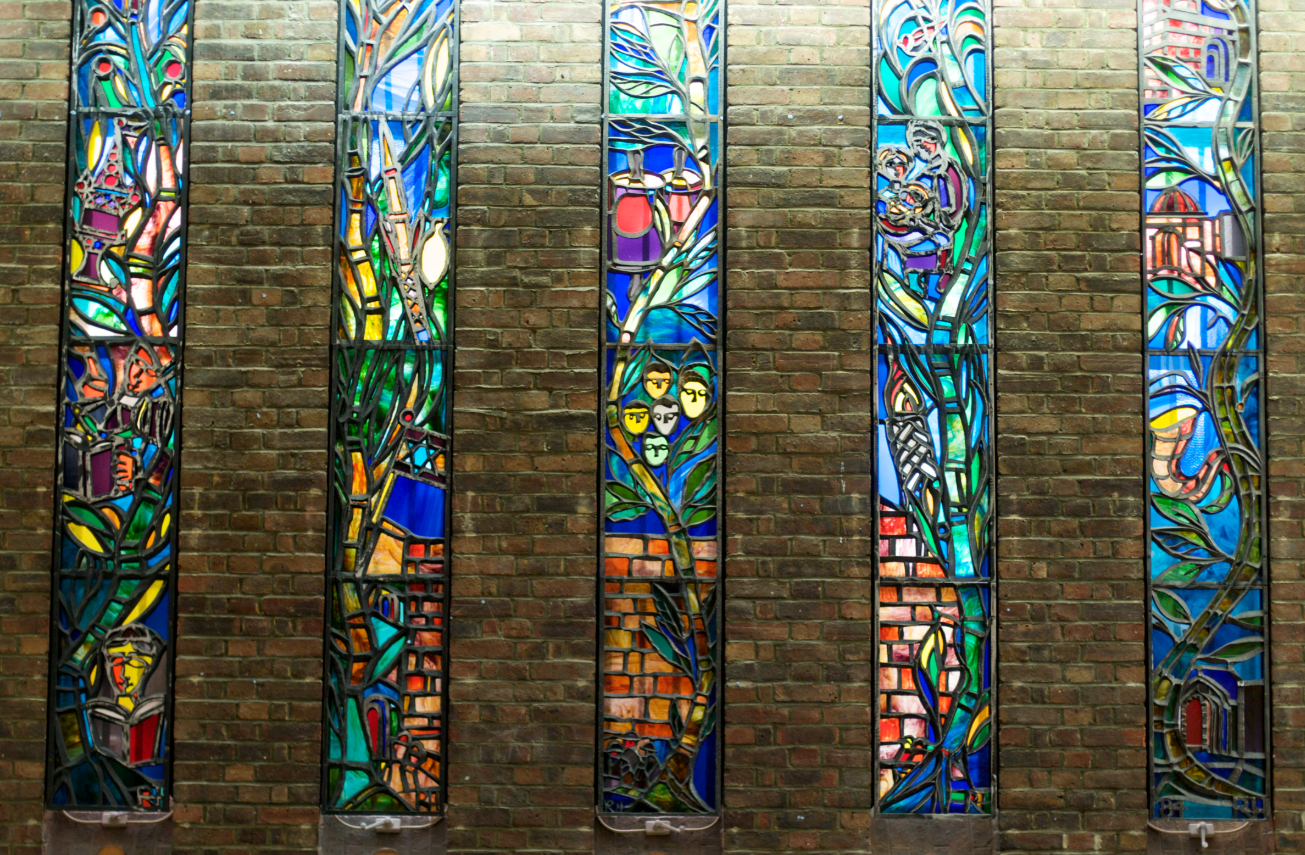
That belief is visible in the synagogue he called home, Alyth. Halter designed eighteen windows, eighteen representing chai, the Hebrew number for life. Of those eighteen, two remember victims of the Shoah. For Halter, remembrance was not meant to eclipse the world around it. It was meant to sit within it, shaping how people live and act.
That idea runs deeply in Jewish tradition.
On the memorial at the Sternberg Centre, the home of the Movement for Progressive Judaism, also designed by Halter, appears a single word: zachor -remember.
In English, remembering often means recalling the past. In Judaism, zachor means something more demanding. The Torah commands, “Zachor et yom haShabbat l’kadsho” – remember the Sabbath day and make it holy.
One does not remember Shabbat by thinking about it, but by changing one’s behaviour: how we use our time, how we treat one another, how we live with intention.
Memory, in the Jewish tradition, is a verb. It carries responsibility.
That is why moments of discomfort cannot be the signal to step back. They are the signal to step forward with thoughtfulness and purpose. Holocaust remembrance was never meant to be easy, and it was never meant to be frozen in time. It is meant to shape how we see the world and how we act within it.
Roman Halter understood that. His memorials do not shout. They sit among the living and ask something of them. They insist that memory is not an exercise in fear but in moral formation.
The response to falling participation in Holocaust Memorial Day must be constructive and confident. It should be invitational and collaborative, supporting teachers rather than pressuring them, and helping schools create spaces where difficult history can be taught with care and integrity.
Holocaust education, when done well, does not divide us. It encourages critical thinking. It builds empathy. It equips young people to recognise prejudice, challenge injustice and understand the consequences of silence.
This moment calls for leadership that trusts the next generation with complexity, teaches history honestly, and understands that remembering is not only about what happened then, but about how we live now.

Keep community journalism free.
Jewish News is free for everyone. No paywall. No barriers. Just trusted journalism for anyone who wants to stay connected to Jewish life in Britain.
If you value that, please support us.
From as little as £5 a month, you can help keep our journalism free and accessible to all.
Every day, we report on the issues that matter to our community. We celebrate achievements, support charities, challenge antisemitism and ensure Jewish voices are heard more widely.
From as little as £5 a month, you can help us continue to:
- Report on the stories shaping Jewish life in the UK and beyond
- Bring our community together through shared stories, events and campaigns
- Celebrate the people, culture and moments that define our community
- Support organisations doing vital work across Jewish Britain
You can make a one-off donation or become a regular supporter. Every contribution helps keep our journalism free, independent and accessible to all.
If everyone who values Jewish News gave a small amount, it would make a real difference to our future.