Prefer Jewish News on Google

I had death threats after visiting Israel. My Cambridge college saw me as the problem
Bradley Smart endured a campaign of harassment, with a fellow student at Homerton College saying he would 'kill' him. Yet in some ways even more disturbing was Homerton's response
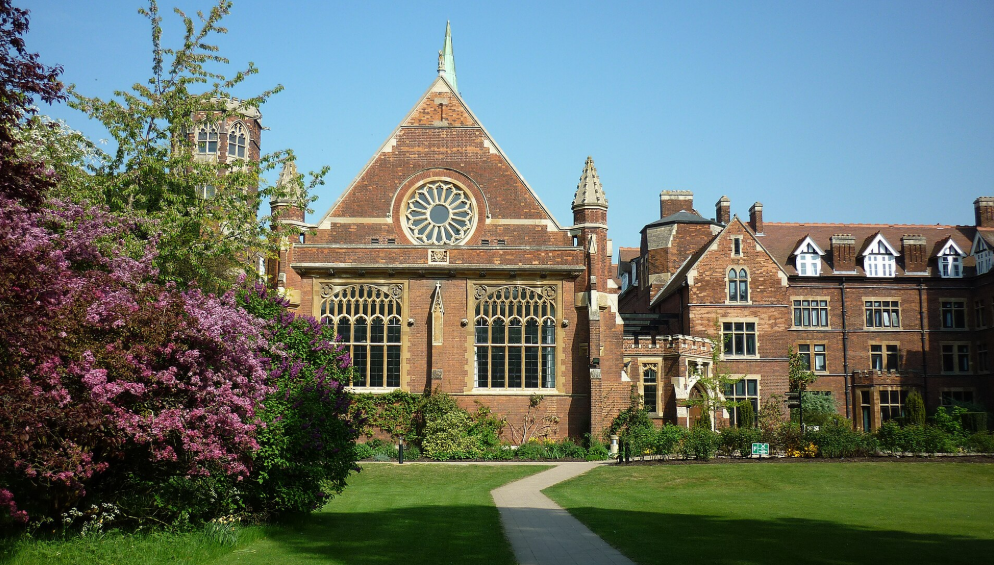
In January, I had the privilege of visiting Israel with the Pinsker Centre, a London-based foreign policy think tank which focuses on Middle Eastern geopolitics and facilitating open on-campus discussion regarding the Israel-Palestine conflict. As a Cambridge student, I expected my university to be a place where opinions could be refined through dialogue, where competing convictions would converge under respect for one’s fellow learners, and where rigorous inquiry would prevail over ideological conformity. The reality, however, was that this trip was enough to trigger a campaign of “cancellation,” including explicit death threats and being banned from a college club. Homerton College’s response, whilst polite and procedural, revealed a disturbing truth: it was far more interested in managing reputational risk than genuinely safeguarding its students.
The crisis started after I posted a handful of photographs on my Instagram, as any travelling student would, sharing where I had been, and what I had seen. The reaction from Homerton College’s students was vicious. In a student group chat, individuals from within the college stated, “I’m going to kill him,” “kill him,” and “he needs to die,” all aimed at me. Other messages used slurs and degrading language. Then came the wider “cancellation”: anonymous college gossip-page commentaries about me, defamatory posts made directly about me on social media, attempts to destroy my future career, and perhaps the most petty but the most revealing, exclusion from a college social club. This was all because I had gone to Israel.
In any serious institution, the key dividing line should be obvious. People are entitled to dislike, even detest your politics. However, they should not be entitled to threaten your life. College disciplinary staff apparently failed to see this obvious distinction.
I reported the threats through the college’s harassment channels. Staff members were sympathetic, and meetings were promptly offered. But sympathy is not protection. For thirty-one nights after I saw the threats, I remained living in a room where the person who stated directly that I needed to die had unrestricted lift access to my room. This student had also reposted overtly antisemitic content, including posts on “the Hamas rape lie” and statements that Israeli society is “no different from the Nazis,” screenshots of which I also shared with the College.
In any serious safeguarding context, that pattern I showed matters. But instead of removing this student, I was encouraged to think in terms of my own “wellbeing”: to speak to welfare staff, to consider moving rooms myself, and/or accept a “mutual behavioral agreement” (MBA). To offer “wellbeing” resources while I was still living beneath someone who had threatened my life is like bandaging a wound whilst an assailant remains in the room; it treated the symptom of my distress whilst ignoring the source of the danger. Moreover, the implication of any “mutual” measures was clear – if conflict has occurred, everyone must have contributed to it, and therefore everyone must carry the burden of resolution. This is where Cambridge’s institutional culture becomes its most virulent. An MBA may be a useful tool when students have fallen out. It is not an appropriate frame when one party has been threatened with death. Instead, a firm stand must be taken.
Homerton’s other instinct was to outsource responsibility. I was repeatedly told that serious disciplinary matters require University investigators and central processes. This may be true, but why could the college’s Safeguarding Officer decide the risk is “low,” and yet simultaneously insist that it could not act decisively because it lacked investigative remit?
They also suggested a safety alarm for me, but not to relocate those who created the fear. They proposed moving rooms within the college, whilst those who made the threats were not the ones bearing the upheaval of moving, and I would still have to use shared spaces with them unless I wished to “mutually” restrict my movement across the site to certain times.
I additionally sought advice from the police but was told in an initial conversation that it was being treated as an “educational” matter; since then, I have had no follow-up.
What makes this ordeal worse is that those thirty-one nights never turned into the rest of my degree as I pleaded for the basic separation and protection that came with a college transfer within the University. Each day I remained living beneath the student who had said I “need[ed] to die” was another day the College’s message was reinforced: that the victim could be asked to endure whilst the aggressor remained embedded in ordinary college life. I was told repeatedly that there was nothing more college officials could do, but the College’s own disciplinary framework gives the Dean wide discretionary powers to impose “any other reasonable measure” during disciplinary proceedings. I cannot help but find that the claim of institutional powerlessness was, to a greater degree, willful inaction.
I consider it a civic and moral duty to defend my Jewish friends and to call out the prevalence of antisemitic rhetoric on campus when I see it, especially after visiting the region and engaging with people across the spectrum of the Israeli-Palestinian conflict on the trip, which gave me a clearer sense of both the stakes and the realities on the ground. If this is the experience of a non-Jew who simply visited Israel, imagine the climate of fear and repression that Jewish and Israeli students feel on our campuses.
In my case, the most serious conversations about Israel, pluralism, and civic responsibility did not come from my former college, which promotes their “Anti-Racist Reading Collective” groups, but from institutions like the Pinsker Centre. They exist precisely to facilitate discussion and dialogue on some of the difficult questions of our time. I am indebted to how Pinsker has supported me during and after the transfer, and, above all, I am grateful that my new college has shown how radically different Cambridge can be when colleges choose to nurture freedom of expression, when hesitation is replaced with an uncompromising commitment to the values that make Cambridge great, and when the true spirit of our institution is exalted.
I have continued to speak without being threatened. I have been able to study without fear. And, despite everything, I have never been happier, all thanks to the Pinsker Centre and my new college. I look forward to returning to Israel very soon.

Keep community journalism free.
Jewish News is free for everyone. No paywall. No barriers. Just trusted journalism for anyone who wants to stay connected to Jewish life in Britain.
If you value that, please support us.
From as little as £5 a month, you can help keep our journalism free and accessible to all.
Every day, we report on the issues that matter to our community. We celebrate achievements, support charities, challenge antisemitism and ensure Jewish voices are heard more widely.
From as little as £5 a month, you can help us continue to:
- Report on the stories shaping Jewish life in the UK and beyond
- Bring our community together through shared stories, events and campaigns
- Celebrate the people, culture and moments that define our community
- Support organisations doing vital work across Jewish Britain
You can make a one-off donation or become a regular supporter. Every contribution helps keep our journalism free, independent and accessible to all.
If everyone who values Jewish News gave a small amount, it would make a real difference to our future.