Prefer Jewish News on Google
I lobby for many causes – but defending kosher meat makes me ‘evil’
After activists called for a protest outside his office, a Shechita advocate argues that hostility is replacing debate over Jewish religious practice
Last weekend, someone posted on Facebook: “The people who run this organisation are called Shimon Cohen and Gavriel Cohn (that’s me). I think it is important that in the future we arrange a demonstration against this evil organisation.”
They listed our office address and urged people to protest outside it.
Our offence? Defending the right of Jews to eat kosher meat.
We are lobbyists. We represent clients to those in power. Whether advocating for electric vehicle chargers, a stadium extension or an amendment to a business bill, strong, detailed arguments usually find a hearing.
Yet when it comes to the practices of religious Jews, we often encounter something different. People do not want to listen.
Why can you not mechanically stun an animal before slaughter? (It is worth noting that “stunning” means an electric water bath, a captive bolt through the skull, or another industrial process, and that Shechita includes a simultaneous stun, stunning and dispatching the animal in one movement). Why observe these Jewish practices in twenty-first-century Britain?
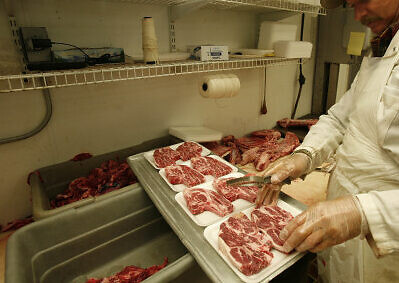
Shechita, the Jewish religious method of slaughter, is lawful and humane. Yet it remains surrounded by suspicion and swarmed by misinformation. Every week, we find ourselves explaining the same facts to journalists, retailers, policymakers and members of the public.
Since last year, leading American and European veterinary journals have published scientific papers finding “non-stun” slaughter at least as humane as other methods, dispelling the myths around it. In April, we sent them to a prominent professor in London. His response was striking: “I look forward to reading them, though I think we will most likely disagree.”
Last month, a YouTube video made by a self-styled “animal liberation activist” was posted online for little more than a day, yet it caused a stir. His organisation openly seeks to “encourage millions of people to eat vegan”, a position reflected in the word “vegan” tattooed across his neck. Few seemed interested in hearing the other side.
That closed-mindedness is at least ostensibly about the issues at hand. There is also more sinister opposition to Shechita. The accusations, obsessive and oversized, against Jews and Jewish religious practice have a long history and, as we are keenly aware, persist today. For more than a century, Shechita bans enacted across Europe were predominantly about controlling or excluding Jewish or other populations, not about animal welfare.
Then we spoke to a sheep farmer near the Cotswolds who restored some of our faith. He told us about vegan protesters outside his farm who refused every offer of a tour. Unlike them, he ended our conversation with genuinely warm words:
“You guys are entitled to speak to as many people as you can. You have not changed my mind. But knowledge is power. When I talk to others, I will be able to explain your reasoning and perspective.”
He did not agree with us on Shechita. But he listened.
It was one of the most open-minded conversations we have had this year about kosher slaughter outside of Westminster, perhaps because he understands the realities of livestock farming first-hand or because he respected our faith.
In a healthy, democratic society, disagreement is normal. The problem is not disagreement. The problem is reaching a conclusion before hearing the argument.
We need fewer hate posts and protests and more tours and conversations.
Listen first. Knowledge is power.
- Gavriel Cohn is a senior consultant at Roath PR and works with Shechita UK, which represents kosher meat provision in Britain

Keep community journalism free.
Jewish News is free for everyone. No paywall. No barriers. Just trusted journalism for anyone who wants to stay connected to Jewish life in Britain.
If you value that, please support us.
From as little as £5 a month, you can help keep our journalism free and accessible to all.
Every day, we report on the issues that matter to our community. We celebrate achievements, support charities, challenge antisemitism and ensure Jewish voices are heard more widely.
From as little as £5 a month, you can help us continue to:
- Report on the stories shaping Jewish life in the UK and beyond
- Bring our community together through shared stories, events and campaigns
- Celebrate the people, culture and moments that define our community
- Support organisations doing vital work across Jewish Britain
You can make a one-off donation or become a regular supporter. Every contribution helps keep our journalism free, independent and accessible to all.
If everyone who values Jewish News gave a small amount, it would make a real difference to our future.